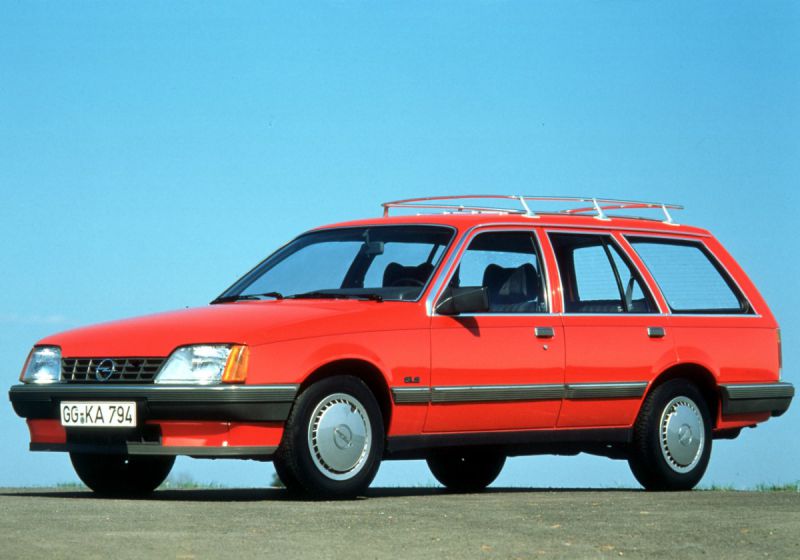
The Opel Rekord E Caravan (facelift 1982) 2.3 D (65 Hp) represents a significant chapter in European automotive history, embodying the practical, durable, and economical ethos of its era. As a product of Opel, a German marque long integrated into General Motors’ European operations, the Rekord series was a ubiquitous sight on European roads, serving countless families and businesses. The E generation, produced from 1977 to 1986, was Opel’s answer to the mid-size (often referred to as a large family car in Europe) segment, offering a compelling blend of space, comfort, and reliability. The 1982 facelift brought subtle but effective styling updates and mechanical refinements, ensuring the Rekord remained competitive in a challenging market. This particular variant, the 2.3 D Caravan, highlights the growing importance of diesel power for fuel efficiency and longevity, especially in the practical station wagon (estate) body style, making it a true European workhorse.
Powertrain & Engine Architecture
At the heart of the Opel Rekord E Caravan (facelift 1982) 2.3 D (65 Hp) lay a powertrain engineered for endurance and economy rather than outright speed. The vehicle was propelled by a naturally aspirated 2.3-liter (2260 cm3 or 137.91 cubic inches) inline four-cylinder diesel engine, designated with the code 23D. This robust unit produced 65 horsepower at a relatively low 4200 revolutions per minute (rpm), a figure that, while modest by modern standards, was entirely respectable for a family diesel in the early 1980s. More crucial for its intended purpose was the torque output: 127 Newton-meters (93.67 lb.-ft.) delivered at just 2500 rpm. This low-end torque was vital for hauling cargo, towing, and navigating varied road conditions without constant gear changes, making it highly practical for daily use.
The engine featured a SOHC (Single Overhead Camshaft) valvetrain and relied on a precombustion chamber injection system, a common and reliable method for diesel engines of that period, known for its smoother operation compared to direct injection systems of the time. With a high compression ratio of 22:1, the engine was designed for efficient combustion of diesel fuel. Power was routed to the rear wheels via a five-speed manual transmission, offering a good balance between acceleration and highway cruising economy. This rear-wheel-drive architecture was traditional for Opel’s larger models and contributed to a predictable and stable driving experience, especially when fully loaded.
Driving Characteristics
The driving experience of the 2.3 D Rekord E Caravan was defined by its practicality and focus on usability. Acceleration was deliberately unhurried, with the 0 to 60 mph sprint taking approximately 23.8 seconds. This was significantly slower than gasoline-powered Rekord variants, such as the 1.8 or 2.0-liter models, which offered considerably more horsepower and quicker response. The diesel engine’s strength lay in its torque delivery, providing ample pulling power for everyday driving and loaded conditions. The five-speed manual transmission allowed drivers to keep the engine within its optimal torque band, maximizing fuel efficiency and minimizing the need for frequent downshifts. Compared to the automatic transmission options available on other Rekord models, the manual gearbox offered greater control and a more engaging driving experience, albeit requiring more driver involvement.
The rear-wheel-drive layout contributed to a balanced feel, particularly when carrying a load. However, it lacked the front-wheel-drive’s inherent traction advantages in slippery conditions. The suspension, tuned for comfort rather than sporty handling, provided a reasonably smooth ride, absorbing bumps and imperfections in the road surface effectively. Overall, the 2.3 D Caravan was not designed for enthusiastic driving but rather for reliable, comfortable, and economical transportation.
Equipment & Trim Levels
The Opel Rekord E Caravan (facelift 1982) 2.3 D (65 Hp) typically occupied a mid-range position within the Rekord lineup. It was positioned above the base models, which often featured smaller engines and fewer amenities, but below the more luxurious trims with larger engines and additional features. Standard equipment generally included cloth upholstery, a basic instrument cluster with speedometer, fuel gauge, and coolant temperature indicator, and manually adjustable seats. A heater and defroster were standard, providing basic climate control. The Caravan body style inherently offered a large cargo area, which was a key selling point.
Optional extras varied depending on the market but commonly included a radio, upgraded upholstery, power windows, a sunroof, and a roof rack. Some models also offered a limited-slip differential for improved traction. The exterior trim was relatively understated, with chrome accents on the bumpers and grille. The interior plastics were durable but not particularly luxurious, reflecting the car’s focus on practicality and affordability. The 2.3 D trim often included reinforced suspension components to handle the increased weight of the diesel engine and potential cargo loads.
Chassis & Braking
The Opel Rekord E Caravan (facelift 1982) 2.3 D (65 Hp) utilized a traditional body-on-frame construction, providing a robust and durable chassis. The suspension system consisted of independent front suspension with coil springs and a rigid rear axle with leaf springs. This setup prioritized ride comfort and load-carrying capacity over sporty handling. The front suspension featured anti-roll bar to reduce body roll during cornering. The rear suspension was designed to handle heavy loads without compromising ride quality.
The braking system employed ventilated disc brakes at the front and drum brakes at the rear. This configuration was typical for vehicles of this era and weight class. While adequate for normal driving conditions, the braking performance was not particularly strong by modern standards. Power assistance was not standard on all models, and the braking system lacked advanced features such as ABS (Anti-lock Braking System). The steering was a recirculating ball system, providing a relatively heavy but precise feel. The overall chassis and braking setup were designed to provide safe and reliable operation under a variety of conditions, prioritizing durability and affordability over high performance.
Market Reception & Comparison
The Opel Rekord E Caravan (facelift 1982) 2.3 D (65 Hp) received generally positive reviews for its practicality, fuel economy, and durability. Critics praised the diesel engine’s low running costs and its ability to handle long distances without excessive fuel consumption. However, the engine’s modest power output and relatively slow acceleration were often noted as drawbacks. Compared to the gasoline-powered Rekord variants, the 2.3 D offered significantly better fuel economy but at the expense of performance. The 2.0-liter gasoline engine, for example, provided considerably more horsepower and quicker acceleration, making it a more appealing choice for drivers who prioritized performance.
The 2.3 D Caravan also faced competition from other diesel station wagons in the European market, such as the Volkswagen Passat Diesel and the Peugeot 505 Diesel. The Rekord offered a competitive combination of space, comfort, and fuel economy, but the Passat was often praised for its more modern design and handling. The Peugeot 505 Diesel, while more expensive, offered a more refined driving experience. In terms of reliability, the Rekord E generally enjoyed a good reputation, but some owners reported issues with the diesel injection system and the rear suspension. Overall, the 2.3 D Caravan represented a sensible and practical choice for buyers who prioritized fuel economy, durability, and spaciousness.
Technical Specifications: Opel Rekord E Caravan (facelift 1982) 2.3 D (65 Hp)
| Category | Specification |
| General Information | |
| Brand | Opel |
| Model | Rekord E Caravan (facelift 1982) |
| Type (Engine) | 2.3 D (65 Hp) |
| Start of Production | September, 1982 |
| End of Production | July, 1983 |
| Powertrain Architecture | Internal Combustion Engine |
| Body Type | Station wagon (estate) |
| Seats | 5 |
| Doors | 3-5 |
| Performance Specifications | |
| Fuel Consumption (combined) | 7.3 l/100 km |
| Fuel Type | Diesel |
| Acceleration 0 – 60 mph | 23.8 sec |
| Maximum Speed | 148 km/h |
| Weight-to-Power Ratio | 19.6 kg/Hp |
| Weight-to-Torque Ratio | 10 kg/Nm |
| Engine Specifications | |
| Power | 65 Hp @ 4200 rpm |
| Power per Liter | 28.8 Hp/l |
| Torque | 127 Nm @ 2500 rpm |
| Engine Model/Code | 23D |
| Engine Displacement | 2260 cm3 |
| Number of Cylinders | 4 |
| Engine Configuration | Inline |
| Cylinder Bore | 92 mm |
| Piston Stroke | 85 mm |
| Compression Ratio | 22:1 |
| Number of Valves per Cylinder | 2 |
| Fuel Injection System | Precombustion chamber injection |
| Engine Aspiration | Naturally aspirated engine |
| Valvetrain | SOHC |
| Engine Oil Capacity | 5.5 l |
| Coolant Capacity | 11.5 l |
| Dimensions, Volume, and Weights | |
| Kerb Weight | 1275 kg |
| Maximum Weight | 1900 kg |
| Max Load | 625 kg |
| Fuel Tank Capacity | 70 l |
| Permitted Trailer Load with Brakes (12%) | 1000 kg |
| Permitted Trailer Load without Brakes | 535 kg |
| Length | 4678 mm |
| Width | 1720 mm |
| Height | 1475 mm |
| Wheelbase | 2668 mm |
| Front Track | 1435 mm |
| Rear Track | 1432 mm |
| Ride Height (Ground Clearance) | 140 mm |
| Minimum Turning Circle | 10.8 m |
| Drivetrain, Brakes, and Suspension | |
| Drivetrain Architecture | Internal Combustion engine drives the rear wheels |
| Drive Wheel | Rear wheel drive |
| Number of Gears and Type of Gearbox | 5 gears, manual transmission |
| Front Brakes | Ventilated discs |
| Rear Brakes | Drum |
Legacy
The Opel Rekord E Caravan (facelift 1982) 2.3 D (65 Hp) carved out a significant legacy in Europe as a symbol of practical, no-nonsense motoring. It was not a car that sought to redefine luxury or performance, but rather to excel in the fundamentals that mattered most to a broad segment of the European population: reliability, spaciousness, and economy. Its reputation as a robust and dependable vehicle made it a favorite among families, small businesses, and even taxi operators across Germany and beyond.
Today, the 2.3 D Rekord E Caravan is a relatively rare sight on the roads, but it remains a popular choice among classic car enthusiasts and collectors. The diesel engine, while not particularly powerful, is known for its longevity and relatively simple maintenance requirements. Parts availability can be a challenge, but a dedicated network of Opel enthusiasts and suppliers continues to support these vehicles. The 2.3 D powertrain, when properly maintained, is capable of providing many years of reliable service. The Rekord E Caravan represents a bygone era of automotive design, characterized by its functional styling, robust construction, and focus on practicality. It stands as a testament to the enduring appeal of a well-engineered and dependable family car.