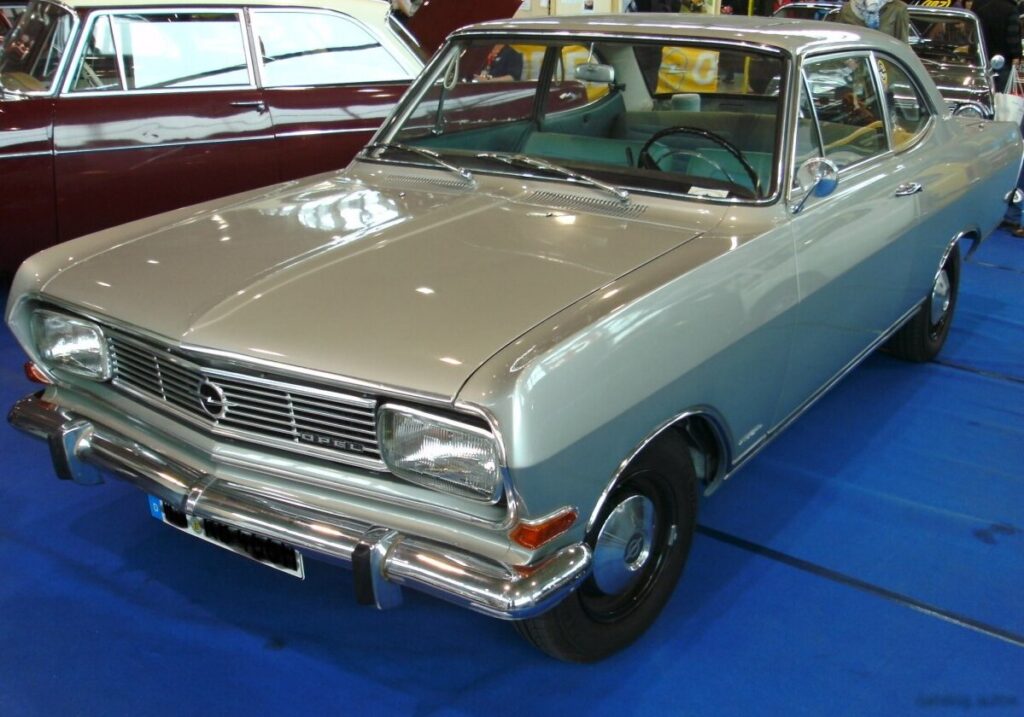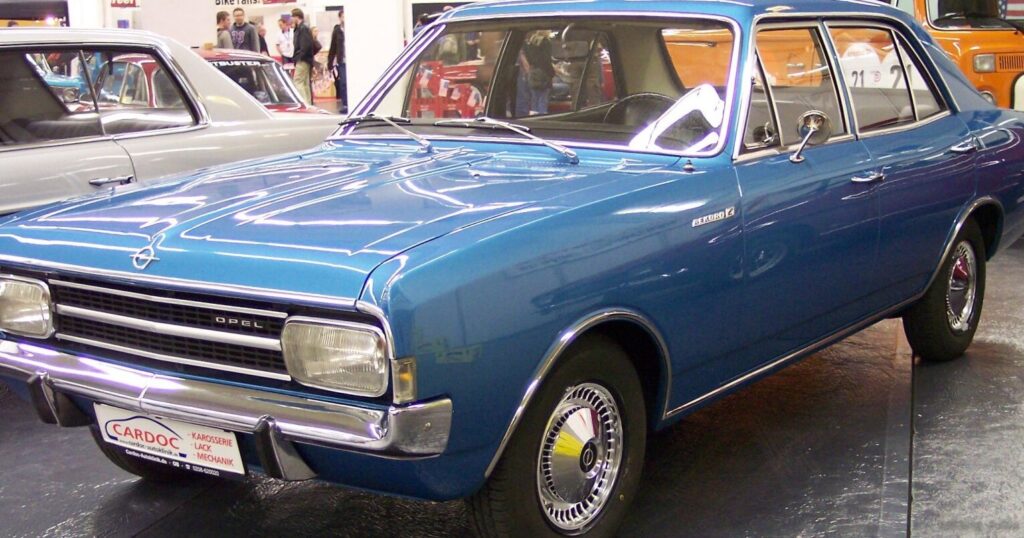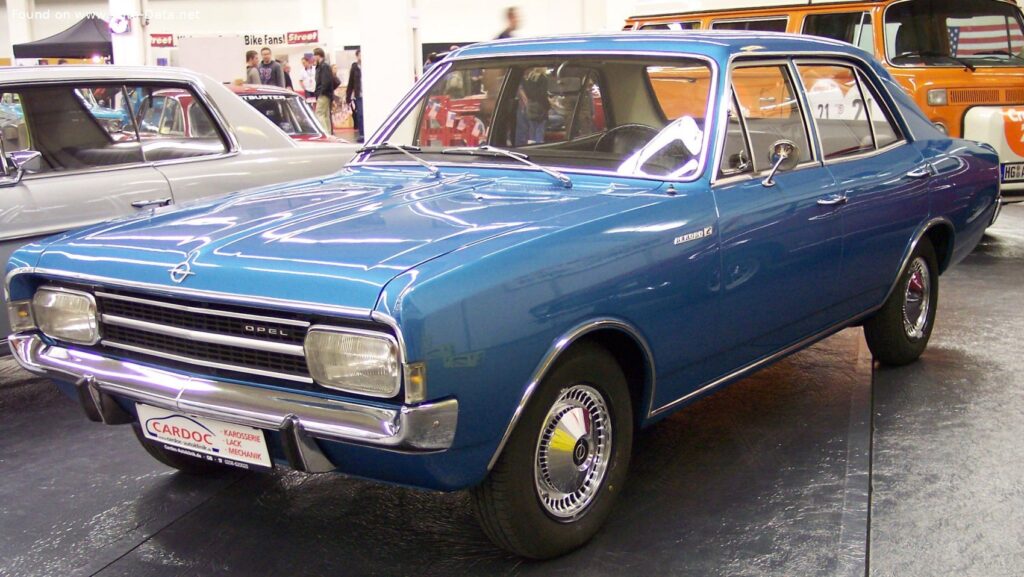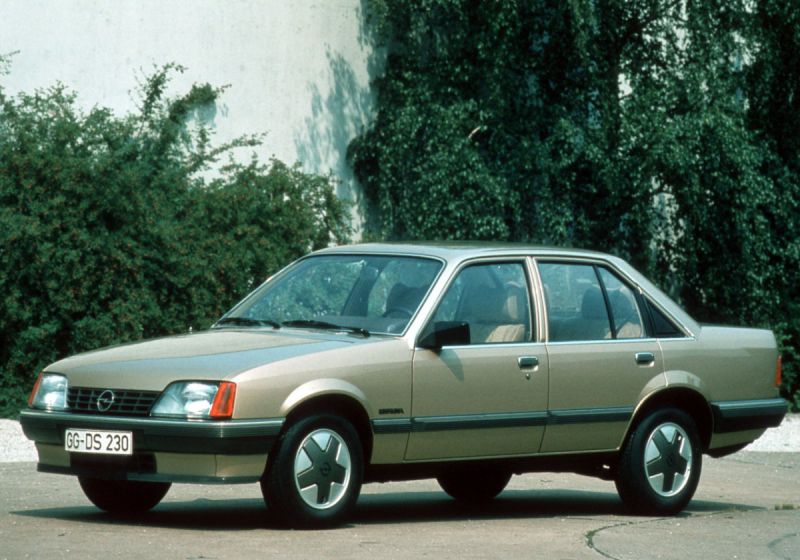
The Opel Rekord E (facelift 1982) represents a significant iteration of a long-running and highly successful executive car series from German automaker Opel, a subsidiary of General Motors. While never officially imported to the United States, the Rekord was a ubiquitous sight on European roads, serving as a reliable family sedan, fleet vehicle, and even a preferred choice for taxi operators for decades. The E-generation, produced from 1977 to 1986, marked a pivotal period for Opel, introducing more aerodynamic styling and refined engineering. The 1982 facelift, specifically, brought subtle yet impactful updates that kept the Rekord competitive in the rapidly evolving European mid-size segment of the early to mid-1980s. This particular variant, the 1.8 S with an automatic transmission, epitomized the comfortable and practical attributes that made the Rekord a household name across the continent.
Opel Rekord E (1982 Facelift) 1.8 S Automatic: A Detailed Overview
The 1.8 S Automatic trim occupied a middle ground within the Rekord E lineup. It wasn’t the base model, which typically featured smaller engines and fewer amenities, nor was it the high-performance or luxury-oriented versions like those equipped with the larger six-cylinder engines. Instead, the 1.8 S Automatic was aimed at buyers seeking a balance of comfort, fuel efficiency, and reasonable performance, coupled with the convenience of an automatic transmission. It was a popular choice for families and business users who prioritized practicality and reliability over outright driving excitement.
Powertrain & Engine Architecture
At the heart of the Opel Rekord E (facelift 1982) 1.8 S was Opel’s robust 1.8-liter (1796 cm3 or 109.6 cu. in.) inline-four engine, designated with the code 18S. This naturally aspirated unit, utilizing a carburetor fuel injection system and a Single Overhead Camshaft (SOHC) valvetrain with two valves per cylinder, was engineered for durability and dependable performance rather than outright speed. It produced a respectable 90 horsepower at 5400 rpm, translating to a power-per-liter figure of 50.1 Hp/l. Torque output stood at 143 Nm (105.47 lb.-ft.), available across a broad and usable band from 3000 to 3400 rpm, making it well-suited for everyday driving conditions. The engine featured a cylinder bore of 3.34 inches and a piston stroke of 3.13 inches, with a compression ratio of 9.2:1.
The carburetor system, while common for the era, was a Solex 32 PHN type. This system, while relatively simple and reliable, wasn’t as efficient or responsive as contemporary fuel injection systems found in some competing models. The SOHC valvetrain, with its two valves per cylinder, represented a compromise between complexity and performance. It offered adequate breathing for the engine’s displacement without the added cost and maintenance requirements of a dual overhead cam design.
Mated to this engine in the specified variant was a 3-speed automatic transmission, a common offering for those seeking driving convenience in the era. This transmission, a General Motors-sourced unit (likely the TH180 or similar), provided smooth shifts but did contribute to a more leisurely acceleration profile compared to manual transmission counterparts. The automatic transmission was designed for durability and ease of use, prioritizing smooth operation over sporty responsiveness.
Driving Characteristics
The Rekord 1.8 S Automatic offered a comfortable and relaxed driving experience. Acceleration from 0 to 60 mph took a calculated 14.7 seconds, reaching a maximum speed of 103.77 mph. These figures were considered adequate for a family sedan of its time, prioritizing comfort and ease of use over sporty dynamics. The 3-speed automatic transmission meant that the engine often operated at higher rpm during highway cruising, which could contribute to increased fuel consumption and engine noise compared to a manual transmission or a more modern automatic with additional gears.
The broad torque curve of the 1.8-liter engine helped to mitigate the effects of the automatic transmission. The engine provided sufficient power for everyday driving situations, such as merging onto highways or overtaking slower vehicles, although it required a deliberate kickdown of the throttle to initiate a downshift. Compared to the manual transmission versions of the Rekord 1.8 S, the automatic variant felt noticeably slower, particularly in terms of acceleration. However, the convenience of the automatic transmission was a significant draw for many buyers.
Equipment & Trim Levels
The 1.8 S trim level offered a reasonable level of standard equipment. Typically, it included features such as cloth upholstery, a basic radio, and manual windows. The interior was designed for durability and practicality, with hard-wearing materials and a functional layout. Optional extras available for the 1.8 S included power windows, a more advanced radio with cassette player, upgraded upholstery, and a sunroof. Air conditioning was also available as an option, although it wasn’t standard equipment.
The dashboard configuration was relatively simple, with clearly labeled gauges for speed, fuel level, coolant temperature, and battery voltage. The steering wheel was typically made of plastic, although leather-wrapped steering wheels were available as an option. The overall interior ambiance was one of understated functionality, reflecting the Rekord’s role as a practical and reliable family car.
Chassis & Braking
The Rekord E featured a traditional rear-wheel-drive architecture, a hallmark of Opel’s larger models for decades. This setup was favored for its predictable handling characteristics and robustness. The front suspension utilized independent coil springs and wishbones, while the rear suspension employed a live axle with leaf springs. This suspension setup provided a comfortable ride, although it wasn’t particularly sporty or responsive.
The front brakes were ventilated discs, offering effective stopping power, while the rear utilized drum brakes, a common configuration for mid-size cars of the period. The drum brakes, while adequate for normal driving conditions, weren’t as effective as disc brakes in terms of heat dissipation and stopping power, particularly during repeated hard braking. The steering was a recirculating ball system, which provided a relatively heavy but precise steering feel.
Market Reception & Comparison
Critics generally viewed the Opel Rekord E 1.8 S Automatic as a competent and reliable family sedan. It was praised for its spacious interior, comfortable ride, and robust build quality. However, it was also criticized for its relatively slow acceleration and somewhat dated technology, particularly the carburetor fuel injection system and the 3-speed automatic transmission. Fuel economy, rated at 27 US mpg (8.7 l/100 km) combined, was considered reasonable for a carbureted, rear-wheel-drive vehicle of its size.
Compared to other trims in the Rekord lineup, the 1.8 S Automatic offered a good balance of price and features. The smaller-engined models were more affordable but lacked the power and refinement of the 1.8 S. The larger-engined models, such as the 2.0-liter and 2.2-liter versions, offered more performance but were more expensive to purchase and operate. In terms of reliability, the 1.8 S Automatic was generally considered to be a very dependable powertrain, with few major issues reported.
Technical Specifications
| Category | Specification |
| Brand | Opel |
| Model | Rekord E (facelift 1982) |
| Type | 1.8 S (90 Hp) Automatic |
| Production Start | September, 1982 |
| Production End | August, 1986 |
| Body Type | Sedan |
| Seats | 5 |
| Doors | 4 |
| Fuel Type | Petrol (Gasoline) |
| Fuel Consumption (Combined) | 27 US mpg (8.7 l/100 km) |
| Acceleration 0-60 mph | 14.7 sec |
| Maximum Speed | 103.77 mph (167 km/h) |
| Power | 90 Hp @ 5400 rpm |
| Torque | 105.47 lb.-ft. (143 Nm) @ 3000-3400 rpm |
| Engine Displacement | 1.8 liters (1796 cm3 / 109.6 cu. in.) |
| Number of Cylinders | 4, Inline |
| Valvetrain | SOHC |
| Fuel Injection System | Carburetor |
| Transmission | 3 gears, Automatic |
| Drivetrain | Rear-wheel drive |
| Front Brakes | Ventilated discs |
| Rear Brakes | Drum |
| Kerb Weight | 2513.27 lbs. (1140 kg) |
| Max. Weight | 3648.65 lbs. (1655 kg) |
| Trunk Space (Minimum) | 17.3 cu. ft. (490 l) |
| Fuel Tank Capacity | 17.17 US gal (65 l) |
| Length | 183.15 in. (4652 mm) |
| Width | 67.95 in. (1726 mm) |
| Height | 55.91 in. (1420 mm) |
| Wheelbase | 105.04 in. (2668 mm) |
| Front Track | 56.5 in. (1435 mm) |
| Rear Track | 55.59 in. (1412 mm) |
| Ride Height | 5.51 in. (140 mm) |
| Drag Coefficient (Cd) | 0.36 |
| Minimum Turning Circle | 35.43 ft. (10.8 m) |
Legacy
The Opel Rekord E (facelift 1982), particularly in its 1.8 S Automatic guise, cemented its reputation as a highly dependable and practical vehicle in the fiercely competitive European market. The powertrain, while not particularly exciting, proved to be remarkably durable. Today, well-maintained examples are sought after by classic car enthusiasts and collectors. The 18S engine, with its simple design, remains relatively easy to maintain and repair, making it a popular choice for those looking for a classic European car that isn’t overly complicated. While rust can be a concern with older European cars, the Rekord E’s robust construction helps it to withstand the ravages of time. The 1.8 S Automatic represents a sweet spot in the Rekord E lineup, offering a good balance of affordability, reliability, and comfort.