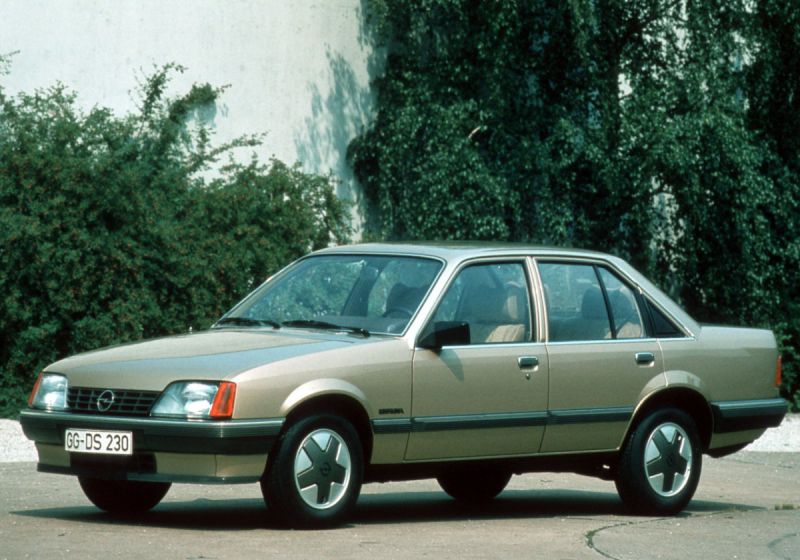
The Opel Rekord E (Facelift 1982) 1.8i CAT (100 Hp) Automatic represents a significant chapter in European automotive history. As a long-standing staple in the mid-size segment for General Motors’ German subsidiary, Opel, the Rekord was synonymous with dependable, practical family transport across the continent. The specific variant, produced from August 1985 to August 1986, arrived at a pivotal moment, showcasing Opel’s efforts to integrate modern emissions control technology while maintaining its established reputation for robust engineering. This model, a four-door sedan, embodies the conventional European family car of the mid-1980s, prioritizing comfort, space, and a straightforward driving experience over outright performance or luxury. It served as a bridge between older automotive traditions and the emerging demands for greater efficiency and environmental responsibility. It was built on the 1HX0/A3 platform, shared with other GM models of the era.
Powertrain & Engine Architecture
Under the hood, the Opel Rekord E (facelift 1982) 1.8i CAT (100 Hp) Automatic featured a 1.8-liter (1796 cm3 or 109.6 cu. in.) inline-four gasoline engine, designated C18NV. This naturally aspirated unit employed a Single Overhead Camshaft (SOHC) valvetrain with two valves per cylinder, a common and reliable configuration for the era. Power output was a respectable 100 horsepower at 5800 rpm, delivering a specific power output of 55.7 horsepower per liter. Torque peaked at 103.26 lb-ft (140 Nm) at a relatively low 3000 rpm, indicating a focus on usable mid-range pull for everyday driving rather than high-revving performance.
A notable inclusion for this particular model was the “CAT” designation, signifying the presence of a catalytic converter. This was a forward-thinking feature for the mid-1980s, as emissions regulations began to tighten in various European markets, even before widespread mandates. The multi-port manifold injection system, a Bosch Jetronic system, ensured more precise fuel delivery compared to carbureted predecessors, contributing to improved efficiency and smoother operation. The engine utilized a conventional distributor ignition system. The C18NV engine was known for its relative simplicity and ease of maintenance, making it a popular choice for fleet operators and private buyers alike.
Power was sent to the rear wheels via a 3-speed automatic transmission, a common choice for those seeking convenience and a relaxed driving experience. This transmission, a GM-sourced unit, was known for its durability but lacked the refinement of more modern automatic gearboxes. It featured a torque converter for smooth engagement and a relatively conservative gear ratio spread designed for fuel economy and comfortable cruising.
Driving Characteristics
The Opel Rekord E 1.8i CAT Automatic offered a driving experience geared towards comfort and ease of use. The 3-speed automatic transmission, while reliable, resulted in somewhat leisurely acceleration. The gear ratios were optimized for cruising, with a relatively tall final drive. This meant that while highway speeds were easily maintained, overtaking maneuvers required careful planning. Compared to the available 5-speed manual transmission, the automatic version sacrificed some responsiveness and fuel efficiency. The manual transmission, paired with the same 1.8-liter engine, offered a noticeably more engaging driving experience and slightly improved performance.
The rear-wheel-drive layout provided balanced handling, although it wasn’t particularly sporty. The suspension, tuned for comfort, absorbed bumps and imperfections in the road well, providing a smooth ride for passengers. The steering was relatively light and precise, making it easy to maneuver in urban environments. The overall driving experience was typical of a mid-size European sedan of the 1980s – predictable, comfortable, and reliable.
Equipment & Trim Levels
The Opel Rekord E (facelift 1982) 1.8i CAT Automatic occupied a mid-range position within the Rekord lineup. It was positioned above the base models with smaller engines and fewer features, but below the more powerful and luxurious versions equipped with the 2.0-liter or 2.2-liter engines. Standard equipment included cloth upholstery, a basic AM/FM radio, and manual windows and door locks. Power steering was often included, but air conditioning was typically an optional extra.
Optional extras available for this trim included air conditioning, a sunroof, upgraded audio systems, and metallic paint finishes. Interior upholstery could be upgraded to velour for a more premium feel. The dashboard configuration was relatively simple, with clear analog gauges for speed, fuel level, coolant temperature, and battery voltage. The instrument cluster featured a central information display that could show trip mileage and other basic information.
Chassis & Braking
The Rekord E featured a conventional chassis design with a body-on-frame construction. The suspension consisted of independent front suspension with MacPherson struts and a solid rear axle with leaf springs. This setup provided a comfortable ride but wasn’t particularly sophisticated in terms of handling. The steering was a recirculating ball system, offering adequate precision but lacking the feel of more modern rack-and-pinion steering.
The braking system comprised ventilated discs at the front and drum brakes at the rear. This configuration was typical for vehicles in this class during the 1980s. While adequate for normal driving conditions, the drum brakes at the rear offered less stopping power and were more prone to fade under heavy use. The Rekord E did not feature anti-lock brakes (ABS), which were still a relatively rare feature at the time.
Market Reception & Comparison
Critics generally viewed the Opel Rekord E 1.8i CAT Automatic as a competent and reliable family car. It was praised for its spacious interior, comfortable ride, and robust build quality. However, it was also criticized for its somewhat lackluster performance and the lack of modern features compared to some of its competitors. Fuel economy was considered reasonable for a vehicle of its size and class, but it wasn’t a standout performer in this regard.
Compared to other trims in the Rekord lineup, the 1.8i CAT Automatic offered a good balance between performance, fuel economy, and price. The smaller-engined models were more affordable but lacked the power needed for comfortable highway cruising. The larger-engined models offered more performance but were more expensive to purchase and operate. The Rekord E 1.8i CAT Automatic appealed to buyers who prioritized practicality, reliability, and a comfortable driving experience over outright performance or luxury.
Technical Specifications
| Category | Specification |
| General Information | |
| Brand | Opel |
| Model | Rekord |
| Generation | Rekord E (facelift 1982) |
| Type (Engine) | 1.8i CAT (100 Hp) Automatic |
| Start of Production | August, 1985 |
| End of Production | August, 1986 |
| Powertrain Architecture | Internal Combustion engine |
| Body Type | Sedan |
| Seats | 5 |
| Doors | 4 |
| Performance Specs | |
| Fuel Consumption (Combined) | 10.1 l/100 km |
| Fuel Type | Petrol (Gasoline) |
| Acceleration 0 – 62 mph (0-100 km/h) | 15 sec |
| Acceleration 0 – 60 mph (Calculated) | 14.3 sec |
| Maximum Speed | 172 km/h |
| Engine Specs | |
| Power | 100 Hp @ 5800 rpm |
| Torque | 140 Nm @ 3000 rpm |
| Engine Model/Code | C18NV |
| Engine Displacement | 1796 cm3 |
| Number of Cylinders | 4 Inline |
| Fuel Injection System | Multi-port manifold injection |
| Valvetrain | SOHC |
| Space, Volume, and Weights | |
| Kerb Weight (Curb Weight) | 1145 kg |
| Trunk (Boot) Space – Minimum | 490 l |
| Dimensions | |
| Length | 4652 mm |
| Width | 1726 mm |
| Height | 1420 mm |
| Wheelbase | 2668 mm |
Legacy
The Opel Rekord E, and specifically the 1.8i CAT Automatic variant, has proven to be a relatively reliable vehicle over the long term. The C18NV engine is known for its durability, and the automatic transmission, while not particularly sophisticated, is also generally robust. However, like all vehicles of this age, they are susceptible to rust, particularly in areas with harsh winters. Finding parts can sometimes be challenging, but a dedicated network of Opel enthusiasts and parts suppliers exists to support owners.
In the used car market today, the Rekord E 1.8i CAT Automatic is considered a classic car and is gaining popularity among collectors and enthusiasts. Well-maintained examples are becoming increasingly rare and can command a premium price. The car’s simple mechanics and relatively low running costs make it an appealing option for those looking for a classic European driving experience. It represents a tangible link to a bygone era of automotive engineering, characterized by durability, practicality, and a focus on the fundamentals of driving.