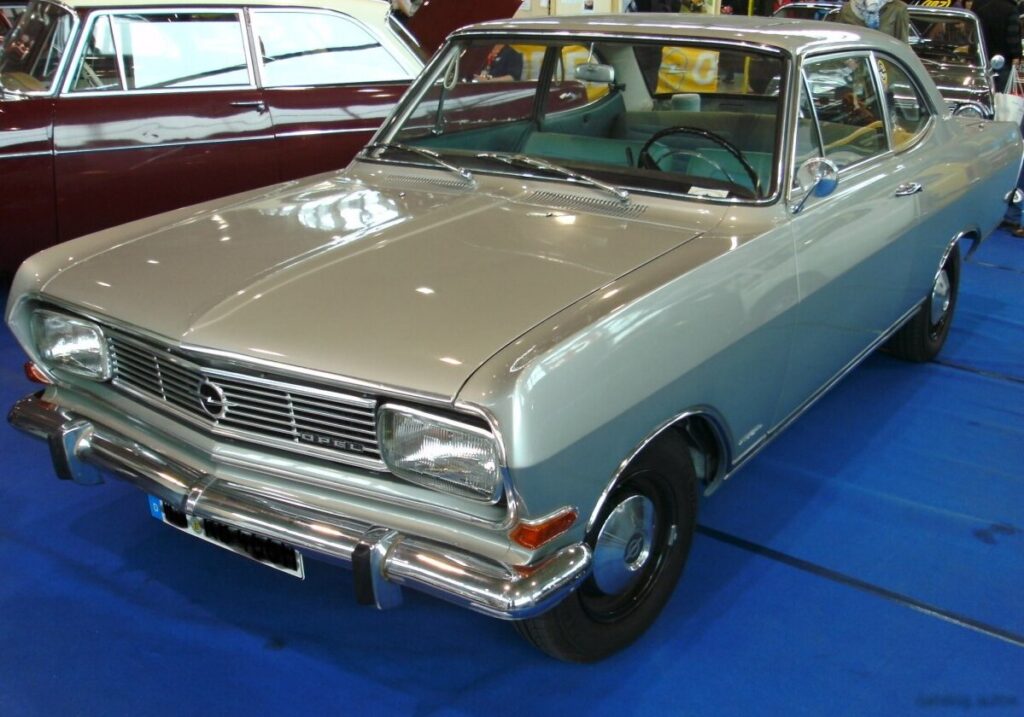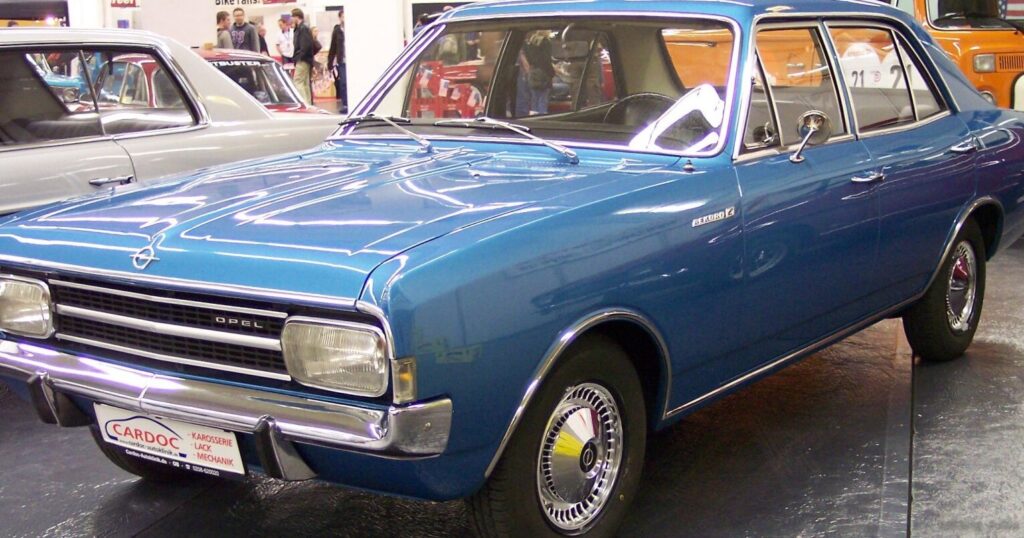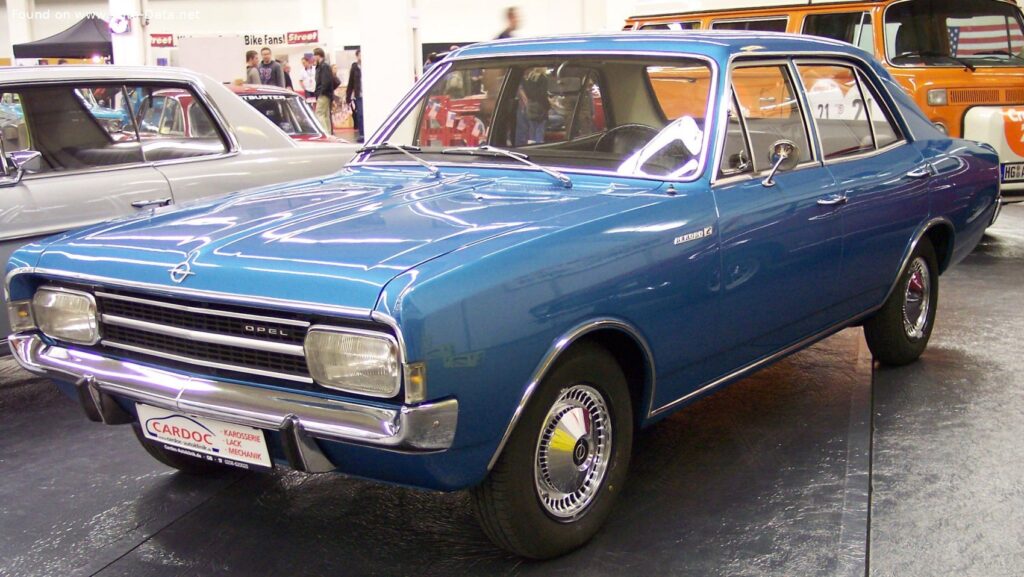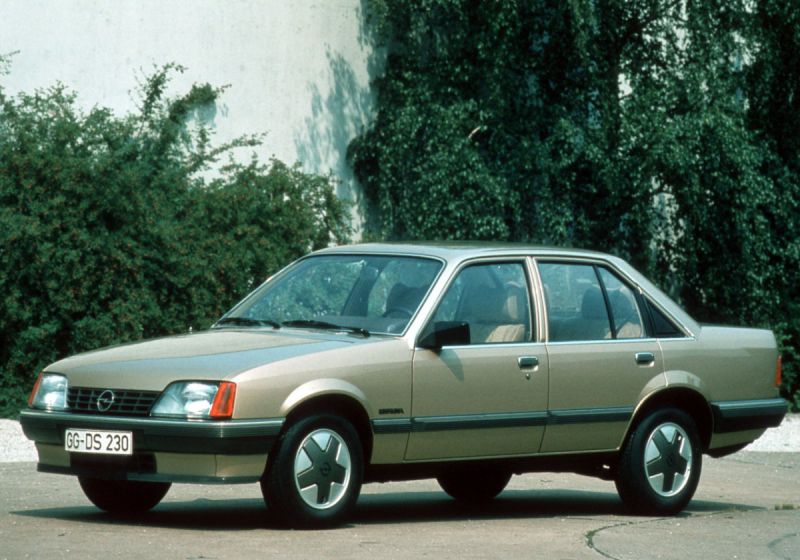
The Opel Rekord E (facelift 1982) 2.2 D (71 hp) represents a significant variant within the final generation of the long-running Opel Rekord series. Produced from August 1983 to September 1986, this four-door sedan was a mainstay of European roads, particularly in Germany, serving as a dependable family vehicle, a common fleet choice, and a popular taxi. While never officially sold in the United States, the Rekord E 2.2 D occupied a crucial position in Opel’s lineup, emphasizing fuel efficiency and durability during a period of increasing fuel costs and economic uncertainty. It was built on the GM X-platform, shared with other European Opel and Vauxhall models.
The Rekord E Facelift and the 2.2 D Variant
The Opel Rekord E, initially launched in 1977, underwent a substantial facelift in 1982. This update brought a more streamlined and modern aesthetic to the vehicle, addressing criticisms of the earlier design and improving its aerodynamic efficiency. The introduction of the 2.2 D model in the post-facelift series further solidified Opel’s commitment to diesel power, responding to growing consumer demand for economical vehicles. The 2.2 D was positioned as the entry-level diesel offering within the Rekord E range, slotting below the more powerful 2.3 D variants. It targeted buyers prioritizing practicality, low running costs, and a comfortable ride over sporty performance.
Powertrain & Engine Architecture
The heart of the Opel Rekord E (facelift 1982) 2.2 D (71 hp) is its 23D inline four-cylinder diesel engine. This naturally aspirated engine boasts a displacement of 2.26 liters (2260 cc or 137.91 cubic inches). The engine was designed with a focus on robustness and longevity, utilizing a cast iron block and a relatively simple mechanical fuel injection system. Unlike later diesels, it did not employ turbocharging or sophisticated electronic controls. The fuel injection system was a Bosch inline plunger pump, delivering fuel directly into the combustion chambers. The engine features a single overhead camshaft (SOHC) valvetrain operating two valves per cylinder. This configuration contributed to the engine’s smooth operation and relatively quiet running for a diesel of its era.
Power is transmitted to the rear wheels through a five-speed manual transmission. This transmission was a standard offering for the 2.2 D model, providing a balance between fuel efficiency and drivability. The gear ratios were optimized for relaxed cruising and efficient acceleration. While an automatic transmission was available on some Rekord E models, it was not typically paired with the 2.2 D engine due to the engine’s relatively low power output and the desire to maximize fuel economy. The rear axle employed a conventional solid axle design with a limited-slip differential, enhancing traction and stability.
Driving Characteristics
The driving experience in the Opel Rekord E 2.2 D is characterized by its relaxed and comfortable nature. The 71 hp output and 99.57 lb-ft of torque provide adequate power for everyday driving, but acceleration is not its strong suit. The engine delivers its peak torque at a low 2400 rpm, making it well-suited for navigating city traffic and maintaining comfortable cruising speeds on the Autobahn. The five-speed manual transmission allows drivers to keep the engine within its optimal operating range, maximizing fuel efficiency and minimizing noise. Compared to the higher-output 2.3 D models, the 2.2 D feels noticeably less powerful, particularly when accelerating or climbing hills. However, its lighter weight and simpler mechanicals contribute to a more nimble and responsive feel. The suspension, tuned for comfort, absorbs bumps and imperfections in the road effectively, providing a smooth and stable ride.
Equipment & Trim Levels
The Opel Rekord E (facelift 1982) 2.2 D was typically equipped with a modest level of standard features, reflecting its position as an entry-level model. Standard equipment generally included cloth upholstery, a basic instrument panel with analog gauges, and manually adjustable seats. Power steering and central locking were often optional extras. The interior design was functional and straightforward, prioritizing practicality and durability over luxury. The dashboard layout was typical of European cars of the era, with a clear and concise arrangement of controls. Optional extras included a sunroof, upgraded audio systems, and more luxurious upholstery options. The exterior trim was relatively simple, with black plastic bumpers and chrome accents. Wheel covers were often included as standard equipment, with optional alloy wheels available for those seeking a more stylish appearance.
Chassis & Braking
The Rekord E 2.2 D utilizes a conventional body-on-frame construction, providing a robust and durable chassis. The front suspension consists of MacPherson struts with stabilizer bar, while the rear suspension employs a solid axle with leaf springs. This setup prioritizes ride comfort and load-carrying capacity. The braking system features disc brakes on the front wheels and drum brakes on the rear wheels. This configuration was common for vehicles in this class during the early 1980s. The braking performance is adequate for everyday driving, but it lacks the stopping power of more modern braking systems. Power-assisted braking was often an optional extra.
Market Reception & Comparison
The Opel Rekord E 2.2 D received generally positive reviews from automotive critics, who praised its fuel efficiency, durability, and comfortable ride. However, its modest performance was often criticized. Compared to the gasoline-powered Rekord E models, the 2.2 D offered significantly better fuel economy but lacked the same level of acceleration and refinement. Compared to the 2.3 D variants, the 2.2 D was more affordable but offered less power. The Rekord E 2.2 D competed with other European family sedans, such as the Ford Taunus, Volkswagen Passat, and Peugeot 505. It offered a compelling combination of practicality, reliability, and affordability, making it a popular choice for budget-conscious buyers.
Technical Specifications
| Engine Type | Inline Four-Cylinder Diesel |
| Displacement | 2.26 Liters (2260 cc / 137.91 cu in) |
| Horsepower | 71 hp @ 4400 rpm |
| Torque | 99.57 lb-ft @ 2400 rpm (135 Nm) |
| Fuel Injection | Bosch Inline Plunger Pump |
| Valvetrain | SOHC, 2 Valves per Cylinder |
| Transmission | 5-Speed Manual |
| Drivetrain | Rear-Wheel Drive |
| Brakes (Front) | Disc |
| Brakes (Rear) | Drum |
| Weight | Approximately 2866 lbs (1300 kg) |
| Top Speed | 99.42 mph (160 km/h) |
| 0-60 mph | Approximately 19 seconds |
Legacy
The Opel Rekord E 2.2 D, while not a performance icon, has earned a reputation for its exceptional reliability and longevity. The robust diesel engine and straightforward mechanicals contribute to its durability. Today, well-maintained examples are sought after by classic car enthusiasts and collectors. The 23D engine, while relatively simple by modern standards, is known for its ability to withstand high mileage with proper maintenance. The Rekord E 2.2 D remains a testament to Opel’s engineering prowess and its commitment to building dependable and practical vehicles. In the used car market, these vehicles are often valued for their simplicity, affordability, and potential for restoration. Parts availability can be a challenge, but a dedicated community of enthusiasts continues to support the preservation of these classic Opels.