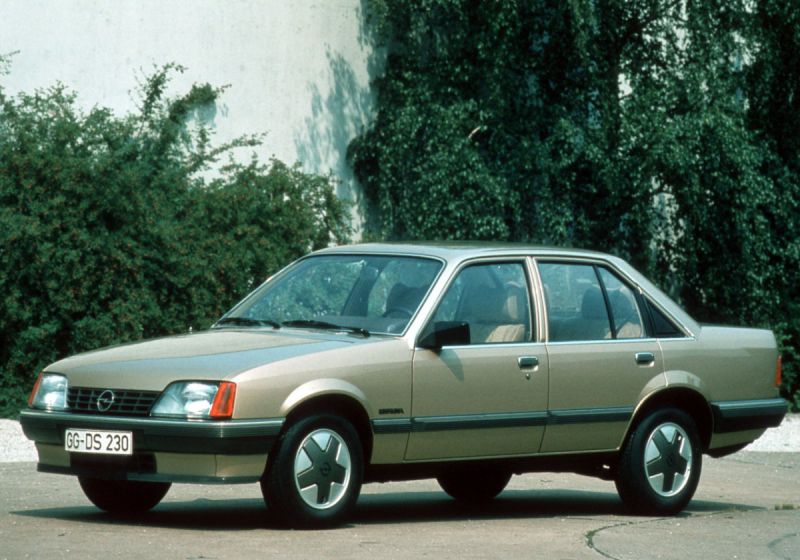
The Opel Rekord E (facelift 1982) 2.2 E (115 Hp) Automatic represents a significant chapter in European automotive history. As a cornerstone of Opel’s lineup, a prominent German manufacturer under the General Motors (GM) umbrella, the Rekord served as a popular mid-size to executive sedan and wagon across Europe for decades. The generation E, specifically the variant produced between September 1984 and August 1986, with its 2.2 E (115 Hp) Automatic powertrain, showcased Opel’s commitment to offering robust, comfortable, and well-equipped vehicles for the mainstream European market. While never officially sold in the United States under the Opel badge, the Rekord’s engineering and design philosophies often mirrored those found in contemporary GM models globally, adapted for European tastes and regulations. This particular model, the Opel Rekord E (facelift 1982) 2.2 E (115 Hp) Automatic, was a practical and capable four-door sedan, offering a blend of performance, economy, and traditional rear-wheel-drive dynamics.
Powertrain & Engine Architecture
At the heart of the Opel Rekord E (facelift 1982) 2.2 E (115 Hp) Automatic was its 2.2-liter (2197 cm3 or 134.07 cu. in.) inline four-cylinder engine, designated by the engine code 22E. This naturally aspirated gasoline (petrol) unit was a testament to Opel’s engineering prowess during the era, featuring a Single Overhead Camshaft (SOHC) valvetrain with two valves per cylinder. Fuel delivery was managed by a multi-port manifold injection system, a modern feature for the mid-1980s that contributed to improved fuel efficiency and smoother power delivery compared to carbureted setups. The Bosch Jetronic fuel injection system was commonly used, providing precise fuel metering for optimal combustion.
The engine produced a respectable 115 horsepower at 4800 rpm, delivering a power-to-liter ratio of 52.3 horsepower per liter. Torque output stood at 182 Nm, or 134.24 lb.-ft., available at a relatively low 2800 rpm, which ensured strong pulling power and easy drivability in everyday conditions. This power was channeled to the rear wheels via a three-speed automatic transmission, a common offering in European cars of this period, prioritizing comfort and ease of use over outright performance or complex gearing. The automatic transmission was typically a GM-sourced unit, known for its durability and relatively smooth operation, though it lacked the sophistication of more modern automatic gearboxes.
Driving Characteristics
The Opel Rekord E 2.2 E Automatic offered a comfortable and predictable driving experience. While not a sports sedan, the 115 hp engine provided adequate power for highway cruising and overtaking maneuvers. The three-speed automatic transmission, while not offering the quickest acceleration, provided smooth gear changes and contributed to a relaxed driving style. Compared to the manual transmission versions of the Rekord E, the automatic variant sacrificed some responsiveness and fuel efficiency, but gained in ease of use, particularly in urban environments. The rear-wheel-drive layout provided balanced handling, although it wasn’t as nimble as front-wheel-drive competitors. The gear ratios were optimized for cruising, with a relatively tall final drive ratio prioritizing fuel economy at higher speeds. Acceleration from 0 to 60 mph (0-97 km/h) was calculated at 10.9 seconds, and the vehicle could reach a maximum speed of 112.47 mph (181 km/h).
Equipment & Trim Levels
The 2.2 E Automatic trim level represented a mid-range offering within the Rekord E lineup. It was positioned above the base models with smaller engines and fewer features, but below the more luxurious and powerful variants. Standard features included hydraulic power steering, which made maneuvering the 2645.55 lbs. (1200 kg) vehicle easier. Interior appointments typically included cloth upholstery, although optional upgrades to velour or leather were available. The dashboard featured a straightforward layout with analog gauges for speed, tachometer, fuel level, coolant temperature, and clock. A basic radio was standard, with options for upgraded sound systems and cassette players.
Optional extras for the 2.2 E Automatic included an Anti-lock Braking System (ABS), a cutting-edge feature for a non-luxury vehicle in the mid-1980s, significantly enhancing braking performance and control in adverse conditions. Electric windows, central locking, and a sunroof were also available as optional extras. The availability of these options allowed buyers to customize their Rekord E to suit their individual needs and preferences.
Chassis & Braking
The Opel Rekord E 2.2 E Automatic featured a robust chassis designed for comfort and durability. The suspension consisted of an independent McPherson type at the front and a coil spring arrangement at the rear, providing a comfortable yet competent ride quality, well-suited for varied European road conditions. The front suspension incorporated anti-roll bar to reduce body roll during cornering. Braking was handled by ventilated discs at the front and traditional drum brakes at the rear. The drum brakes at the rear were a cost-saving measure, but provided adequate stopping power for most driving situations. The availability of ABS significantly improved braking performance, particularly on slippery surfaces. The steering system was a recirculating ball type, providing a relatively direct steering feel.
Market Reception & Comparison
Critics generally viewed the Opel Rekord E 2.2 E Automatic as a competent and reliable mid-size sedan. It was praised for its spacious interior, comfortable ride, and robust build quality. However, some critics noted that the three-speed automatic transmission felt somewhat dated compared to more modern automatic gearboxes with more gears. Fuel economy was considered reasonable for a vehicle of its size and class, rated at 26.4 US mpg (8.9 l/100 km) in combined driving. Compared to other trims in the Rekord lineup, the 2.2 E Automatic offered a good balance of performance and fuel efficiency. The smaller-engined models were more economical but lacked the power for comfortable highway cruising, while the larger-engined models offered more performance but at the expense of fuel economy. Compared to competitors like the Ford Granada and Peugeot 505, the Rekord E offered a similar level of comfort and practicality, often at a slightly lower price point.
Technical Specifications
| General Information | |
| Brand | Opel |
| Model | Rekord |
| Generation | Rekord E (facelift 1982) |
| Type (Engine) | 2.2 E (115 Hp) Automatic |
| Start of Production | September, 1984 |
| End of Production | August, 1986 |
| Powertrain Architecture | Internal Combustion engine |
| Body Type | Sedan |
| Seats | 5 |
| Doors | 4 |
| Performance Specs | |
| Fuel Consumption (combined) | 8.9 l/100 km (26.4 US mpg) |
| Fuel Type | Petrol (Gasoline) |
| Acceleration 0 – 60 mph | 10.9 sec |
| Maximum Speed | 112.47 mph (181 km/h) |
| Weight-to-Power Ratio | 10.4 kg/Hp (95.8 Hp/tonne) |
| Weight-to-Torque Ratio | 6.6 kg/Nm (151.7 Nm/tonne) |
| Engine Specs | |
| Power | 115 Hp @ 4800 rpm |
| Power per Liter | 52.3 Hp/l |
| Torque | 182 Nm (134.24 lb.-ft.) @ 2800 rpm |
| Engine Layout | Front, Longitudinal |
| Engine Model/Code | 22E |
| Engine Displacement | 2197 cm3 (134.07 cu. in.) |
| Number of Cylinders | 4 |
| Engine Configuration | Inline |
| Cylinder Bore | 95 mm (3.74 in.) |
| Piston Stroke | 77.5 mm (3.05 in.) |
| Compression Ratio | 9.4:1 |
| Valves per Cylinder | 2 |
| Fuel Injection System | Multi-port manifold injection |
| Engine Aspiration | Naturally aspirated engine |
| Valvetrain | SOHC |
| Engine Oil Capacity | 3.8 l (4.02 US qt) |
| Coolant Capacity | 10 l (10.57 US qt) |
| Dimensions, Volume, and Weights | |
| Kerb Weight | 1200 kg (2645.55 lbs.) |
| Max. Weight | 1705 kg (3758.88 lbs.) |
| Max Load | 505 kg (1113.33 lbs.) |
| Trunk (boot) Space – Minimum | 490 l (17.3 cu. ft.) |
| Fuel Tank Capacity | 65 l (17.17 US gal) |
| Length | 4652 mm (183.15 in.) |
| Width | 1726 mm (67.95 in.) |
| Height | 1420 mm (55.91 in.) |
| Wheelbase | 2668 mm (105.04 in.) |
| Front Track | 1435 mm (56.5 in.) |
| Rear Track | 1412 mm (55.59 in.) |
| Ride Height (Ground Clearance) | 140 mm (5.51 in.) |
| Drag Coefficient (Cd) | 0.36 |
| Minimum Turning Circle | 10.8 m (35.43 ft.) |
| Drivetrain, Brakes, and Suspension Specs | |
| Drivetrain Architecture | The Internal Combustion Engine (ICE) drives the rear wheels of the vehicle. |
| Drive Wheel | Rear wheel drive |
| Number of Gears and Type of Gearbox | 3 gears, automatic transmission |
| Front Suspension | Independent type McPherson |
| Rear Suspension | Coil spring |
| Front Brakes | Ventilated discs |
| Rear Brakes | Drum |
| Assisting Systems | ABS (Anti-lock braking system) |
| Power Steering | Hydraulic Steering |
Legacy
The Opel Rekord E, particularly its facelifted version from 1982, holds a significant place in the European automotive landscape of the 1980s. It was a quintessential mid-size executive car, known for its reliability, spaciousness, and straightforward engineering. In an era where European manufacturers were fiercely competitive, the Rekord E carved out a strong niche as a practical, no-nonsense vehicle suitable for both family duties and corporate fleets. Its robust construction and ease of maintenance contributed to its reputation as a durable workhorse, a quality highly valued by consumers. The 2.2 E engine variant, with its 115 horsepower, placed it among the more capable options within the Rekord lineup, offering a good balance of performance for highway cruising and sufficient power for overtaking, without compromising too heavily on fuel economy. The availability of a 3-speed automatic transmission further broadened its appeal, especially among buyers who prioritized comfort and convenience in urban driving.
Today, well-preserved examples of the Opel Rekord E (facelift 1982) 2.2 E (115 Hp) Automatic are appreciated by classic car enthusiasts for their classic 1980s styling, robust mechanics, and a touch of nostalgic charm. The 22E engine is known for its durability, and with proper maintenance, can provide many years of reliable service. While parts availability can be a challenge, a dedicated community of Opel enthusiasts ensures that spare parts and technical expertise are still accessible. The Rekord E remains a testament to Opel’s commitment to building practical, dependable, and comfortable vehicles for the European market.