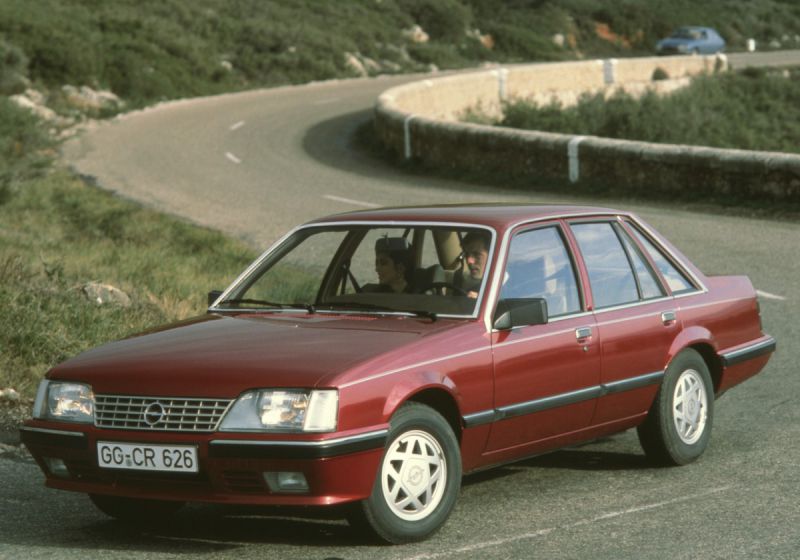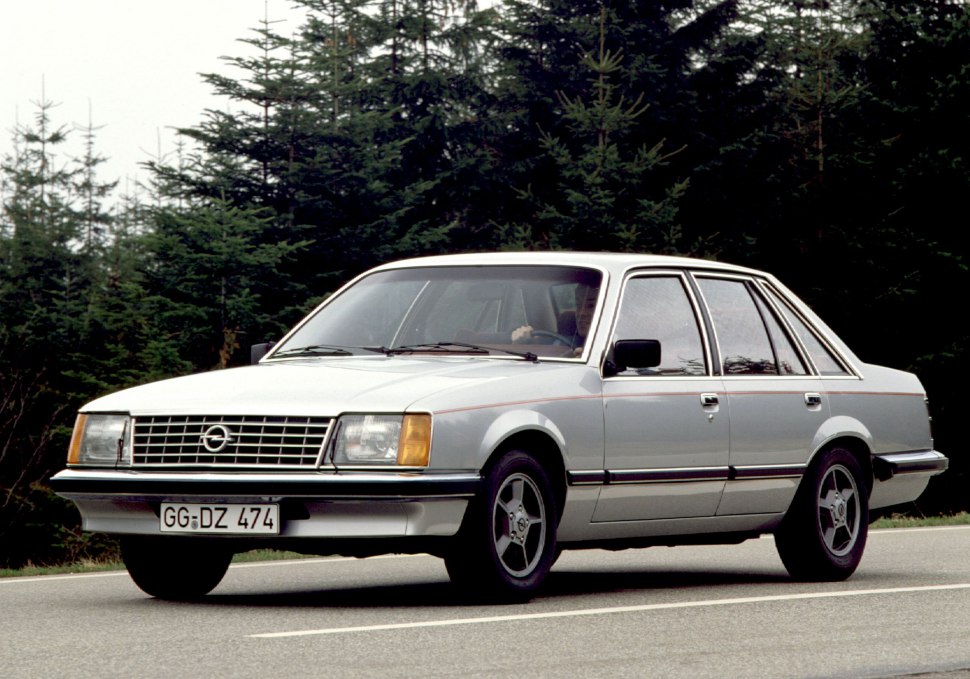
The Opel Senator A 3.0 (150 Hp), produced between 1978 and 1982, represents Opel’s ambitious foray into the executive car segment, primarily targeting the European market. As the flagship model in Opel’s lineup, the Senator A was designed to offer a compelling blend of comfort, performance, and German engineering, aiming to compete with established luxury sedans from rivals like Mercedes-Benz and BMW. Based on the Opel Rekord E platform but with a stretched wheelbase and more luxurious appointments, the Senator A provided a sophisticated and spacious alternative for buyers seeking a premium driving experience without necessarily opting for the more expensive offerings from its direct competitors. This particular variant, equipped with a 3.0-liter inline-six engine delivering 150 horsepower, was a popular choice, striking a balance between robust performance and everyday usability for its era.
While never officially sold in the United States under the Opel badge, the Senator A played a crucial role in shaping Opel’s image as a capable manufacturer of larger, more prestigious vehicles in its primary European markets. Its design, engineering, and market positioning offer a fascinating glimpse into the automotive landscape of the late 1970s and early 1980s, highlighting the evolution of European executive sedans.
Engine & Performance of the Opel Senator A
At the heart of the Opel Senator A 3.0 (150 Hp) was a robust 2,969 cm³ (181.18 cubic inch) inline-six gasoline engine, designated with the model code 30H. This powerplant was a prime example of Opel’s engineering prowess during the period, featuring a naturally aspirated design with a carburetor fuel injection system. The engine utilized a “Cam-in-Head” (CIH) valvetrain, a characteristic Opel design that positioned the camshaft directly above the cylinder head, operating the valves via short rocker arms. This configuration offered a good compromise between the simplicity of pushrod engines and the performance benefits of overhead camshaft designs.
The engine produced a respectable 150 horsepower at 5,200 rpm, which was a strong output for a non-performance-oriented executive sedan of its time. Torque figures stood at 230 Nm (169.64 lb.-ft.) at a relatively low 3,400 rpm, providing ample pulling power across the rev range. This allowed the Senator A 3.0 to accelerate from 0 to 60 mph in a brisk 9.5 seconds, with a top speed of 119.92 mph (193 km/h). These performance figures placed it competitively within its segment, offering a smooth and confident driving experience.
Power was delivered to the rear wheels via a 4-speed manual transmission, a common choice for cars of this class and era, emphasizing driver engagement. The engine’s front, longitudinal layout contributed to a balanced weight distribution, enhancing the vehicle’s handling characteristics. Fuel economy, while not a primary concern for executive cars of the late 70s, was rated at a combined 19.1 US mpg (12.3 l/100 km), with urban consumption at 14.5 US mpg (16.2 l/100 km) and extra-urban at 25.6 US mpg (9.2 l/100 km). These figures, while seemingly high by modern standards, were typical for a large-displacement gasoline engine from the period. The generous 19.81 US gallon (75-liter) fuel tank ensured a decent cruising range.
Design & Features of the Opel Senator A
The Opel Senator A was offered exclusively as a 4-door sedan, designed to comfortably accommodate five occupants. Its styling was characteristic of late 1970s European automotive design: clean, somewhat conservative, and functional. With a length of 189.41 inches (4811 mm), a width of 68.03 inches (1728 mm), and a height of 55.71 inches (1415 mm), the Senator A had a commanding road presence. The wheelbase measured 105.63 inches (2683 mm), providing a stable ride and generous interior space.
Inside, the Senator A aimed for an upscale ambiance, offering comfortable seating and a well-appointed dashboard. While specific luxury features would vary by trim level and optional extras, the general approach was one of understated elegance and robust build quality. Features considered advanced for its time included hydraulic power steering, which made maneuvering the large sedan easier, and an independent suspension system both front and rear. The front utilized a McPherson strut setup with coil springs and an anti-roll bar, while the rear featured independent coil springs, a transverse stabilizer, and trailing arms, all contributing to a composed ride and confident handling.
Braking duties were handled by ventilated discs at the front and disc brakes at the rear, providing adequate stopping power for a vehicle weighing 3020.33 lbs (1370 kg) unladen. The steering system was a cone worm with recirculation balls, a common and durable design for the era. The car rode on 6J x 14-inch wheel rims. A notable practical feature was the exceptionally large trunk space, offering a minimum of 25.25 cubic feet (715 liters), making the Senator A highly practical for long journeys or family use. Despite its executive aspirations, the car’s drag coefficient (Cd) was 0.45, reflecting the aerodynamic understanding and styling trends of the late 1970s, which prioritized boxy aesthetics over slippery profiles.
Technical Specifications: Opel Senator A 3.0 (150 Hp)
| Category | Specification |
| General Information | |
| Brand | Opel |
| Model | Senator |
| Generation | Senator A |
| Type (Engine) | 3.0 (150 Hp) |
| Start of production | 1978 year |
| End of production | 1982 year |
| Powertrain Architecture | Internal Combustion engine |
| Body type | Sedan |
| Seats | 5 |
| Doors | 4 |
| Performance Specs | |
| Fuel consumption (economy) – urban | 16.2 l/100 km (14.5 US mpg / 17.4 UK mpg) |
| Fuel consumption (economy) – extra urban | 9.2 l/100 km (25.6 US mpg / 30.7 UK mpg) |
| Fuel consumption (economy) – combined | 12.3 l/100 km (19.1 US mpg / 23 UK mpg) |
| Fuel Type | Petrol (Gasoline) |
| Acceleration 0 – 60 mph | 9.5 sec |
| Acceleration 0 – 100 km/h | 10 sec |
| Maximum speed | 193 km/h (119.92 mph) |
| Weight-to-power ratio | 9.1 kg/Hp (109.5 Hp/tonne) |
| Weight-to-torque ratio | 6 kg/Nm (167.9 Nm/tonne) |
| Engine Specs | |
| Power | 150 Hp @ 5200 rpm |
| Power per liter | 50.5 Hp/l |
| Torque | 230 Nm @ 3400 rpm (169.64 lb.-ft. @ 3400 rpm) |
| Engine layout | Front, Longitudinal |
| Engine Model/Code | 30H |
| Engine displacement | 2969 cm³ (181.18 cu. in.) |
| Number of cylinders | 6 |
| Engine configuration | Inline |
| Cylinder Bore | 95 mm (3.74 in.) |
| Piston Stroke | 69.8 mm (2.75 in.) |
| Compression ratio | 9.25:1 |
| Number of valves per cylinder | 2 |
| Fuel injection system | Carburetor |
| Engine aspiration | Naturally aspirated engine |
| Valvetrain | CIH |
| Engine oil capacity | 5.5 l (5.81 US qt / 4.84 UK qt) |
| Engine oil specification | Not specified in data |
| Coolant | 10.1 l (10.67 US qt / 8.89 UK qt) |
| Space, Volume and Weights | |
| Kerb Weight | 1370 kg (3020.33 lbs.) |
| Max. weight | 1900 kg (4188.78 lbs.) |
| Max load | 530 kg (1168.45 lbs.) |
| Trunk (boot) space – minimum | 715 l (25.25 cu. ft.) |
| Fuel tank capacity | 75 l (19.81 US gal / 16.5 UK gal) |
| Permitted trailer load with brakes (12%) | 1700 kg (3747.86 lbs.) |
| Permitted trailer load without brakes | 700 kg (1543.24 lbs.) |
| Dimensions | |
| Length | 4811 mm (189.41 in.) |
| Width | 1728 mm (68.03 in.) |
| Height | 1415 mm (55.71 in.) |
| Wheelbase | 2683 mm (105.63 in.) |
| Front track | 1443 mm (56.81 in.) |
| Rear (Back) track | 1472 mm (57.95 in.) |
| Front overhang | 926 mm (36.46 in.) |
| Rear overhang | 1202 mm (47.32 in.) |
| Ride height (ground clearance) | 140 mm (5.51 in.) |
| Drag coefficient (Cd) | 0.45 |
| Minimum turning circle (turning diameter) | 10.8 m (35.43 ft.) |
Legacy and Market Impact of the Opel Senator A
The Opel Senator A carved out a significant niche in the European executive car market during its production run. Positioned above the Rekord and Commodore models, it was Opel’s direct answer to the likes of the BMW 5 Series (E12/E28 generations), Mercedes-Benz W123, and the Ford Granada. While it may not have achieved the same prestige as its more established Bavarian and Stuttgart rivals, the Senator A was widely respected for its robust engineering, comfortable ride, and excellent value proposition. It offered a compelling blend of space, power, and refinement at a price point that often undercut its premium competitors.
The Senator A’s reputation for reliability and durability contributed to its popularity, particularly among business executives, government officials, and families who required a spacious and capable long-distance cruiser. Its straightforward mechanicals, including the durable CIH inline-six engine, made it relatively easy to maintain, a factor that resonated with practical European buyers. The generous trunk space further enhanced its appeal as a practical executive sedan.
Although the Opel Senator A was not marketed in the United States, its influence extended beyond its European borders through various rebadged versions in other markets, such as the Vauxhall Senator in the UK and the Chevrolet Senator in South Africa. This demonstrated the underlying strength and adaptability of its platform. The Senator A also served as a foundation for the Opel Monza, a stylish two-door coupé variant that shared much of its mechanical underpinnings.
The Senator A ultimately paved the way for its successor, the Senator B, which continued Opel’s pursuit of the executive segment with a more aerodynamic design and updated technology. Today, the Opel Senator A is remembered as a classic European executive car, appreciated by enthusiasts for its solid build, smooth inline-six power, and its role in Opel’s history as a challenger in the premium car market. It stands as a testament to an era when German engineering prioritized durability and understated elegance, offering a comfortable and confident driving experience that remains appealing to classic car collectors and aficionados. Its blend of performance, practicality, and period-specific luxury ensures its place as an important, albeit largely European, automotive icon.