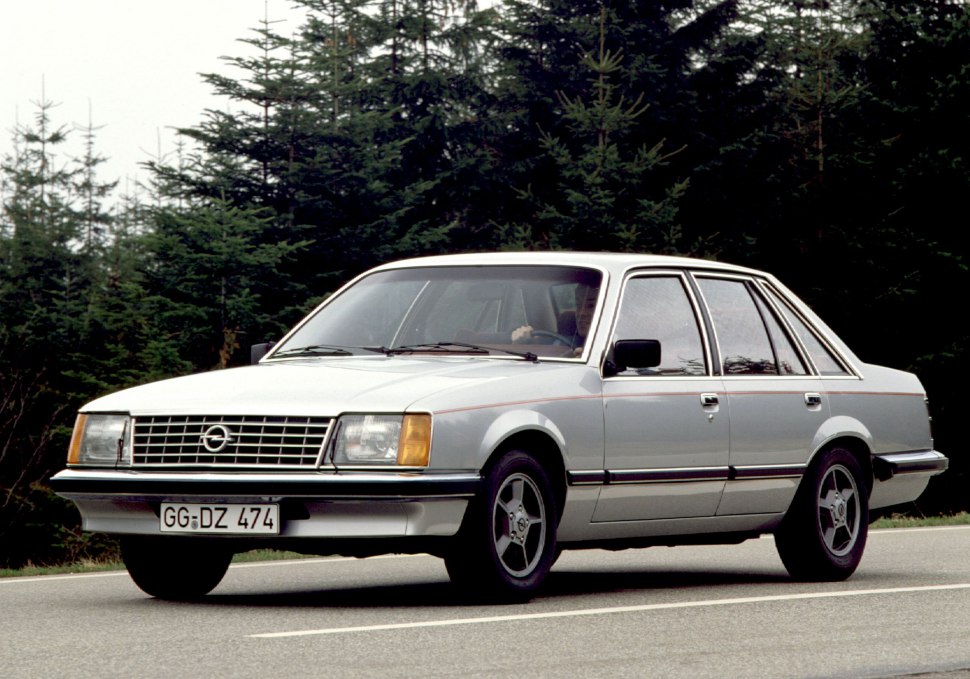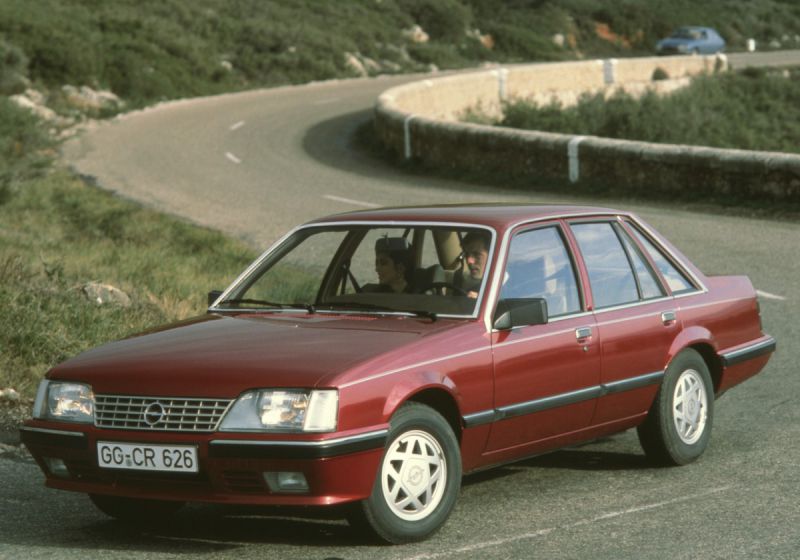
The Opel Senator A (facelift 1982) represented Opel’s ambitious entry into the executive car segment, primarily serving the European market. Launched in 1978, the Senator A was a larger, more luxurious derivative of the Opel Rekord E, designed to compete with established premium offerings from brands like Mercedes-Benz and BMW. The variant under review, the 2.0 E Automatic, specifically refers to a model produced between 1983 and 1984, incorporating the refinements of the 1982 facelift. This iteration aimed to modernize its aesthetics and enhance its appeal, continuing the Senator’s role as Opel’s flagship sedan. As a product of General Motors’ European division, the Senator exemplified Opel’s engineering philosophy of robust construction, comfortable ride quality, and practical luxury for its target audience across the continent.
Opel Senator A (facelift 1982): An Overview
The Opel Senator A was conceived as a response to the growing demand for larger, more comfortable, and technologically advanced sedans in Europe. Opel, already a well-established manufacturer of mainstream vehicles, sought to move upmarket and challenge the dominance of German premium brands. The Senator A, and subsequently the facelifted versions like the 2.0 E Automatic, were key to this strategy. It offered a compelling combination of space, comfort, and features at a price point that often undercut its rivals, making it an attractive option for discerning buyers.
Engine & Performance
The Opel Senator A (facelift 1982) 2.0 E Automatic was powered by a 1,979 cubic centimeter (approximately 2.0 liters or 120.77 cubic inches) inline four-cylinder engine. This naturally aspirated powerplant produced 115 horsepower at 5,600 rpm and 160 Nm (118.01 lb.-ft.) of torque at 4,200 rpm. The engine utilized a Single Overhead Camshaft (SOHC) valvetrain with two valves per cylinder and a multi-port manifold injection system for efficient fuel delivery. A compression ratio of 9.4:1 was typical for gasoline engines of the early 1980s.
Power was transmitted to the rear wheels via a three-speed automatic transmission, prioritizing smooth and effortless driving. Acceleration from 0 to 60 mph was approximately 14.3 seconds, with a top speed of 108.74 mph (175 km/h). The vehicle’s weight-to-power ratio was 11.7 kg/Hp (85.2 Hp/tonne). Fuel economy was rated at 10 liters per 100 km (23.5 US mpg) on the combined cycle, and the 75-liter (19.81 US gallon) fuel tank provided a substantial cruising range. These figures positioned the 2.0 E as a relaxed and capable long-distance cruiser.
Design & Features
The Opel Senator A (facelift 1982) featured a classic, stately sedan profile typical of European executive cars of the era. It measured 190.51 inches (4839 mm) in length, 67.8 inches (1722 mm) in width, and 55.71 inches (1415 mm) in height, with a 105.63-inch (2683 mm) wheelbase. The 1982 facelift included revised grille designs, updated headlamp and taillamp clusters, and refreshed interior trim.
The Senator A was a four-door sedan offering ample interior space and a generous 715 liters (25.25 cubic feet) of trunk capacity. Standard features included power steering and a robust heating and ventilation system, with options like air conditioning and power windows available depending on the trim level. The rear-wheel-drive architecture provided predictable handling, while ventilated front discs and solid rear discs ensured confident stopping power. The drag coefficient (Cd) of 0.39 was respectable for a large sedan in the early 1980s, contributing to both fuel efficiency and reduced wind noise.
Technical Specifications: Opel Senator A (facelift 1982) 2.0 E (115 Hp) Automatic
| Category | Specification |
| General Information | |
| Brand | Opel |
| Model | Senator A (facelift 1982) |
| Type (Engine) | 2.0 E (115 Hp) Automatic |
| Start of Production | 1983 year |
| End of Production | 1984 year |
| Powertrain Architecture | Internal Combustion engine |
| Body type | Sedan |
| Seats | 5 |
| Doors | 4 |
| Performance Specs | |
| Fuel consumption (combined) | 10 l/100 km |
| Fuel Type | Petrol (Gasoline) |
| Acceleration 0 – 60 mph | 14.3 sec |
| Maximum speed | 175 km/h |
| Weight-to-power ratio | 11.7 kg/Hp |
| Engine Specs | |
| Power | 115 Hp @ 5600 rpm |
| Torque | 160 Nm @ 4200 rpm |
| Engine displacement | 1979 cm3 |
| Number of cylinders | 4 |
| Engine configuration | Inline |
| Compression ratio | 9.4:1 |
| Fuel injection system | Multi-port manifold injection |
| Space, Volume and Weights | |
| Kerb Weight | 1350 kg |
| Trunk (boot) space – maximum | 715 l |
| Fuel tank capacity | 75 l |
| Dimensions | |
| Length | 4839 mm |
| Width | 1722 mm |
| Height | 1415 mm |
| Wheelbase | 2683 mm |
| Drivetrain, Brakes and Suspension Specs | |
| Drivetrain Architecture | The Internal combustion engine (ICE) drives the rear wheels of the vehicle. |
| Front brakes | Ventilated discs |
Legacy and Market Impact
The Opel Senator A was a significant vehicle for Opel, demonstrating the brand’s ability to compete in the executive car segment. While not officially sold in the United States, it was a popular choice in Europe, particularly among business professionals and families. It offered a compelling alternative to more expensive German rivals, providing a blend of comfort, practicality, and reliability. The Senator A laid the foundation for future Opel models and helped to elevate the brand’s image in the European market. Today, the Opel Senator A (facelift 1982) is appreciated by classic car enthusiasts for its understated elegance, robust engineering, and a nostalgic connection to a bygone era of automotive design.