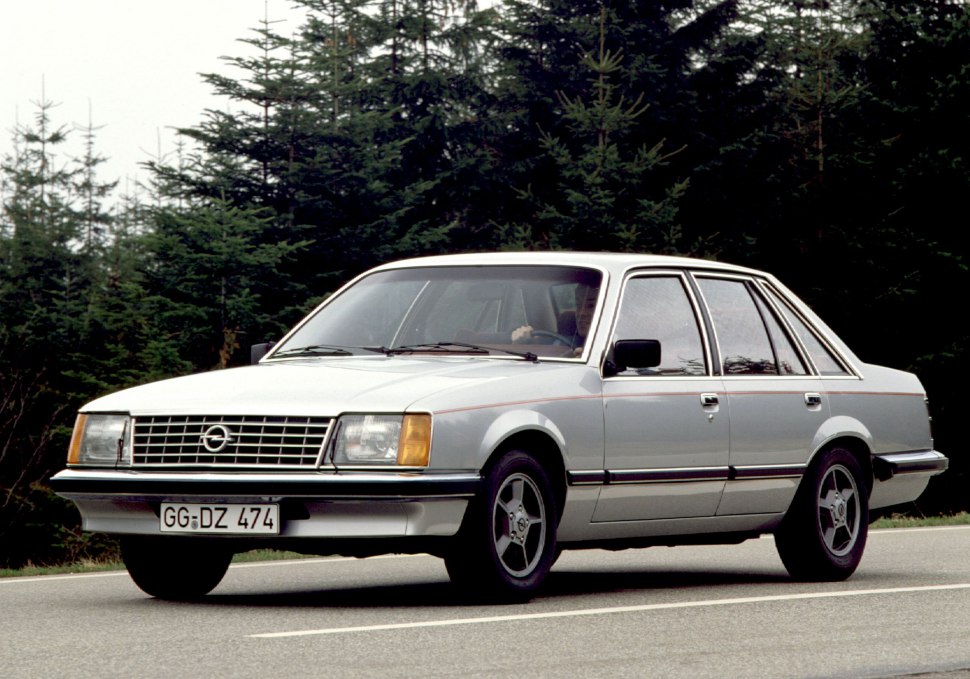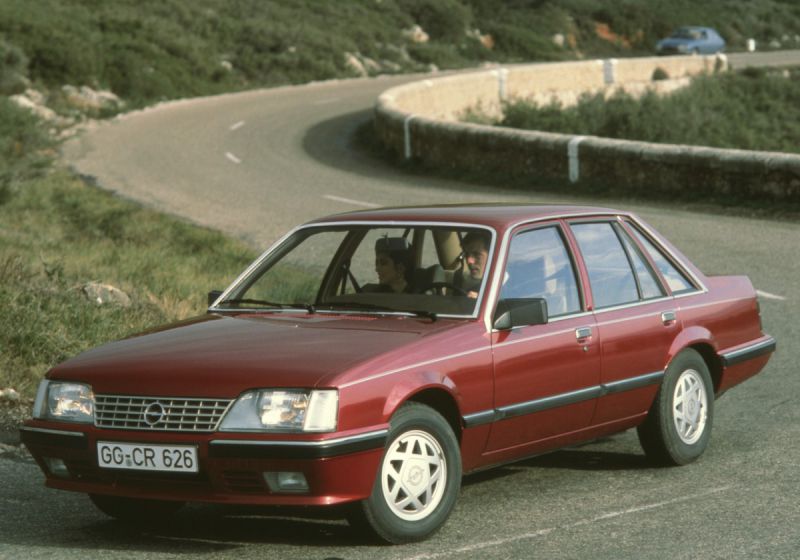
The Opel Senator A (facelift 1982) 2.5 E (140 Hp) represented Opel’s ambitious entry into the executive car segment, targeting European buyers seeking a blend of comfort, performance, and sophistication. Produced between 1984 and 1986, this facelifted version of the Senator A showcased Opel’s engineering capabilities and its dedication to the rear-wheel-drive, straight-six configuration common in premium European sedans of the period. Although never officially sold in the United States, the Senator served as Opel’s flagship model, embodying understated luxury and robust reliability in its primary European markets, where it competed with established German rivals and offered a compelling alternative for those desiring a spacious and powerful grand tourer.
The Opel Senator A: A European Executive Sedan
As a full-size, four-door sedan, the Senator A shared its platform with the Opel Monza coupe, a strategic decision that allowed Opel to optimize development costs while providing distinct body styles to appeal to different consumer preferences. The 1982 facelift brought significant aesthetic and aerodynamic enhancements, modernizing the vehicle’s appearance and improving its efficiency, ensuring its competitiveness in a rapidly evolving automotive market. The 2.5 E model, equipped with its potent inline-six engine, was positioned as a high-performance variant within the lineup, capable of comfortable long-distance cruising and respectable acceleration.
Engine & Performance
The Opel Senator A (facelift 1982) 2.5 E (140 Hp) was powered by Opel’s well-regarded 2.5-liter (2490 cm3 or 151.95 cu. in.) inline-six gasoline engine, designated 25NE. This naturally aspirated engine was a hallmark of Opel’s larger vehicles, known for its smoothness, durability, and linear power delivery. Featuring a single overhead camshaft (SOHC) and multi-port fuel injection, the engine generated 140 horsepower at 5200 rpm, resulting in a power-per-liter ratio of 56.2 HP/l – a respectable figure for a naturally aspirated engine of that era.
Torque output was equally impressive, peaking at 151.2 lb.-ft. (205 Nm) at 4000 rpm, providing ample power for confident overtaking and relaxed highway driving. The engine’s robust characteristics aligned well with the Senator’s executive aspirations, delivering a refined driving experience. Power was transferred to the rear wheels through a standard 5-speed manual transmission, allowing drivers to fully utilize the engine’s capabilities. This traditional rear-wheel-drive layout contributed to the car’s balanced handling and classic driving dynamics.
Performance figures included a 0 to 60 mph acceleration time of approximately 10.5 seconds and a top speed of 123.03 mph (198 km/h). These numbers positioned the Senator 2.5 E competitively within its segment, offering a spirited yet composed performance. Fuel economy was rated at 23.1 US mpg (10.2 l/100 km) for combined driving, considered reasonable for a large, six-cylinder sedan in the mid-1980s, particularly given its focus on comfort and performance. The substantial 19.81 US gallon (75-liter) fuel tank provided a generous cruising range, ideal for extended European journeys.
Design & Features
The 1982 facelift of the Opel Senator A introduced a more contemporary and aerodynamic design, building upon the original 1978 model. The four-door sedan body style offered generous space for five occupants, prioritizing comfort and practicality. Exterior updates included a revised front fascia with a modern grille, updated headlights, and redesigned taillights, creating a sleeker, more integrated appearance. The drag coefficient (Cd) was reduced to 0.39, a significant achievement for a large sedan in the early 1980s, contributing to improved fuel efficiency and reduced wind noise at higher speeds.
With dimensions of 190.51 inches in length, 67.8 inches in width, and 55.71 inches in height, and a wheelbase of 105.63 inches, the Senator A presented a commanding road presence and a spacious interior. The cabin was designed with driver and passenger comfort in mind, featuring supportive seating and a well-appointed dashboard. Standard features typically included power windows, central locking, and a sophisticated heating and ventilation system. Higher trim levels offered optional amenities such as air conditioning, power-adjustable mirrors, and upgraded audio systems, enhancing its executive appeal.
Safety and handling were also prioritized. The Senator A featured a robust suspension system and ventilated disc brakes on all four wheels, providing reliable stopping power. Its curb weight of 3020.33 lbs. (1370 kg) contributed to a solid and stable ride, particularly at higher speeds. The large trunk capacity of 25.25 cu. ft. (715 liters) made the Senator a practical choice for families or business travelers needing ample luggage space.
Technical Specifications
| Category | Specification |
| Brand | Opel |
| Model | Senator |
| Generation | Senator A (facelift 1982) |
| Type (Engine) | 2.5 E (140 Hp) |
| Start of Production | 1984 |
| End of Production | 1986 |
| Powertrain Architecture | Internal Combustion engine |
| Body Type | Sedan |
| Seats | 5 |
| Doors | 4 |
| Fuel Consumption (Combined) | 23.1 US mpg (10.2 l/100 km) |
| Fuel Type | Petrol (Gasoline) |
| Acceleration 0-60 mph | 10.5 sec |
| Maximum Speed | 123.03 mph (198 km/h) |
| Power | 140 Hp @ 5200 rpm |
| Torque | 151.2 lb.-ft. @ 4000 rpm (205 Nm) |
| Engine Model/Code | 25NE |
| Engine Displacement | 2.5 Liters (2490 cm3 / 151.95 cu. in.) |
| Number of Cylinders | 6 |
| Engine Configuration | Inline |
| Cylinder Bore | 3.43 in. (87 mm) |
| Piston Stroke | 2.75 in. (69.8 mm) |
| Compression Ratio | 9.2:1 |
| Valves per Cylinder | 2 |
| Fuel Injection System | Multi-port manifold injection |
| Engine Aspiration | Naturally aspirated engine |
| Valvetrain | SOHC |
| Engine Oil Capacity | 5.81 US qt (5.5 l) |
| Coolant Capacity | 10.57 US qt (10 l) |
| Kerb Weight | 3020.33 lbs. (1370 kg) |
| Max. Weight | 4265.94 lbs. (1935 kg) |
| Max Load | 1245.61 lbs. (565 kg) |
| Trunk (Boot) Space | 25.25 cu. ft. (715 l) |
| Fuel Tank Capacity | 19.81 US gal (75 l) |
| Length | 190.51 in. (4839 mm) |
| Width | 67.8 in. (1722 mm) |
| Height | 55.71 in. (1415 mm) |
| Wheelbase | 105.63 in. (2683 mm) |
| Front Track | 56.97 in. (1447 mm) |
| Rear Track | 57.95 in. (1472 mm) |
| Ride Height (Ground Clearance) | 5.51 in. (140 mm) |
| Drag Coefficient (Cd) | 0.39 |
| Minimum Turning Circle | 35.43 ft. (10.8 m) |
| Drivetrain Architecture | Rear wheel drive, Internal Combustion engine |
| Drive Wheel | Rear wheel drive |
| Number of Gears/Gearbox Type | 5 gears, manual transmission |
| Front Brakes | Ventilated discs |
| Rear Brakes | Disc |
| Weight-to-Power Ratio | 9.8 kg/Hp |
The Opel Senator A, particularly the facelifted 2.5 E variant, occupies a notable position in Opel’s history as its top-tier offering during the mid-1980s. It represented Opel’s continued commitment to the executive segment, a highly competitive market. In Europe, the Senator directly challenged established brands like BMW, Mercedes-Benz, Ford, and Audi. While lacking the prestige of some rivals, the Senator distinguished itself as a comfortable, reliable, and well-equipped executive sedan offering excellent value. Its reputation for robust engineering, smooth inline-six engines, and comfortable ride made it a popular choice for long-distance travel. Today, the Senator A is appreciated by enthusiasts for its classic European styling and enduring build quality.