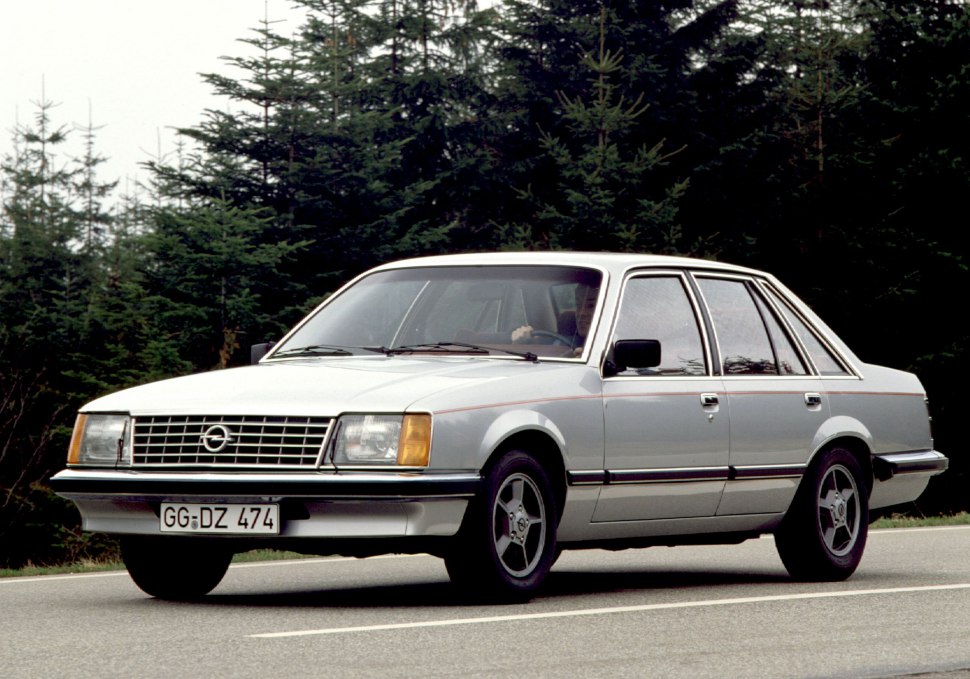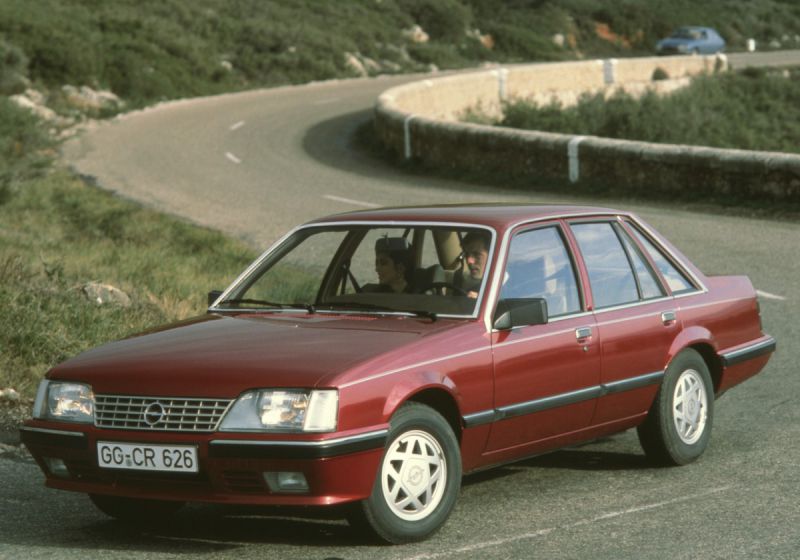
The Opel Senator A (facelift 1982) 3.0i CAT (156 Hp) represents a significant era for Opel, General Motors’ European subsidiary, in the executive car segment. Produced from 1985 to 1986, this particular iteration was a refined version of the Senator A, which had initially launched in 1978. Positioned as Opel’s flagship model, the Senator A was a large, rear-wheel-drive sedan designed to compete with established premium offerings from manufacturers like Mercedes-Benz and BMW in the European market. While never officially sold in the United States, the Senator played a crucial role in Opel’s strategy to offer a sophisticated and comfortable vehicle for discerning European buyers, embodying a blend of robust engineering and understated luxury characteristic of German automotive design during the 1980s. The “3.0i CAT” designation signifies its 3.0-liter fuel-injected engine equipped with a catalytic converter, a forward-thinking feature for emissions control in the mid-1980s.
Opel Senator A (facelift 1982) 3.0i CAT: An Overview
The Opel Senator A, particularly the facelifted 1982-1986 models, occupied a unique space in the European automotive landscape. It was designed to bridge the gap between mainstream family sedans and the more prestigious offerings from German luxury brands. Opel aimed to provide a vehicle that offered a high level of comfort, performance, and practicality without the significantly higher price tag associated with Mercedes-Benz or BMW. The Senator A was a key component of Opel’s ambition to be a leading force in the European car market, showcasing the company’s engineering capabilities and design prowess.
Engine & Performance
Under the hood, the Opel Senator A (facelift 1982) 3.0i CAT (156 Hp) was powered by a robust 3.0-liter (2969 cm³, or 181.18 cu. in.) inline-six gasoline engine, designated with the code C30LE. This naturally aspirated unit featured a multi-port manifold injection system, a modern touch for its time, ensuring efficient fuel delivery and improved responsiveness. The engine was configured with Opel’s enduring CIH (Cam-in-Head) valvetrain, utilizing two valves per cylinder and a compression ratio of 8.5:1. This CIH design was a hallmark of Opel engines for many years, known for its reliability and tuneability.
The engine delivered a respectable 156 horsepower at 5600 revolutions per minute (rpm), making it a capable cruiser for autobahn speeds. Torque output stood at 226 Nm, or 166.69 lb.-ft., available at a peak of 4200 rpm, providing ample pulling power for a car of its size. This powertrain was mated to a 5-speed manual transmission, sending power to the rear wheels, a preferred layout for executive sedans of the era, offering a balanced driving dynamic. While an automatic transmission was available, the manual offered a more engaging driving experience.
In terms of acceleration, the Senator A 3.0i CAT could sprint from 0 to 60 mph in an estimated 9.5 seconds, with a 0 to 100 km/h time of 10 seconds. Its top speed was an impressive 202 km/h (125.52 mph), underscoring its capabilities as a long-distance tourer. Fuel economy, while not its primary selling point, was rated at approximately 20.8 US mpg combined, with a more efficient 28.7 US mpg on the extra-urban cycle and 15.4 US mpg in urban driving conditions. The inclusion of a catalytic converter was a notable step towards environmental responsibility, reflecting growing concerns about automotive emissions in Europe during the mid-1980s.
Design & Features
The Opel Senator A (facelift 1982) retained the classic proportions of a four-door sedan, a body style synonymous with executive transport. With a length of 190.51 inches (4839 mm), a width of 67.8 inches (1722 mm), and a height of 55.71 inches (1415 mm), it presented a substantial and commanding presence on the road. The design, while updated with the 1982 facelift, maintained a conservative and functional aesthetic typical of German engineering, prioritizing aerodynamics and interior space. Its relatively low drag coefficient (Cd) of 0.39 was commendable for a large sedan of its time, contributing to both fuel efficiency and reduced wind noise at higher speeds.
Inside, the Senator A offered seating for five occupants, emphasizing comfort and practicality. The spacious cabin was complemented by a generous trunk capacity of 25.25 cu. ft. (715 liters), making it well-suited for family trips or business travel. The car’s kerb weight of 3020.33 lbs (1370 kg) contributed to a stable and composed ride. Interior appointments typically included comfortable cloth or velour upholstery, and higher-spec models offered features like power windows and central locking.
The suspension system featured an independent McPherson strut setup with coil springs and an anti-roll bar at the front, paired with an independent coil spring, transverse stabilizer, and trailing arm arrangement at the rear. This configuration aimed to deliver a comfortable yet controlled ride, characteristic of European executive cars. Braking power came from ventilated discs at the front and solid discs at the rear, providing adequate stopping performance. Steering was handled by a cone worm system with recirculation balls and hydraulic power assistance, offering ease of maneuverability despite the vehicle’s size, with a minimum turning circle of 35.43 feet (10.8 meters).
Technical Specifications
| Category | Specification |
| Brand | Opel |
| Model | Senator |
| Generation | Senator A (facelift 1982) |
| Type (Engine) | 3.0i CAT (156 Hp) |
| Production Years | 1985 – 1986 |
| Body Type | Sedan |
| Doors / Seats | 4 / 5 |
| Performance Specs | |
| Fuel Type | Petrol (Gasoline) |
| Fuel Consumption (Urban) | 15.3 l/100 km (15.4 US mpg) |
| Fuel Consumption (Extra Urban) | 8.2 l/100 km (28.7 US mpg) |
| Fuel Consumption (Combined) | 11.3 l/100 km (20.8 US mpg) |
| Acceleration 0-60 mph | 9.5 seconds |
| Acceleration 0-100 km/h | 10 seconds |
| Maximum Speed | 202 km/h (125.52 mph) |
| Weight-to-Power Ratio | 8.8 kg/Hp (113.9 Hp/tonne) |
| Weight-to-Torque Ratio | 6.1 kg/Nm (165 Nm/tonne) |
| Engine Specs | |
| Power | 156 Hp @ 5600 rpm |
| Torque | 226 Nm (166.69 lb.-ft.) @ 4200 rpm |
| Engine Layout | Front, Longitudinal |
| Engine Model/Code | C30LE |
| Engine Displacement | 2969 cm³ (3.0 l, 181.18 cu. in.) |
| Number of Cylinders | 6, Inline |
| Cylinder Bore | 95 mm (3.74 in.) |
| Piston Stroke | 69.8 mm (2.75 in.) |
| Compression Ratio | 8.5:1 |
| Valves per Cylinder | 2 |
| Fuel Injection System | Multi-port manifold injection |
| Engine Aspiration | Naturally aspirated |
| Valvetrain | CIH |
| Engine Oil Capacity | 5.5 l (5.81 US qt) |
| Coolant Capacity | 10.1 l (10.67 US qt) |
| Space, Volume, and Weights | |
| Kerb Weight | 1370 kg (3020.33 lbs) |
| Max. Weight | 1935 kg (4265.94 lbs) |
| Max. Load | 565 kg (1245.61 lbs) |
| Trunk (Boot) Space | 715 l (25.25 cu. ft.) |
| Fuel Tank Capacity | 75 l (19.81 US gal) |
| Max. Roof Load | 80 kg (176.37 lbs) |
| Permitted Trailer Load (with brakes) | 1600 kg (3527.4 lbs) |
| Permitted Trailer Load (without brakes) | 700 kg (1543.24 lbs) |
| Dimensions | |
| Length | 4839 mm (190.51 in.) |
| Width | 1722 mm (67.8 in.) |
| Height | 1415 mm (55.71 in.) |
| Wheelbase | 2683 mm (105.63 in.) |
| Front Track | 1447 mm (56.97 in.) |
| Rear Track | 1472 mm (57.95 in.) |
| Front Overhang | 891 mm (35.08 in.) |
| Rear Overhang | 1265 mm (49.8 in.) |
| Ride Height (Ground Clearance) | 140 mm (5.51 in.) |
| Drag Coefficient (Cd) | 0.39 |
| Minimum Turning Circle | 10.8 m (35.43 ft) |
| Drivetrain, Brakes, and Suspension | |
| Drivetrain Architecture | Rear-wheel drive |
| Gearbox Type | 5-speed manual transmission |
| Front Suspension | Independent, McPherson with coil spring and anti-roll bar |
| Rear Suspension | Independent coil spring, Transverse stabilizer, Trailing arm |
| Front Brakes | Ventilated discs |
| Rear Brakes | Disc |
| Steering Type | Cone worm with recirculation balls |
| Power Steering | Hydraulic Steering |
| Tires Size | 195/70 R14 |
| Wheel Rims Size | 6J x 14 |
Legacy and Market Impact
The Opel Senator A (facelift 1982) 3.0i CAT (156 Hp), like its stablemate the smaller Rekord, was a cornerstone of Opel’s presence in the competitive European market. As a full-size executive sedan, it aimed to provide a more affordable, yet still well-appointed, alternative to luxury marques like Mercedes-Benz (e.g., the W123 and later W124 E-Class) and BMW (e.g., the E28 5 Series). Its primary rivals also included the Ford Granada and, to some extent, the Volvo 740. The Senator’s appeal lay in its blend of spaciousness, comfortable ride, robust inline-six engine, and traditional rear-wheel-drive dynamics, all offered at a more accessible price point than its German luxury counterparts.
The inclusion of a catalytic converter in the 3.0i CAT model was a forward-thinking move, demonstrating Opel’s commitment to meeting evolving emissions standards in Europe. This was particularly significant as environmental regulations began to tighten in the mid-1980s, positioning the Senator as a more environmentally conscious choice compared to some of its contemporaries.
Despite its success in Europe, the Opel Senator A was never officially imported to the United States. General Motors had other strategies for the US market in the executive segment, primarily through its Cadillac and Buick brands, and later through imported European models under different badges (e.g., the Opel Omega A being sold as the Cadillac Catera). This decision meant that American consumers largely missed out on Opel’s robust and practical executive offerings.
Today, the Opel Senator A is remembered as a classic example of 1980s European executive motoring. It embodies an era when German cars were known for their solidity, straightforward engineering, and understated elegance. While not as flashy or technologically advanced as modern sedans, its enduring design and mechanical integrity have earned it a loyal following among classic car enthusiasts, particularly in its native European markets. Its legacy is one of a dependable, comfortable, and capable sedan that held its own in a fiercely competitive segment, representing Opel’s ambition to offer premium quality without the premium price tag.