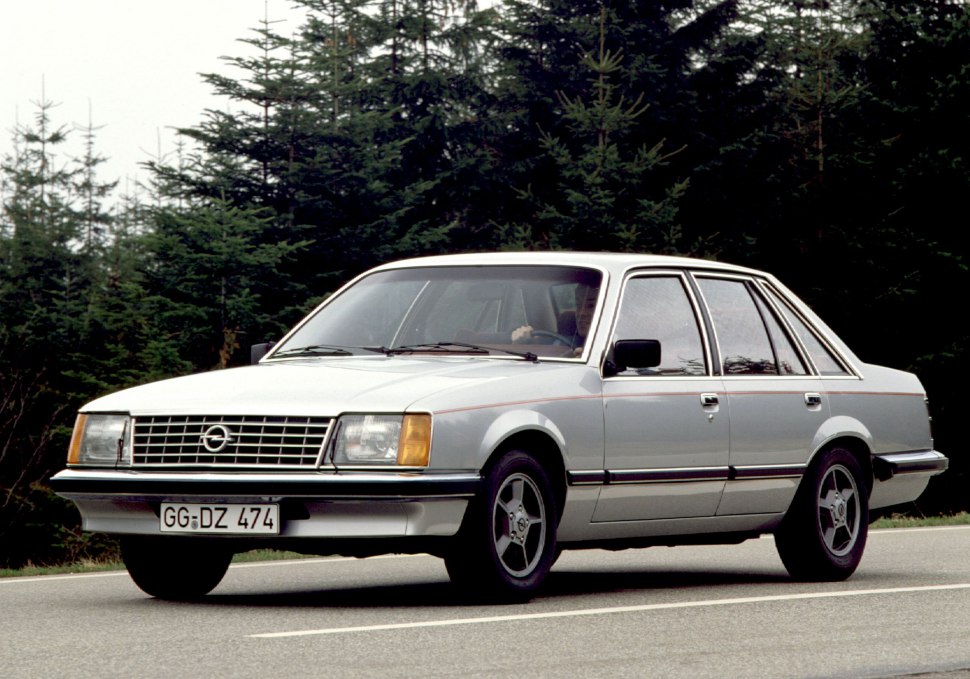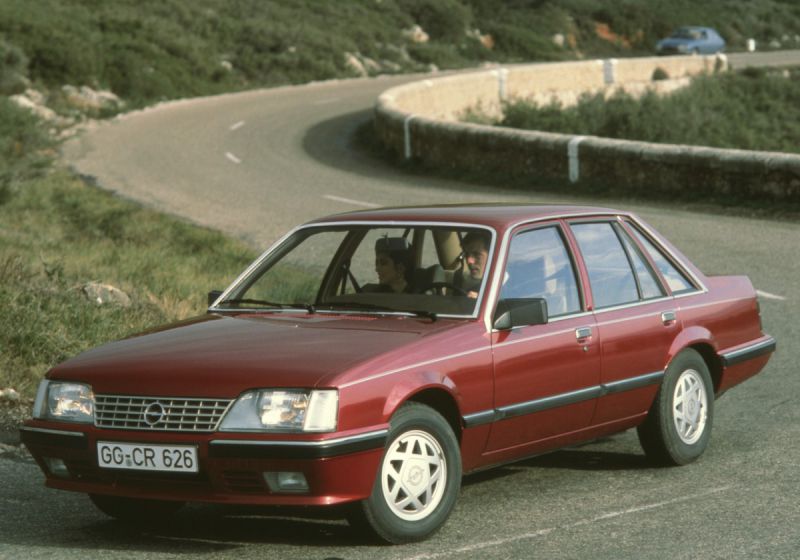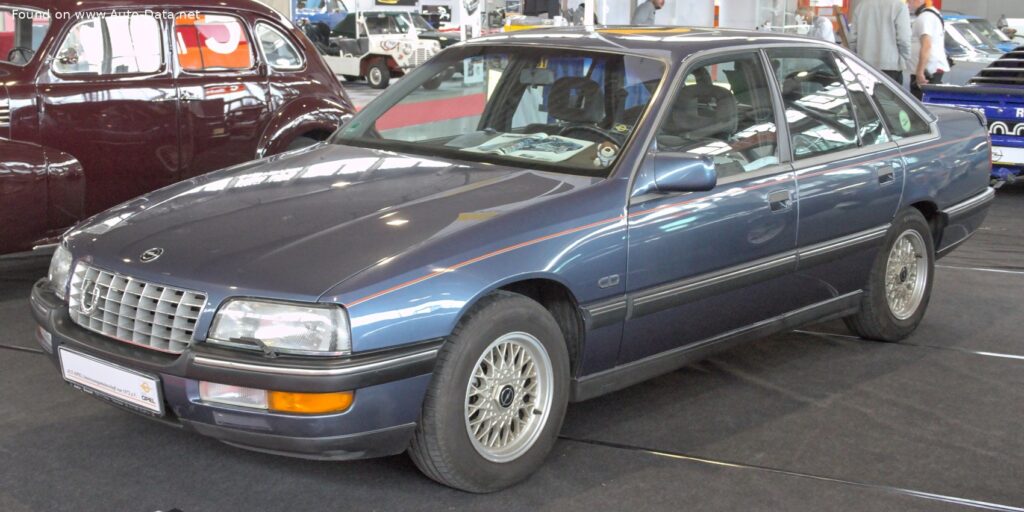
The Opel Senator B 2.3 TD Automatic represents a significant, albeit niche, offering from the German automaker Opel during the late 1980s. As Opel’s flagship executive sedan, the Senator B, produced from 1987 to 1993, aimed to provide a comfortable, refined, and well-equipped alternative in the competitive European luxury segment. This particular variant, featuring the 2.3-liter turbocharged diesel engine paired with an automatic transmission, highlighted Opel’s commitment to offering fuel-efficient yet capable powertrains, a common demand in the European market. While the Opel brand was a key part of General Motors’ global portfolio, the Senator B was never officially imported or sold in the United States, making it a distinctly European proposition. Its role was to elevate Opel’s image, showcasing engineering prowess and a commitment to driver and passenger comfort, positioning it against established rivals from other European manufacturers.
Opel Senator B 2.3 TD Automatic: An Overview
The Opel Senator B was the second generation of the Senator line, succeeding the original Senator (A) launched in 1978. Positioned above the Opel Rekord and Commodore, the Senator B aimed to compete with established executive cars like the Ford Granada, BMW 5 Series, and Mercedes-Benz E-Class. The “B” designation signifies a substantial redesign, incorporating more modern styling and improved technology. The 2.3 TD Automatic model specifically catered to buyers prioritizing fuel economy and long-distance comfort, leveraging the benefits of a turbocharged diesel engine and the convenience of an automatic transmission. It was a vehicle designed for the European Autobahn and the demands of discerning business travelers.
Engine & Performance
At the heart of the Opel Senator B 2.3 TD Automatic lies its 2.3-liter (2260 cm3 or 137.91 cubic inches) turbocharged diesel engine. This inline four-cylinder powerplant utilized a Single Overhead Camshaft (SOHC) valvetrain and a precombustion chamber injection system, a common diesel technology of the era. The engine produced 90 horsepower at 4200 revolutions per minute, a respectable output for a diesel of its displacement in the late 1980s. However, the engine’s strength lay in its torque output – a substantial 190 Newton-meters, or 140.14 pound-feet, available at a low 2200 rpm. This ample low-end torque provided effortless cruising and confident acceleration, even when the vehicle was fully loaded.
Power was delivered to the rear wheels through a four-speed automatic transmission, a popular choice for executive cars prioritizing smooth shifts and relaxed driving. While the 0-60 mph acceleration time of 15.2 seconds may seem slow by contemporary standards, it was considered adequate for a large diesel sedan of the period. The Senator B 2.3 TD Automatic achieved a top speed of 109.36 mph (176 km/h), making it capable of sustained high-speed travel on European motorways. Fuel economy was a key selling point, with a combined rating of 28.7 US miles per gallon (8.2 liters per 100 km), competitive for a vehicle of its size and class, especially considering it was a diesel. The generous 19.81 US gallon (75-liter) fuel tank provided a substantial cruising range.
Design & Features
The Opel Senator B featured a more rounded and aerodynamic design compared to its predecessor, reflecting the evolving automotive trends of the late 1980s. It was a four-door, five-seat sedan with substantial exterior dimensions: 190.75 inches (4845 mm) in length, 68.62 inches (1743 mm) in width, and 57.09 inches (1450 mm) in height. The 107.48-inch (2730 mm) wheelbase contributed to a stable ride and a spacious interior, hallmarks of executive-class vehicles. The design was purposeful and understated, avoiding ostentatious styling in favor of a classic, dignified profile.
The interior of the Senator B was designed for comfort and refinement. The spacious cabin offered ample legroom and headroom for all occupants, reducing fatigue on long journeys. Trunk space was generous, ranging from 18.72 cubic feet (530 liters) to 30.72 cubic feet (870 liters) with the rear seats folded (if equipped). Features typical of an executive car of this era included power windows, central locking, and potentially air conditioning, depending on the trim level. Safety features included a robust chassis and a braking system with ventilated discs at the front and solid discs at the rear, providing confident stopping power for a vehicle weighing 3086.47 pounds (1400 kg). The car rode on 15-inch wheels with 205/65 R15 tires, balancing ride comfort and handling.
Technical Specifications
| Category | Specification |
| General Information | |
| Brand | Opel |
| Model | Senator |
| Generation | Senator B |
| Type (Engine) | 2.3 TD (90 Hp) Automatic |
| Start of Production | 1987 |
| End of Production | 1988 |
| Powertrain Architecture | Internal Combustion Engine |
| Body Type | Sedan |
| Seats | 5 |
| Doors | 4 |
| Performance Specifications | |
| Fuel Consumption (Combined) | 8.2 l/100 km (28.7 US mpg) |
| Fuel Type | Diesel |
| Acceleration 0 – 60 mph | 15.2 seconds |
| Maximum Speed | 109.36 mph (176 km/h) |
| Weight-to-Power Ratio | 15.6 kg/Hp (64.3 Hp/tonne) |
| Weight-to-Torque Ratio | 7.4 kg/Nm (135.7 Nm/tonne) |
| Engine Specifications | |
| Power | 90 Hp @ 4200 rpm |
| Power per Liter | 39.8 Hp/l |
| Torque | 140.14 lb.-ft. (190 Nm) @ 2200 rpm |
| Maximum Engine Speed | 4600 rpm |
| Engine Displacement | 2.3 Liters (2260 cm3 / 137.91 cu. in.) |
| Number of Cylinders | 4 |
| Engine Configuration | Inline |
| Cylinder Bore | 3.62 inches (92 mm) |
| Piston Stroke | 3.35 inches (85 mm) |
| Compression Ratio | 23:1 |
| Number of Valves per Cylinder | 2 |
| Fuel Injection System | Precombustion Chamber Injection |
| Engine Aspiration | Turbocharger |
| Valvetrain | SOHC |
| Space, Volume, and Weights | |
| Kerb Weight | 3086.47 lbs. (1400 kg) |
| Trunk (Boot) Space – Minimum | 18.72 cu. ft. (530 l) |
| Trunk (Boot) Space – Maximum | 30.72 cu. ft. (870 l) |
| Fuel Tank Capacity | 19.81 US gal (75 l) |
| Dimensions | |
| Length | 190.75 inches (4845 mm) |
| Width | 68.62 inches (1743 mm) |
| Height | 57.09 inches (1450 mm) |
| Wheelbase | 107.48 inches (2730 mm) |
| Front Track | 57.09 inches (1450 mm) |
| Rear (Back) Track | 57.8 inches (1468 mm) |
| Ride Height (Ground Clearance) | 5.51 inches (140 mm) |
| Minimum Turning Circle (Diameter) | 35.93 ft. (10.95 m) |
| Drivetrain, Brakes, and Suspension Specifications | |
| Drivetrain Architecture | The Internal Combustion Engine (ICE) drives the rear wheels of the vehicle. |
| Drive Wheel | Rear Wheel Drive |
| Number of Gears and Type of Gearbox | 4 gears, automatic transmission |
| Front Brakes | Ventilated Discs |
| Rear Brakes | Disc |
| Tires Size | 205/65 R15 |
| Wheel Rims Size | 15 |
Legacy and Market Impact
The Opel Senator B 2.3 TD Automatic occupied a unique position in the European executive car market. While lacking the prestige of brands like Mercedes-Benz and BMW, it offered a compelling value proposition – a spacious, comfortable, and well-equipped sedan at a more accessible price point. Its competitors included the Ford Granada/Scorpio and Volvo 760/960 series.
The Senator B gained a reputation for reliability and dependability, particularly among business professionals and fleet operators who valued its low running costs, comfortable ride, and generous interior space. The 2.3 TD engine was praised for its fuel efficiency and durability, making it ideal for long-distance travel. Its rear-wheel-drive layout contributed to balanced handling.
The Senator B represented the culmination of Opel’s traditional executive sedan offerings. With the discontinuation of the Senator line in 1993, Opel shifted its focus to the Omega, often offering higher trim levels to fill the void. Today, the Opel Senator B, especially the diesel variants, is remembered as a testament to Opel’s engineering capabilities, a comfortable and economical vehicle that provided a viable alternative in the European executive car segment. Its legacy is one of understated quality, practical luxury, and the successful integration of diesel technology for efficient performance.