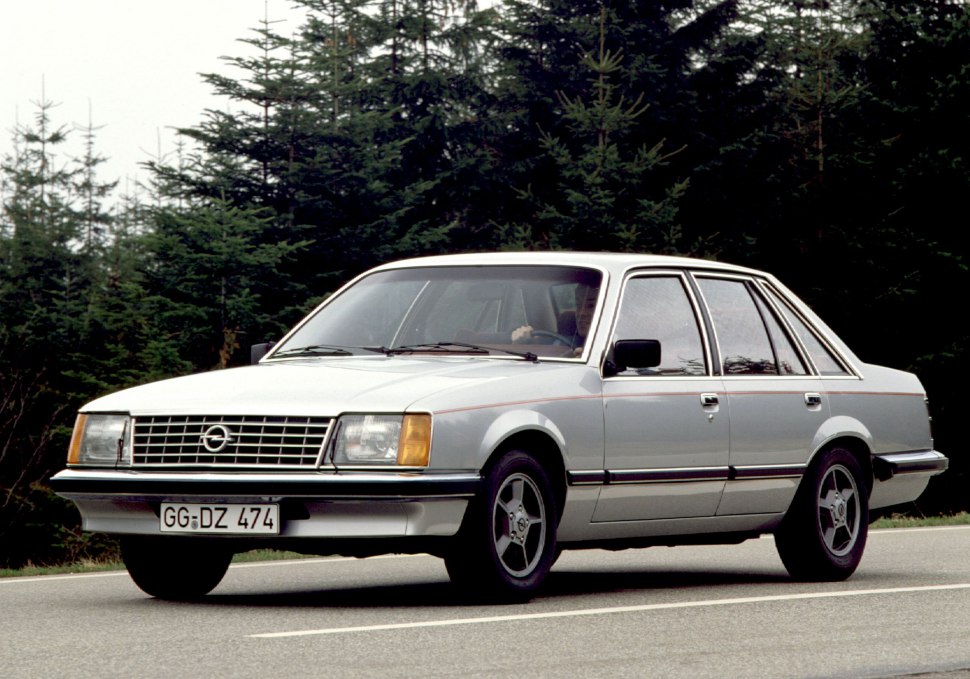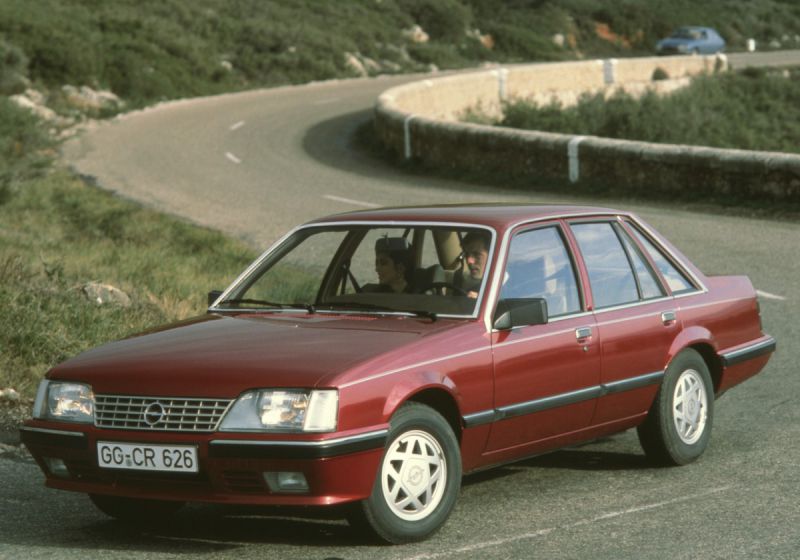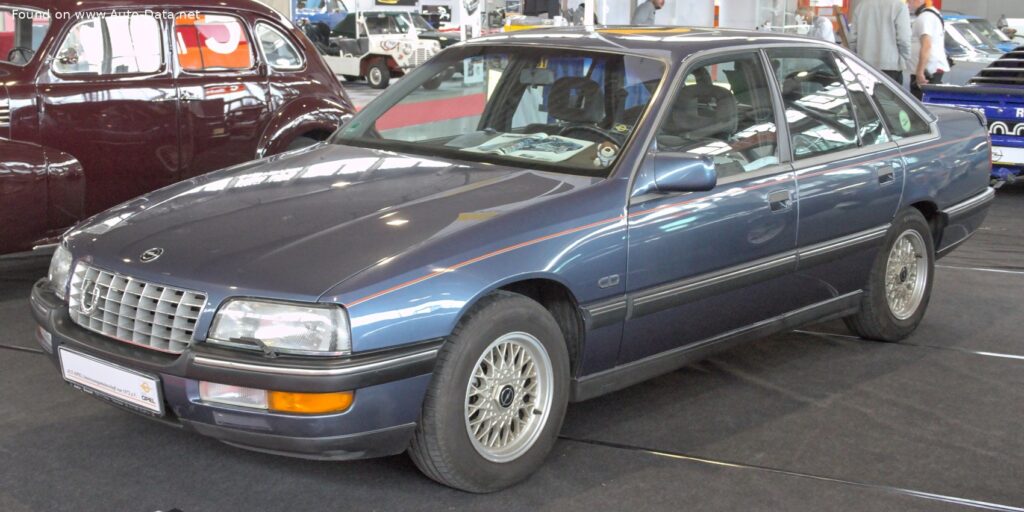
The Opel Senator B 2.3 TD Interc. (100 Hp) Automatic represents a significant offering from the German automaker Opel, a subsidiary of General Motors, during the late 1980s. As the second and final generation of Opel’s full-size executive car, the Senator B was positioned above the Opel Omega, aiming to compete with established premium brands like BMW and Mercedes-Benz in the European market. This particular variant, produced between 1988 and 1989, catered to European buyers seeking a fuel-efficient, comfortable, and prestigious large sedan, blending diesel economy with the hallmarks of executive car refinement.
Engine & Performance of the Opel Senator B 2.3 TD Interc.
The Opel Senator B 2.3 TD Interc. Automatic was powered by a 2.3-liter (2260 cm3 or 137.91 cubic inches) inline-four diesel engine. This engine was notable for incorporating both a turbocharger and an intercooler – advanced features for a diesel engine of the period – which enhanced its power and efficiency. The engine produced 100 horsepower at 4200 revolutions per minute, providing adequate performance for a vehicle of its size. More importantly, it generated 160.79 pound-feet of torque between 2000 and 2200 rpm, delivering strong low-end pull ideal for effortless highway cruising and smooth acceleration.
Power was transmitted to the rear wheels through a 4-speed automatic transmission, a common choice for comfort-focused executive cars. While not designed for sporty acceleration, the powertrain enabled a 0 to 60 mph time of 14.7 seconds and a maximum speed of 114.33 mph (184 km/h). These figures positioned the Senator B 2.3 TD Interc. as a comfortable and capable cruiser rather than a performance-oriented vehicle. Fuel economy was a key advantage, with a combined rating of 28.3 US miles per gallon (8.3 liters per 100 kilometers), making it an economical option for long-distance travel. The engine featured a single overhead camshaft (SOHC), two valves per cylinder, and a precombustion chamber injection system, contributing to its reliability and efficiency. A high compression ratio of 23:1, typical for diesel engines, further enhanced its durability and consistent performance.
Design & Features
The Opel Senator B showcased the understated elegance and functional design characteristic of late 1980s European executive sedans. It adopted a traditional four-door, five-seat sedan body style, defined by clean lines, a relatively low beltline, and a commanding presence. Measuring 190.75 inches (4845 mm) in length, 68.62 inches (1743 mm) in width, and 57.09 inches (1450 mm) in height, the Senator B offered generous interior space. The 107.48-inch (2730 mm) wheelbase contributed to a smooth ride and stable handling.
The interior prioritized comfort and practicality, befitting its executive aspirations. The cabin provided ample room for five adults, with supportive seating and materials considered high quality for the era. Standard or optional features included power windows, central locking, power steering, and a sophisticated heating and ventilation system. Higher trim levels could be equipped with features like an on-board computer, air conditioning, and leather upholstery. The trunk offered a substantial 18.72 cubic feet (530 liters) of space, expanding to 30.72 cubic feet (870 liters) with the rear seats folded (if equipped), providing ample room for luggage or business equipment.
The Senator B’s chassis featured ventilated disc brakes at the front and solid disc brakes at the rear, providing confident stopping power. It rode on 205/65 R15 tires mounted on 15-inch wheels, balancing ride comfort and handling. The rear-wheel-drive layout, combined with a suspension system (likely independent suspension, common for vehicles in this class), ensured predictable handling and a refined ride quality, essential for an executive sedan. The minimum turning circle of 35.93 feet (10.95 meters) offered reasonable maneuverability for a car of its size.
Opel Senator B 2.3 TD Interc. – Technical Specifications
| Brand | Opel |
| Model | Senator |
| Generation | Senator B |
| Type (Engine) | 2.3 TD Interc. (100 Hp) Automatic |
| Start of Production | 1988 |
| End of Production | 1989 |
| Powertrain Architecture | Internal Combustion engine |
| Body type | Sedan |
| Seats | 5 |
| Doors | 4 |
| Fuel Consumption (combined) | 8.3 l/100 km (28.3 US mpg) |
| Fuel Type | Diesel |
| Acceleration 0 – 60 mph | 14.7 sec |
| Acceleration 0 – 100 km/h | 15.5 sec |
| Maximum Speed | 114.33 mph (184 km/h) |
| Weight-to-power ratio | 14 kg/Hp (71.4 Hp/tonne) |
| Weight-to-torque ratio | 6.4 kg/Nm (155.7 Nm/tonne) |
| Power | 100 Hp @ 4200 rpm |
| Power per liter | 44.2 Hp/l |
| Torque | 160.79 lb.-ft. (218 Nm) @ 2000-2200 rpm |
| Maximum Engine Speed | 4600 rpm |
| Engine Displacement | 2.3 Liters (2260 cm3 / 137.91 cu. in.) |
| Number of Cylinders | 4 |
| Engine Configuration | Inline |
| Cylinder Bore | 3.62 in. (92 mm) |
| Piston Stroke | 3.35 in. (85 mm) |
| Compression Ratio | 23:1 |
| Number of Valves per Cylinder | 2 |
| Fuel Injection System | Precombustion chamber injection |
| Engine Aspiration | Turbocharger, Intercooler |
| Valvetrain | SOHC |
| Kerb Weight | 3086.47 lbs (1400 kg) |
| Trunk (boot) Space – Minimum | 18.72 cu. ft. (530 l) |
| Trunk (boot) Space – Maximum | 30.72 cu. ft. (870 l) |
| Fuel Tank Capacity | 19.81 US gal (75 l) |
| Length | 190.75 in. (4845 mm) |
| Width | 68.62 in. (1743 mm) |
| Height | 57.09 in. (1450 mm) |
| Wheelbase | 107.48 in. (2730 mm) |
| Front Track | 57.09 in. (1450 mm) |
| Rear (Back) Track | 57.8 in. (1468 mm) |
| Ride Height (Ground Clearance) | 5.51 in. (140 mm) |
| Minimum Turning Circle (Turning Diameter) | 35.93 ft. (10.95 m) |
| Drivetrain Architecture | The Internal combustion engine (ICE) drives the rear wheels of the vehicle. |
| Drive Wheel | Rear wheel drive |
| Number of Gears and Type of Gearbox | 4 gears, automatic transmission |
| Front Brakes | Ventilated discs |
| Rear Brakes | Disc |
| Tires Size | 205/65 R15 |
| Wheel Rims Size | 15 |
Legacy and Market Impact
The Opel Senator B, and specifically the 2.3 TD Interc. Automatic, occupied a distinct position in the European automotive market. As Opel’s flagship model, it aimed to compete with the established prestige of Mercedes-Benz (W124 E-Class) and BMW (E34 5-Series), alongside rivals like the Audi 100/200 and Ford Scorpio/Granada. While it didn’t achieve the same sales figures or brand recognition as its German competitors, the Senator B offered a compelling combination of comfort, space, and engineering at a more accessible price point.
The diesel variant specifically targeted business users and frequent travelers who prioritized fuel economy and reliability. Its turbocharged and intercooled diesel engine, while not exceptionally powerful, provided sufficient performance for highway driving and offered excellent fuel efficiency for its class and era. This made it a practical and cost-effective choice for both corporate fleets and private buyers.
The Senator B’s legacy is that of a capable and understated executive sedan that represented Opel’s ambition to challenge the premium segment during the late 1980s and early 1990s. It was known for its solid construction, comfortable ride, and straightforward mechanics, contributing to its reputation for durability. While Opel eventually discontinued the large executive car segment, the Senator B remains a reminder of a time when mainstream manufacturers like Opel sought to compete with the established premium brands, offering a uniquely European blend of luxury and practicality. Today, well-maintained examples of the Opel Senator B are appreciated by enthusiasts for their classic styling, comfortable driving experience, and their historical significance as a symbol of Opel’s aspirations in the executive car market.