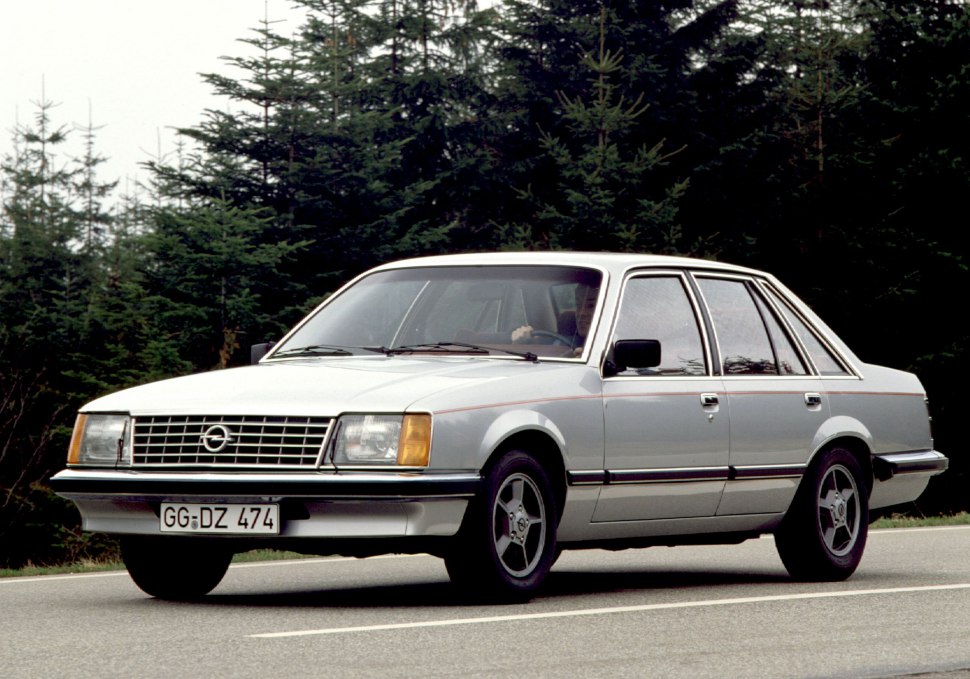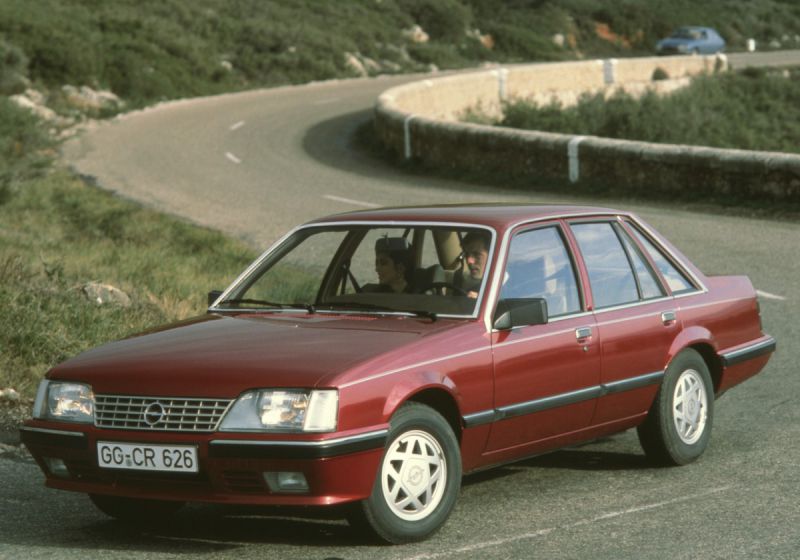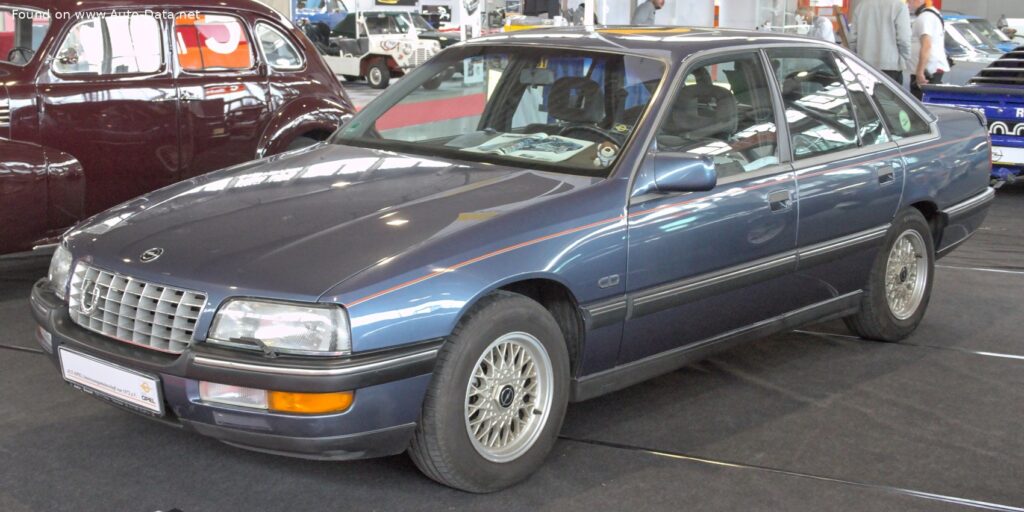
The Opel Senator B 3.0i CAT (156 Hp) Automatic, launched in September 1987, was Opel’s flagship executive sedan, designed to compete in the highly demanding European market. As the second generation of the Senator, it aimed to provide a blend of German engineering, spaciousness, and understated luxury for discerning buyers. While Opel was not a presence in the United States during this period, the Senator B’s development benefited from General Motors’ global engineering resources, sharing its platform with the Opel Omega A. This particular variant, featuring a 3.0-liter inline-six engine and automatic transmission, was a prominent offering, catering to those seeking a comfortable and capable cruiser for long-distance travel. Production continued until September 1990, marking it as a significant model in Opel’s late 1980s lineup.
Opel Senator B 3.0i CAT: Powertrain and Performance
The Opel Senator B 3.0i CAT (156 Hp) Automatic was powered by a longitudinally mounted, naturally aspirated 3.0-liter (2969 cm³, or 181.18 cu. in.) inline-six engine, internally designated as the C30LE. This engine utilized a multi-port fuel injection system and a Cam-in-Head (CIH) valvetrain with two valves per cylinder – a reliable and well-established configuration for Opel. The inclusion of a catalytic converter, denoted by the “CAT” in its name, was crucial for meeting the increasingly strict European emissions regulations of the late 1980s.
The engine produced 156 horsepower at 5400 rpm, resulting in a power-per-liter ratio of 52.5 Hp/l. Torque output was equally impressive for the era, peaking at 230 Nm (169.64 lb.-ft.) between 3800 and 4400 rpm, providing flexible performance across a wide range of driving conditions. Power was delivered to the rear wheels through a smooth-shifting 4-speed automatic transmission, prioritizing comfort and ease of driving over outright sportiness.
Performance figures indicated a 0 to 60 mph acceleration time of approximately 10.3 seconds (0-100 km/h in 10.8 seconds), making it a competitive performer within its segment. The vehicle achieved a maximum speed of 130.49 mph (210 km/h), enabling effortless cruising on high-speed European autobahns. Fuel economy was reasonable for a large sedan of its time, with a combined figure of approximately 21.8 US mpg (10.8 l/100 km), and extra-urban figures reaching 30.5 US mpg (7.7 l/100 km). The engine featured a compression ratio of 8.6:1 and a maximum engine speed of 6400 rpm.
Design and Features
The Opel Senator B adopted a traditional four-door sedan body style, presenting a conservative yet elegant aesthetic characteristic of executive cars from the late 1980s. Its dimensions – 190.75 inches (4845 mm) in length, 69.41 inches (1763 mm) in width, and 57.17 inches (1452 mm) in height – gave it a substantial road presence. A long wheelbase of 107.48 inches (2730 mm) contributed to a spacious interior capable of comfortably accommodating five passengers.
Aerodynamics were considered in the design, evidenced by a drag coefficient (Cd) of 0.30, which was relatively good for a sedan of its size and era. This contributed to both improved fuel efficiency and reduced wind noise at higher speeds. Trunk capacity was generous, offering 18.72 cu. ft. (530 liters) of space, expandable to a maximum of 32.84 cu. ft. (930 liters) with the rear seats folded, although this feature was less common in executive sedans of the period.
The Senator B featured an advanced suspension system for its time. The front utilized an independent McPherson strut setup with coil springs and an anti-roll bar, while the rear employed an independent coil spring system with trailing arms and a transverse stabilizer. This configuration provided a comfortable ride and stable handling characteristics. Braking was handled by ventilated discs at the front and disc brakes at the rear, enhanced by an Anti-lock Braking System (ABS), a significant safety feature for 1987. Steering was hydraulic power-assisted, utilizing a cone worm and recirculation balls mechanism for light and precise control. The car rode on 205/65 R15 tires mounted on 15-inch wheel rims (6J x 15 or 7J x 15).
Technical Specifications: Opel Senator B 3.0i CAT (156 Hp) Automatic
| Category | Specification |
| Brand | Opel |
| Model | Senator B |
| Type (Engine) | 3.0i CAT (156 Hp) Automatic |
| Production Start | September, 1987 |
| Production End | September, 1990 |
| Body Type | Sedan |
| Seats | 5 |
| Doors | 4 |
| Performance Specs | |
| Fuel Consumption (Urban) | 15.5 l/100 km |
| Fuel Consumption (Extra Urban) | 7.7 l/100 km |
| Fuel Consumption (Combined) | 10.8 l/100 km |
| Fuel Type | Petrol (Gasoline) |
| Acceleration 0-60 mph | 10.3 sec |
| Maximum Speed | 210 km/h |
| Weight-to-power ratio | 9.3 kg/Hp |
| Engine Specs | |
| Power | 156 Hp @ 5400 rpm |
| Torque | 230 Nm @ 3800-4400 rpm |
| Engine Displacement | 2969 cm³ |
| Number of Cylinders | 6 |
| Engine Configuration | Inline |
| Bore x Stroke | 95 mm x 69.8 mm |
| Compression Ratio | 8.6:1 |
| Valves per Cylinder | 2 |
| Fuel Injection System | Multi-port manifold injection |
| Engine Aspiration | Naturally aspirated |
| Valvetrain | CIH |
| Dimensions, Volume, and Weights | |
| Kerb Weight | 1455 kg |
| Max. Weight | 1995 kg |
| Max Load | 540 kg |
| Trunk Space (Min/Max) | 530 l / 930 l |
| Fuel Tank Capacity | 75 l |
| Length | 4845 mm |
| Width | 1763 mm |
| Height | 1452 mm |
| Wheelbase | 2730 mm |
| Drivetrain, Brakes, and Suspension | |
| Drivetrain Architecture | Rear wheel drive |
| Gearbox Type | 4-speed automatic transmission |
| Front Suspension | Independent, McPherson with coil spring and anti-roll bar |
| Rear Suspension | Independent coil spring, Transverse stabilizer, Trailing arm |
| Front Brakes | Ventilated discs |
| Rear Brakes | Disc |
| Assisting Systems | ABS (Anti-lock braking system) |
| Power Steering | Hydraulic Steering |
| Tire Size | 205/65 R15 |
Legacy and Market Impact of the Opel Senator B
The Opel Senator B 3.0i CAT (156 Hp) Automatic, and the Senator B line as a whole, established a firm position in the European executive car market. Positioned as Opel’s alternative to competitors like the Ford Scorpio, Renault 25, and Saab 9000, it also aimed to offer a more accessible option compared to premium German brands like the Mercedes-Benz E-Class (W124) and BMW 5 Series (E34). While lacking the prestige of its Bavarian rivals, the Senator B was highly regarded for its robust construction, comfortable ride, and spacious interior.
Its rear-wheel-drive layout, shared with the Opel Omega, contributed to balanced handling. The 3.0-liter inline-six engine, particularly with the catalytic converter, represented a balance between traditional European executive power and growing environmental concerns in the late 1980s. The automatic transmission further enhanced its appeal as a comfortable long-distance vehicle.
The Senator B gained a reputation for durability and reliability, becoming a popular choice for taxi fleets in some European countries, demonstrating its longevity and cost-effectiveness. Although the production run of this specific variant was relatively short (1987-1990), the Senator B continued in other forms until 1993, eventually being succeeded by the Omega B as Opel’s largest sedan. Today, the Opel Senator B is remembered as a capable and often overlooked executive sedan, embodying the practical and dependable spirit of Opel engineering during a pivotal period in automotive history. It remains a classic example of European automotive design and technology from the late 20th century, appreciated by enthusiasts for its comfort, performance, and understated elegance.