
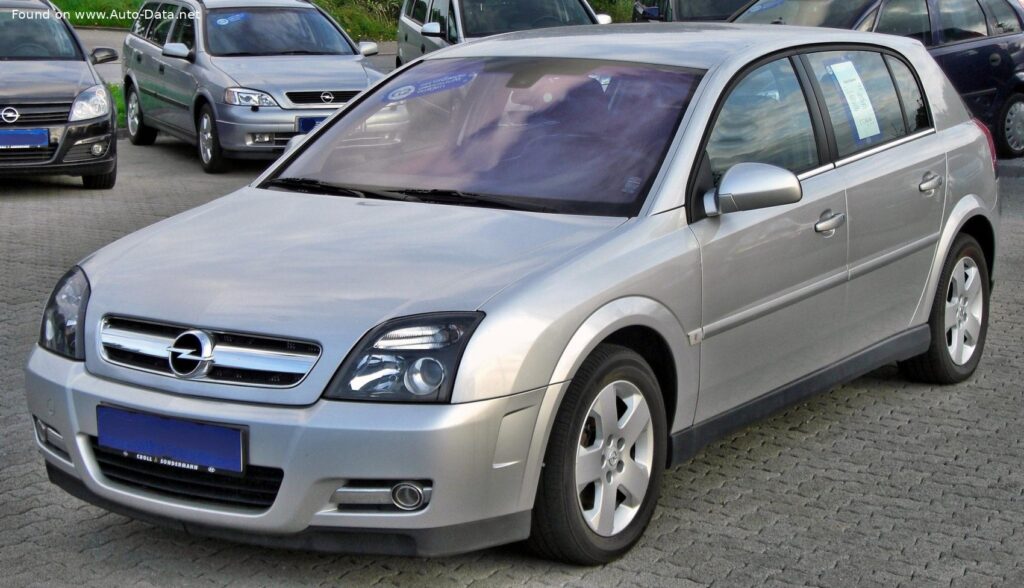
The Opel Signum 3.0 V6 CDTI (177 Hp) Automatic was a distinctive and ambitious vehicle produced by German automaker Opel, a subsidiary of General Motors, from July 2003 to June 2005. Positioned as a large executive hatchback, the Signum was based on the extended platform of the Opel Vectra C, but offered a unique blend of practicality, comfort, and style. It aimed to carve out a niche in the European market by providing enhanced rear passenger space and cargo versatility, combining the attributes of a station wagon with the sleek design of a hatchback. This particular variant, equipped with a 3.0-liter V6 CDTI diesel engine producing 177 horsepower, represented Opel’s commitment to efficient and refined diesel powertrains. The Signum was never officially sold in the United States, but it played a significant role in Opel’s strategy to compete in the executive car segment.
Opel Signum: A Unique European Offering
The Opel Signum was conceived as an alternative to traditional executive sedans and wagons. Its design philosophy centered around providing a more flexible and comfortable experience for both driver and passengers. The “Signum” name itself, derived from Latin, signifies a ‘sign’ or ‘mark’ – intended to represent a new direction for Opel in the executive car market. The vehicle’s extended wheelbase, borrowed from the long-wheelbase Vectra C, was central to achieving its spacious interior. Opel targeted buyers who desired a vehicle that could comfortably accommodate passengers and cargo without sacrificing style or driving dynamics. The Signum’s relatively short production run and limited sales figures, however, meant it remained a relatively uncommon sight on European roads.
Engine & Performance: The 3.0 V6 CDTI Powertrain
The Opel Signum 3.0 V6 CDTI Automatic was powered by a transversely mounted 3.0-liter V6 common rail diesel engine, internally designated Y30DT. This engine was engineered to deliver a balance of power and torque suitable for both highway cruising and spirited driving. It produced 177 horsepower at 4000 rpm, achieving a power density of 59.8 horsepower per liter. However, the engine’s defining characteristic was its substantial torque output of 272.9 lb.-ft. (370 Nm) available from a low 1900 rpm. This strong low-end torque, typical of diesel engines, provided excellent responsiveness and effortless acceleration.
Power was transmitted to the front wheels through a smooth-shifting 5-speed automatic transmission. This combination enabled the Signum to accelerate from 0 to 60 mph in 9.4 seconds, reaching a top speed of 135.46 mph (218 km/h). The engine featured a turbocharger and intercooler to optimize air intake and improve combustion efficiency. A DOHC valvetrain with 4 valves per cylinder further enhanced the engine’s responsiveness. Fuel economy was a key advantage of this diesel powertrain, achieving a combined fuel consumption of 29.8 US mpg (7.9 l/100 km), with urban figures around 21 US mpg (11.2 l/100 km) and highway figures up to 39.2 US mpg (6 l/100 km). Its 15.85 US gallon fuel tank provided a substantial driving range.
Design & Features: Innovation and Versatility
The Opel Signum’s design departed from conventional sedan styling, adopting a five-door hatchback body style with a wheelbase of 111.42 inches (2830 mm). This extended wheelbase contributed significantly to the vehicle’s spacious interior, particularly in the rear. The exterior design featured an aerodynamic profile with a drag coefficient (Cd) of 0.33, improving fuel efficiency and reducing wind noise. The vehicle measured 182.52 inches (4636 mm) in length and 70.79 inches (1798 mm) in width, giving it a substantial presence on the road.
The interior of the Signum was its most distinctive feature. Instead of a traditional rear bench seat, it often featured two individual rear seats that could slide, recline, and fold flat, mirroring the adjustability of the front seats. This “FlexSpace” system offered exceptional versatility, allowing owners to prioritize either rear passenger legroom or cargo capacity. The trunk space ranged from 12.89 cu. ft. (365 l) with all seats in place to a generous 49.79 cu. ft. (1410 l) with the rear seats folded. Standard features included hydraulic rack and pinion power steering, ventilated front disc brakes, rear disc brakes, and an Anti-lock Braking System (ABS). The suspension utilized coil springs at both the front and rear, tuned for a comfortable ride. The vehicle rode on 215/55 R16 tires mounted on 6.5J x 16-inch alloy wheels.
Technical Specifications
| Brand | Opel |
| Model | Signum |
| Generation | Signum |
| Type (Engine) | 3.0 V6 CDTI (177 Hp) Automatic |
| Start of Production | July, 2003 |
| End of Production | June, 2005 |
| Powertrain Architecture | Internal Combustion Engine |
| Body Type | Hatchback |
| Seats | 5 |
| Doors | 5 |
| Fuel Consumption (Economy) – Urban | 21 US mpg (11.2 l/100 km) |
| Fuel Consumption (Economy) – Extra Urban | 39.2 US mpg (6 l/100 km) |
| Fuel Consumption (Economy) – Combined | 29.8 US mpg (7.9 l/100 km) |
| Fuel Type | Diesel |
| Acceleration 0 – 60 mph | 9.4 sec |
| Maximum Speed | 135.46 mph (218 km/h) |
| Weight-to-Power Ratio | 9.4 kg/Hp, 106 Hp/tonne |
| Weight-to-Torque Ratio | 4.5 kg/Nm, 221.6 Nm/tonne |
| Power | 177 Hp @ 4000 rpm |
| Power per Liter | 59.8 Hp/l |
| Torque | 272.9 lb.-ft. @ 1900 rpm (370 Nm @ 1900 rpm) |
| Engine Layout | Front, Transverse |
| Engine Model/Code | Y30DT |
| Engine Displacement | 180.51 cu. in. (2958 cm3) |
| Number of Cylinders | 6 |
| Engine Configuration | V-engine |
| Cylinder Bore | 3.44 in. (87.5 mm) |
| Piston Stroke | 3.23 in. (82 mm) |
| Compression Ratio | 18.5:1 |
| Number of Valves per Cylinder | 4 |
| Fuel Injection System | Diesel Commonrail |
| Engine Aspiration | Turbocharger, Intercooler |
| Valvetrain | DOHC |
| Kerb Weight | 3681.72 lbs. (1670 kg) |
| Trunk (Boot) Space – Minimum | 12.89 cu. ft. (365 l) |
| Trunk (Boot) Space – Maximum | 49.79 cu. ft. (1410 l) |
| Length | 182.52 in. (4636 mm) |
| Width | 70.79 in. (1798 mm) |
Legacy and Market Impact
The Opel Signum 3.0 V6 CDTI represented a bold attempt by Opel to innovate within the executive car segment. Its unique FlexSpace interior and powerful diesel engine offered a compelling alternative to traditional sedans and wagons. However, its unconventional styling and niche positioning limited its market success. Competitors included the Renault Vel Satis, Ford Mondeo, Volkswagen Passat, and entry-level models from premium brands like Audi, BMW, and Mercedes-Benz. Despite its short production run, the Signum remains a testament to Opel’s willingness to experiment with design and packaging. Today, it is appreciated by enthusiasts for its comfort, spaciousness, and the performance of its V6 CDTI engine, representing a unique chapter in Opel’s automotive history.
