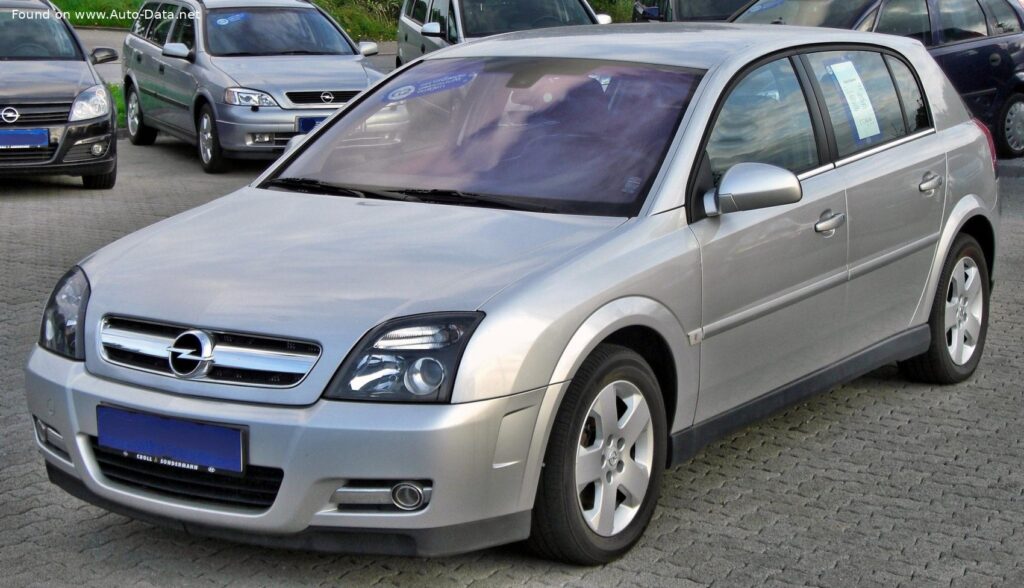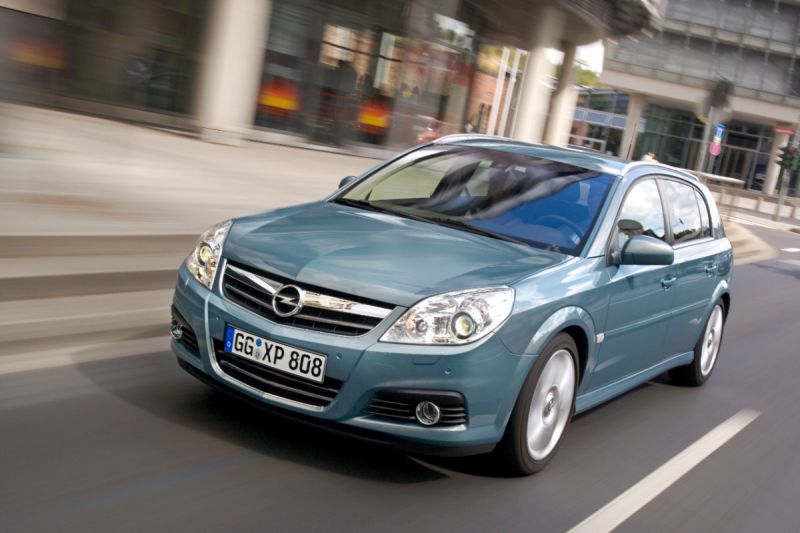
The Opel Signum (facelift 2005), specifically the 1.8i 16V variant, represents a distinctive and somewhat unconventional offering from the German automaker, aimed at the European executive and upper-midsize car segments. Introduced in November 2005, this facelifted model built upon the Opel Vectra C platform – utilizing its longer wheelbase – to create a premium large hatchback, often described as an “executive wagon.” The Signum was designed to bridge the gap between the practicality of a station wagon and the comfort and prestige associated with larger sedans, appealing to buyers seeking a versatile and sophisticated vehicle. As a model primarily developed for the European market, the Opel Signum was never officially sold in the United States, making it a noteworthy example of European automotive engineering and marketing strategy.
Opel Signum (facelift 2005): A Unique Executive Hatchback
The 1.8i 16V version served as the entry-level engine option for the Signum, providing a balance of affordability and usability. It was engineered to deliver sufficient performance for everyday driving and highway cruising, embodying Opel’s commitment to well-engineered vehicles tailored to the needs of European drivers. Production of this specific variant ran from November 2005 to June 2008, representing a relatively short but significant period in the Signum’s lifecycle.
Engine & Performance
The Opel Signum (facelift 2005) 1.8i 16V was powered by a naturally aspirated 1.8-liter (1796 cm3 or 109.6 cubic inches) inline four-cylinder engine, designated the Z18XER. This engine was part of Opel’s Ecotec family, known for its efficiency and respectable power output. Employing a Double Overhead Camshaft (DOHC) valvetrain and multi-port fuel injection, the engine produced 140 horsepower at 6300 revolutions per minute (rpm), resulting in a power-per-liter ratio of 78 horsepower per liter.
Torque output was rated at 175 Nm (approximately 129.07 lb.-ft.) at 3800 rpm. This torque curve provided a smooth and responsive driving experience, suitable for both daily commutes and mid-range acceleration. Power was delivered to the front wheels through a 5-speed manual transmission, a common and reliable configuration for vehicles in this class during the period.
Performance figures indicate a 0 to 60 mph acceleration time of approximately 10.7 seconds, and 0 to 100 km/h (62 mph) in 11.3 seconds. The vehicle’s top speed was 207 km/h (128.62 mph). Fuel economy was rated at 10.4 liters per 100 km (22.6 US mpg) in urban driving and 6.1 liters per 100 km (38.6 US mpg) on extra-urban routes, demonstrating its capability as an economical long-distance vehicle. The vehicle’s weight-to-power ratio was 10.2 kg per horsepower, or 98.2 horsepower per tonne, indicating a solid, though not overtly sporty, performance profile.
Design & Features
The Opel Signum stood out due to its unique five-door hatchback body style, blending elements of a traditional hatchback, sedan, and compact station wagon. Its dimensions – 183.11 inches (4651 mm) in length, 70.79 inches (1798 mm) in width, and 57.72 inches (1466 mm) in height – combined with a substantial 111.42-inch (2830 mm) wheelbase, provided generous interior space. This extended wheelbase, shared with the long-wheelbase Vectra, was crucial to the Signum’s interior versatility.
The interior was designed with flexibility as a priority, featuring five seats and a highly adaptable rear seating system. The “FlexSpace” system allowed the two outer rear seats to slide and recline independently, while the central rear seat could fold down to create a large armrest with integrated storage, including a refrigerated compartment. This innovative system maximized passenger comfort and cargo capacity. Minimum trunk space was 12.89 cubic feet (365 liters), expanding to an impressive 49.79 cubic feet (1410 liters) with the rear seats folded, making it a practical choice for families and those requiring substantial cargo space.
The 2005 facelift brought subtle but effective styling updates, aligning the Signum with Opel’s contemporary design language. These updates included revised headlights, a redesigned grille, and updated front and rear bumpers, resulting in a more modern and refined appearance. Safety features for the era included disc brakes on all four wheels and an Anti-lock Braking System (ABS). The vehicle rode on 215/55 R16 tires mounted on 16-inch alloy wheels, providing a comfortable and stable ride. The drag coefficient (Cd) of 0.32 contributed to fuel efficiency and reduced wind noise at higher speeds.
Technical Specifications
| Category | Specification |
| General Information | |
| Brand | Opel |
| Model | Signum |
| Generation | Signum (facelift 2005) |
| Type (Engine) | 1.8i 16V (140 Hp) |
| Start of production | November, 2005 |
| End of production | June, 2008 |
| Powertrain Architecture | Internal Combustion engine |
| Body type | Hatchback |
| Seats | 5 |
| Doors | 5 |
| Performance Specs | |
| Fuel consumption (urban) | 10.4 l/100 km |
| Fuel consumption (extra urban) | 6.1 l/100 km |
| Fuel Type | Petrol (Gasoline) |
| Acceleration 0 – 100 km/h | 11.3 sec |
| Acceleration 0 – 62 mph | 11.3 sec |
| Acceleration 0 – 60 mph (Calculated) | 10.7 sec |
| Maximum speed | 207 km/h |
| Weight-to-power ratio | 10.2 kg/Hp |
| Engine Specs | |
| Power | 140 Hp @ 6300 rpm |
| Power per liter | 78 Hp/l |
| Torque | 175 Nm @ 3800 rpm |
| Engine layout | Front, Transverse |
| Engine Model/Code | Z18XER |
| Engine displacement | 1796 cm3 |
| Number of cylinders | 4 |
| Engine configuration | Inline |
| Dimensions | |
| Length | 4651 mm |
| Width | 1798 mm |
| Height | 1466 mm |
| Wheelbase | 2830 mm |
Legacy and Market Impact
The Opel Signum (facelift 2005) occupies a unique position in the European automotive market. It was an ambitious attempt by Opel to establish a new niche within the executive segment, offering a more flexible and practical alternative to traditional sedans and station wagons. Its primary competitors included the Volkswagen Passat, Ford Mondeo, and Renault Laguna, as well as entry-level models from premium brands like Audi and BMW. However, the Signum’s distinctive body style set it apart.
Despite its innovative FlexSpace interior and comfortable ride, the Signum did not achieve widespread commercial success. Its unconventional design, which some found ambiguous, may have confused potential buyers. While it offered excellent rear passenger space and cargo versatility, its premium pricing positioned it against more established and prestigious brands. The 1.8i 16V engine, while capable, faced competition from more powerful gasoline and fuel-efficient diesel engines that were popular in the European market.
Production of the Signum ended in June 2008, and Opel did not produce a direct successor. The Insignia eventually took over as Opel’s flagship large car, adopting a more conventional sedan and wagon approach. Nevertheless, the Signum’s legacy lies in its innovative spirit and its attempt to redefine the executive car segment. It demonstrated Opel’s willingness to experiment with design and interior flexibility, influencing subsequent models that prioritized modularity and passenger comfort. For automotive enthusiasts, the Opel Signum remains a fascinating case study in market segmentation and design innovation, representing a bold, if niche, effort to offer something different to European car buyers.