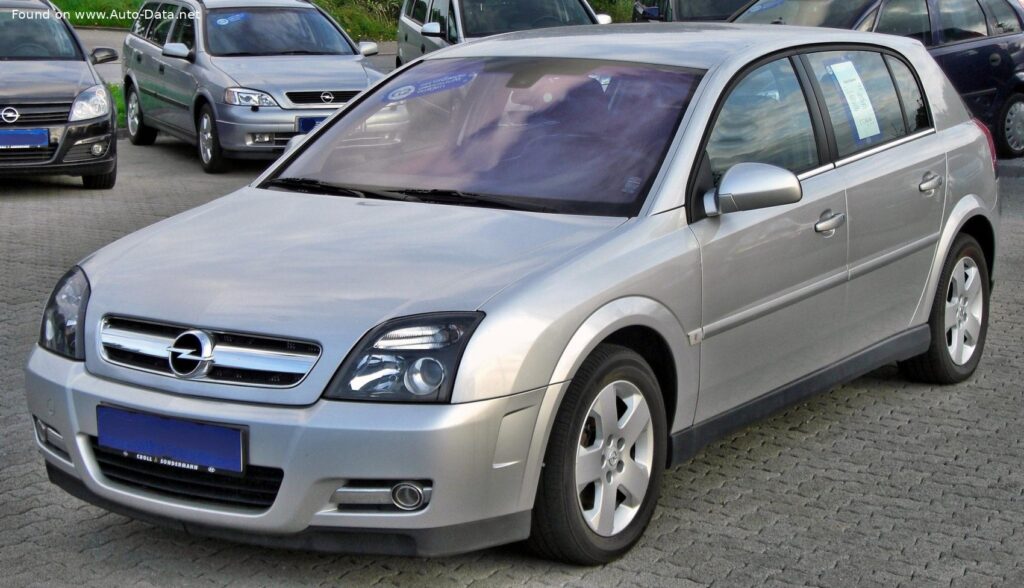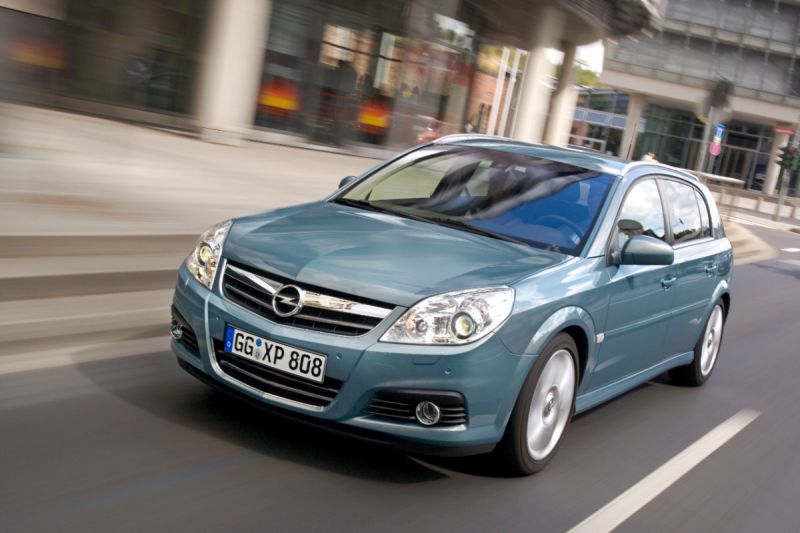
The Opel Signum (facelift 2005) 2.8i V6 24V Turbo (250 Hp) represented a unique and ambitious venture by German automaker Opel into the executive D-segment market. Launched initially in 2003, the Signum was conceived as a premium, versatile five-door hatchback positioned above the conventional Vectra sedan, sharing its extended Epsilon platform. It aimed to blend the spaciousness and flexibility of an MPV (Multi-Purpose Vehicle) with the driving dynamics and refined aesthetics of a traditional executive car. The 2005 facelift brought a host of updates, refining its design, enhancing interior quality, and introducing a more potent powertrain lineup, including the formidable 2.8i V6 24V Turbo (250 Hp) variant, which served as the range-topping performance model.
Unlike many of its Opel siblings, the Signum was never officially sold in the United States, remaining a product tailored specifically for the European market. Its design philosophy, centered around maximizing rear passenger comfort and cargo versatility through an innovative “FlexSpace” seating system, was a direct response to perceived consumer desires for greater practicality without sacrificing executive-level appointments. The 2.8i V6 Turbo model, produced from March 2006 to June 2008, offered a compelling blend of power, luxury, and utility, setting it apart from more conventional sedan and wagon offerings in its class.
Opel Signum (facelift 2005) 2.8i V6 Turbo: Engine & Performance
At the heart of the top-tier Opel Signum (facelift 2005) was the robust 2.8-liter (2792 cm3 or 170.38 cu. in.) Z28NET V6 engine. This powerplant featured a sophisticated 24-valve configuration, a V-engine layout, and was transversely mounted in the front of the vehicle. Crucially, it was equipped with a turbocharger and intercooler, significantly boosting its output and delivering a dynamic driving experience.
This turbocharged V6 engine produced an impressive 250 horsepower at 5500 rpm, translating to a power-per-liter rating of 89.5 HP/l. Complementing this horsepower was a substantial torque output of 350 Nm (258.15 lb.-ft.), available across a broad rev range, ensuring strong acceleration and effortless cruising. Power was channeled to the front wheels via a precise 6-speed manual transmission, offering an engaging connection between the driver and the road.
The performance figures for the 2.8i V6 Turbo were highly competitive for its class and era. The Signum could accelerate from 0 to 60 mph in a brisk 6.8 seconds (0-100 km/h in 7.2 seconds), making it one of the quicker vehicles in the executive hatchback segment. Its top speed was electronically limited to 155 mph (250 km/h), a testament to its significant power reserves. Despite its performance capabilities, Opel engineered the engine for a reasonable balance of power and efficiency, with an extra-urban fuel economy rating of approximately 30.9 US mpg (7.6 l/100 km), though urban consumption was naturally higher at 15 US mpg (15.7 l/100 km). The vehicle’s weight-to-power ratio stood at 6.3 kg/Hp, or 158.2 Hp per ton, highlighting its relatively light footprint for a car of its size and power.
Design & Features of the Opel Signum (facelift 2005)
The Opel Signum (facelift 2005) maintained its distinctive hatchback body type, characterized by a longer wheelbase than its Vectra sedan counterpart and a unique, sloping rear profile. With five doors and seating for five, the Signum prioritized interior flexibility and passenger comfort, particularly for those in the rear seats. Its design was a departure from conventional sedans and wagons, attempting to carve out a niche for buyers seeking something more versatile and less utilitarian than a traditional MPV.
A key interior feature was Opel’s “FlexSpace” system, which allowed for individual adjustment of the three rear seats, including fore-aft sliding, reclining backrests, and even the ability to fold flat to create an expansive cargo area. This provided exceptional adaptability, ranging from maximizing legroom for two rear passengers to optimizing cargo capacity. The minimum trunk space was 12.89 cubic feet (365 liters), expandable to an impressive 49.79 cubic feet (1410 liters) with the rear seats folded, making it highly practical for families or those requiring significant hauling capability.
Externally, the 2005 facelift brought a refreshed front fascia with new headlights, a revised grille featuring Opel’s updated corporate identity, and a more aggressive bumper design. These changes aimed to give the Signum a more contemporary and sophisticated appearance. The vehicle rode on 18-inch wheels with 235/40 R18 tires, contributing to both its visual appeal and handling dynamics. Its overall dimensions – 183.11 inches (4651 mm) in length, 70.79 inches (1798 mm) in width, and 57.72 inches (1466 mm) in height, with a generous 111.42-inch (2830 mm) wheelbase – underscored its spacious interior. The drag coefficient (Cd) of 0.32 was respectable for a car of its size and shape, contributing to both fuel efficiency and reduced wind noise at higher speeds.
Safety features, typical for European vehicles of this era, included disc brakes on both front and rear axles, independent coil spring suspension at all four corners for a comfortable yet controlled ride, and a robust body structure. While specific modern driver-assistance systems were not prevalent in 2005, the Signum would have offered a comprehensive suite of passive safety features, including multiple airbags and advanced braking systems.
Technical Specifications: Opel Signum (facelift 2005) 2.8i V6 24V Turbo (250 Hp)
| Category | Specification |
| General Information | |
| Brand | Opel |
| Model | Signum |
| Generation | Signum (facelift 2005) |
| Type (Engine) | 2.8i V6 24V Turbo (250 Hp) |
| Start of production | March, 2006 |
| End of production | June, 2008 |
| Powertrain Architecture | Internal Combustion engine |
| Body type | Hatchback |
| Seats | 5 |
| Doors | 5 |
| Performance Specifications | |
| Fuel consumption (urban) | 15.7 l/100 km |
| Fuel consumption (extra urban) | 7.6 l/100 km |
| Fuel Type | Petrol (Gasoline) |
| Acceleration 0 – 60 mph | 6.8 sec |
| Acceleration 0 – 100 km/h | 7.2 sec |
| Maximum speed | 250 km/h |
| Weight-to-power ratio | 6.3 kg/Hp |
| Weight-to-torque ratio | 4.5 kg/Nm |
| Engine Specifications | |
| Power | 250 Hp @ 5500 rpm |
| Power per liter | 89.5 Hp/l |
| Torque | 350 Nm |
| Engine layout | Front, Transverse |
| Engine Model/Code | Z28NET |
| Engine displacement | 2792 cm3 |
| Number of cylinders | 6 |
| Engine configuration | V-engine |
| Cylinder Bore | 89 mm |
| Piston Stroke | 74.8 mm |
| Compression ratio | 9.5:1 |
| Number of valves per cylinder | 4 |
| Fuel injection system | Multi-port manifold injection |
| Engine aspiration | Turbocharger, Intercooler |
| Space, Volume and Weights | |
| Kerb Weight | 1580 kg |
| Max. weight (Gross Vehicle Weight) | 2175 kg |
| Max load | 595 kg |
| Trunk (boot) space – minimum | 365 l |
| Trunk (boot) space – maximum | 1410 l |
| Fuel tank capacity | 60 l |
| Dimensions | |
| Length | 4651 mm |
| Width | 1798 mm |
| Height | 1466 mm |
| Wheelbase | 2830 mm |
| Drivetrain, Brakes and Suspension | |
| Drivetrain Architecture | The Internal combustion engine (ICE) drives the front wheels of the vehicle. |
| Drive wheel | Front wheel drive |
| Number of gears and type of gearbox | 6 gears, manual transmission |
The Opel Signum, particularly in its facelift 2005 guise with the potent 2.8i V6 24V Turbo (250 Hp) engine, represents an interesting chapter in Opel’s history. It was an ambitious attempt to challenge the conventional wisdom of the executive car market in Europe, offering a distinct alternative to the ubiquitous sedans and traditional station wagons. Opel’s intention was to create a “business class” vehicle that prioritized space, comfort, and versatility for rear passengers, aiming to appeal to both corporate users and families seeking a more flexible luxury experience.
However, despite its innovative “FlexSpace” interior, powerful engines like the 2.8L V6 Turbo, and a generally comfortable ride, the Signum struggled to gain widespread market acceptance. Its unconventional styling, which blended elements of a hatchback, a wagon, and even a minivan, proved to be a polarizing factor. European consumers, accustomed to more traditional body styles in the D-segment, often found the Signum’s aesthetics to be neither fully one thing nor another, leading to a degree of confusion about its precise market positioning.
Competitors in its segment were plentiful and well-established. These included the Volkswagen Passat, Ford Mondeo, Renault Laguna, and even premium offerings like the Audi A4 and BMW 3 Series, all of which offered more conventional and often more aesthetically pleasing designs for their target audiences. Some contemporary vehicles, like the Renault Vel Satis, also attempted a similar unconventional approach to executive transport and similarly faced an uphill battle in the market.
The Signum’s legacy is therefore one of an innovative concept that perhaps arrived before its time, or at least failed to resonate sufficiently with its intended audience. While it showcased Opel’s engineering capabilities, particularly with the impressive 2.8L V6 Turbo engine, its unique design language and niche positioning ultimately limited its commercial success. Production ceased in 2008, with Opel shifting its focus to more conventional and broadly appealing models. Nevertheless, the Signum remains a testament to Opel’s willingness to experiment and push boundaries in automotive design, offering a unique blend of performance, practicality, and executive comfort for those discerning buyers who appreciated its distinctive character. Today, these models are a rare sight, appreciated by enthusiasts for their powerful engine and unusual, spacious interior.