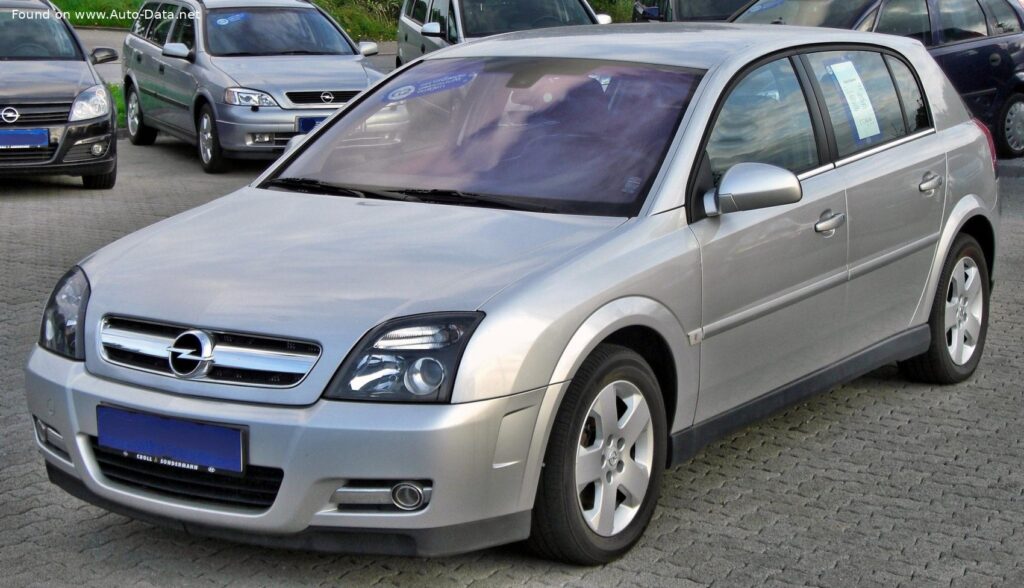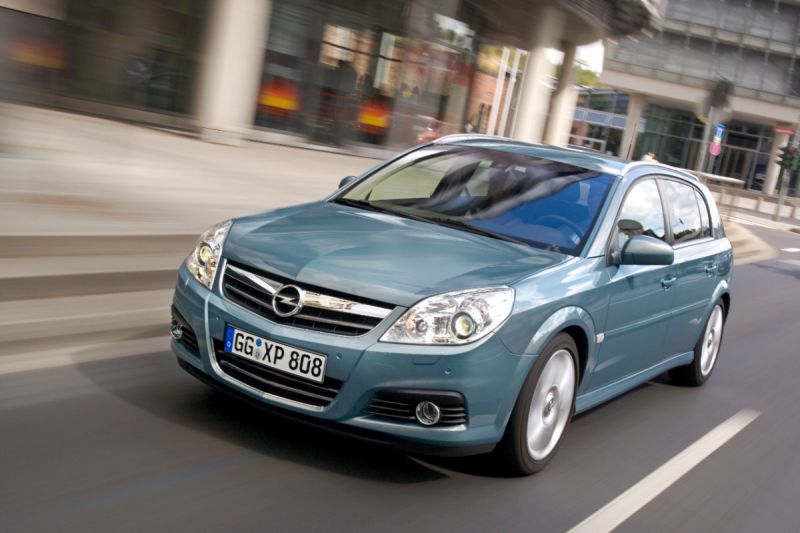
The Opel Signum (facelift 2005) 2.8i V6 24V Turbo represents a unique offering within the European executive car segment. Produced by Opel, then a subsidiary of General Motors, the Signum was designed as a more stylish and versatile alternative to traditional notchback sedans. Introduced in 2003 and receiving a significant facelift in 2005, the Signum aimed to blend the practicality of a station wagon with the perceived prestige of a sedan, creating a “sports hatch” or “estate” body style. While never officially sold in the United States, the Signum provides insight into Opel’s engineering capabilities and its attempt to carve out a niche in a competitive market. The 2.8i V6 24V Turbo variant, producing 250 horsepower, was a flagship model, offering strong performance coupled with a relatively luxurious interior.
Opel Signum: A Unique Approach to the Executive Segment
The Signum’s development stemmed from Opel’s desire to offer a vehicle that appealed to buyers seeking something different from the conventional executive cars of the early 2000s. The D-segment, populated by vehicles like the Ford Mondeo, Volkswagen Passat, and BMW 3 Series, was dominated by traditional saloon (sedan) and estate (wagon) body styles. Opel believed there was a demand for a vehicle that combined the best aspects of both, offering a spacious interior and practical cargo area with a more dynamic and contemporary appearance. The Signum, therefore, adopted a hatchback configuration with a distinctive, sloping rear window. The 2005 facelift refined the original design, updating the front and rear fascias, interior trim, and available equipment to maintain its appeal in a rapidly evolving market.
Market Positioning and European Context
The Opel Signum was primarily marketed in Europe, where the hatchback body style enjoys greater acceptance than in North America. It competed directly with vehicles like the Audi A4 Avant, BMW 3 Series Touring, and Volvo V70, all of which offered a similar blend of practicality and premium features. However, the Signum differentiated itself with its more unconventional styling and focus on interior space and flexibility. Opel positioned the Signum as a vehicle for drivers who valued individuality and practicality, rather than simply chasing brand prestige. The car’s relatively limited sales volume compared to its competitors suggests that while it appealed to a specific niche, it didn’t achieve mainstream success.
Engine & Performance
The heart of the Signum 2.8i V6 24V Turbo is a 2.8-liter, naturally aspirated V6 engine. This engine, designated as the Z28NET, is a 60-degree V-configuration powerplant featuring four valves per cylinder and a turbocharger. It produces a maximum power output of 250 horsepower (186 kW) at 5,250 rpm and a peak torque of 295 lb-ft (400 Nm) available from 2,800 to 5,250 rpm. This provides strong acceleration and effortless cruising capability. The engine is paired with a five-speed automatic transmission, which delivers smooth and responsive gear changes. While a six-speed manual transmission was available on some Signum models, the automatic was a popular choice for its convenience and refinement.
Performance figures for the Signum 2.8i V6 Turbo are respectable for its class. Acceleration from 0 to 62 mph (0-100 km/h) takes approximately 7.4 seconds, and the vehicle has a top speed of around 155 mph (250 km/h). The engine’s turbocharging contributes to its strong mid-range performance, making it well-suited for overtaking maneuvers and highway driving. Fuel economy, however, is not a strong point, with combined cycle figures averaging around 22-26 mpg (10.7-11.0 L/100km). The Signum’s chassis, derived from the Opel Vectra C, provides a comfortable ride and competent handling. The suspension system consists of MacPherson struts at the front and a multi-link setup at the rear, offering a good balance between ride quality and handling precision.
Design & Features
The Opel Signum’s most striking feature is its unconventional body style. The five-door hatchback configuration provides easy access to the spacious interior and a large cargo area. The sloping rear window and integrated spoiler contribute to a sleek and modern appearance. The 2005 facelift brought subtle but noticeable changes to the exterior design, including a revised front grille, new headlights, and updated taillights. Inside, the Signum offers a comfortable and well-equipped cabin. The dashboard is ergonomically designed, with intuitive controls and a clear instrument cluster. The seats are supportive and offer good adjustability.
Standard features on the 2.8i V6 Turbo model typically include leather upholstery, automatic climate control, a premium audio system, and alloy wheels. Optional extras could include a navigation system, sunroof, and parking sensors. Safety features were also a priority, with the Signum equipped with ABS brakes, traction control, stability control, and multiple airbags. The Signum’s interior also boasted a flexible seating arrangement, with the rear seats capable of folding flat to create a large, uninterrupted cargo space. This versatility made the Signum a practical choice for families and those who frequently transport bulky items. The overall design philosophy of the Signum was to create a vehicle that was both stylish and functional, appealing to buyers who wanted a car that stood out from the crowd.
Technical Specifications
| Engine Type | 2.8L V6 24V Turbo |
| Displacement | 2,792 cc (170.3 cu in) |
| Maximum Power | 250 hp (186 kW) @ 5,250 rpm |
| Maximum Torque | 295 lb-ft (400 Nm) @ 2,800-5,200 rpm |
| Transmission | 5-speed Automatic |
| Drivetrain | Front-Wheel Drive |
| 0-62 mph (0-100 km/h) | 7.4 seconds (approx.) |
| Top Speed | 155 mph (250 km/h) (approx.) |
| Fuel Economy (Combined) | 22-26 mpg (10.7-11.0 L/100km) |
| Curb Weight | 3,627 lbs (1,645 kg) (approx.) |
| Body Style | 5-door Hatchback |
| Production Years (Facelift) | 2005-2008 |