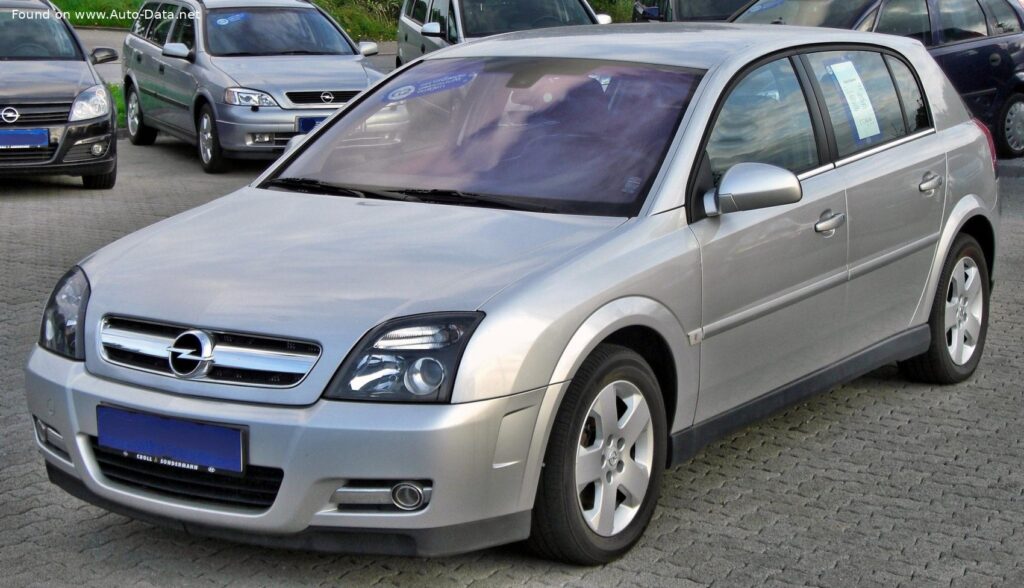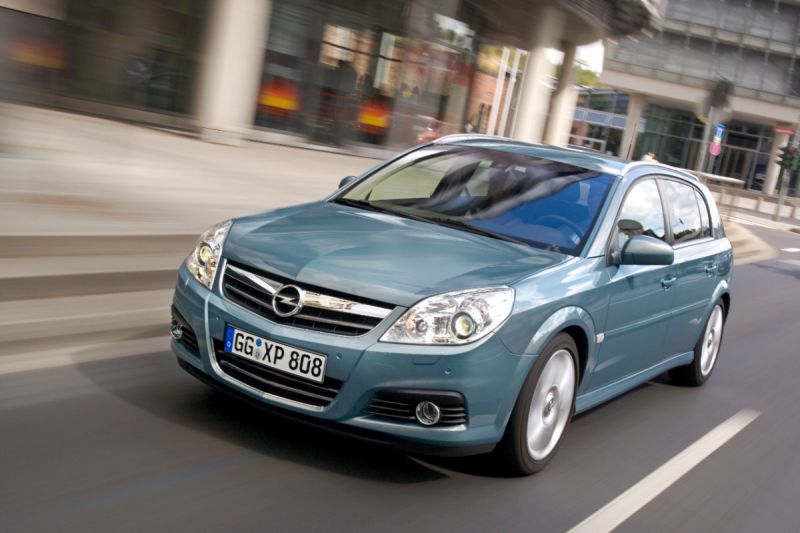
The Opel Signum (facelift 2005) represents a unique and often misunderstood chapter in European automotive history. Launched in July 2005 as a refreshed version of the original Signum, this vehicle was Opel’s ambitious attempt to carve out a niche in the executive D-segment, offering a blend of sedan-like comfort, hatchback versatility, and wagon-like space. Primarily marketed in Europe and the UK (as the Vauxhall Signum), it was never officially sold in the United States, making it an intriguing example of European market specialization.
The Opel Signum: A Unique Executive Hatchback
Built on an extended version of the GM Epsilon platform, which also underpinned the Opel Vectra C, the Signum distinguished itself with a longer wheelbase and a highly flexible interior configuration. This article focuses on the potent and efficient 3.0 V6 CDTI (Common Rail Direct Injection) variant, equipped with an automatic transmission, which served as a flagship diesel offering for the model range from 2005 to its discontinuation in June 2008. The Signum aimed to appeal to business users and families seeking premium features and exceptional practicality without venturing into the traditional luxury sedan or SUV segments.
Engine & Performance
Under the hood, the Opel Signum 3.0 V6 CDTI variant featured a robust and refined 3.0-liter (2958 cm³ or 180.51 cu. in.) V-engine, specifically designated with the Z30DT code. This front, transverse-mounted diesel powerhouse was equipped with a sophisticated Common Rail fuel injection system, a turbocharger, and an intercooler, allowing it to produce a competitive 184 horsepower at 4000 rpm. Its true strength, however, lay in its impressive torque output: a substantial 370 Nm (272.9 lb.-ft.) available from a low 1900 rpm. This broad torque band ensured strong, effortless acceleration and excellent passing power, characteristic of modern European diesel engines.
Power was delivered to the front wheels via a smooth 5-speed automatic transmission. This powertrain combination enabled the Signum to achieve a 0-60 mph acceleration time of approximately 9.3 seconds, with a top speed of 136.08 mph (219 km/h). For a vehicle of its size and executive aspirations, these performance figures were respectable, allowing for confident highway cruising and brisk urban driving.
Despite its powerful V6 engine, the Signum 3.0 V6 CDTI also boasted commendable fuel efficiency, a key selling point for diesel vehicles in Europe. It achieved an estimated 22.8 US mpg in urban driving, an impressive 43.6 US mpg on the extra-urban cycle, and a combined average of 32.7 US mpg. These figures highlighted Opel’s commitment to balancing performance with economy, further enhanced by the inclusion of a particulate filter system, a crucial technology for reducing emissions in diesel engines of that era. The engine’s DOHC valvetrain with 4 valves per cylinder, combined with an 18.5:1 compression ratio, showcased its advanced engineering for optimal combustion and efficiency.
Design & Features
The Opel Signum (facelift 2005) adopted a distinctive 5-door hatchback body type, but its design philosophy leaned more towards an “executive liftback” or “extended wheelbase hatchback.” Measuring 183.11 inches (4651 mm) in length, 70.79 inches (1798 mm) in width, and 57.48 inches (1460 mm) in height, with a substantial 111.42-inch (2830 mm) wheelbase, the Signum offered significantly more rear passenger legroom than its Vectra sedan counterpart. The facelift introduced subtle refinements, including a revised grille, updated headlights, and refreshed bumper designs, aiming for a more contemporary and upscale appearance. Its drag coefficient (Cd) of 0.32 was competitive for its class, contributing to both fuel efficiency and reduced wind noise.
Inside, the Signum was configured for five occupants, but its true innovation lay in the rear seating arrangement. Unlike a conventional bench, the Signum often featured two individual rear seats that could slide, recline, and fold independently, sometimes complemented by a versatile center console system that offered storage and amenities. This “FlexSpace” concept was designed to maximize passenger comfort and cargo flexibility, providing a generous minimum trunk space of 12.89 cubic feet (365 liters), which could expand to an impressive 49.79 cubic feet (1410 liters) with the rear seats folded down. This adaptability was a core aspect of its appeal in the European market, where buyers often sought practicality without sacrificing executive comfort.
Standard features for a vehicle of its segment and era included a robust suspension system with coil springs at both the front and rear, ensuring a comfortable ride. Braking was handled by ventilated discs at the front and solid discs at the rear, augmented by an Anti-lock Braking System (ABS) for enhanced safety. The hydraulic power steering, utilizing a rack and pinion system, provided direct and responsive handling. The vehicle rode on 215/55 R16 tires mounted on 6.5J x 16-inch wheel rims, providing a good balance of ride comfort and grip. While not explicitly listed in all data, it’s reasonable to assume that an executive-class vehicle from 2005 would also include a comprehensive suite of airbags and potentially electronic stability control (ESP) as standard or optional equipment in its primary markets.
Technical Specifications
| Category | Specification |
| General Information | Brand |
| Opel | |
| Model | |
| Signum | |
| Generation | |
| Signum (facelift 2005) | |
| Type (Engine) | |
| 3.0 V6 CDTI (184 Hp) Automatic | |
| Production Start | |
| July, 2005 | |
| Production End | |
| June, 2008 | |
| Powertrain Architecture | |
| Internal Combustion Engine | |
| Body Type | |
| Hatchback | |
| Seats | |
| 5 | |
| Doors | |
| 5 | |
| Performance Specs | Fuel Type |
| Diesel | |
| Acceleration 0 – 60 mph | |
| 9.3 sec | |
| Acceleration 0 – 62 mph (0-100 km/h) | |
| 9.8 sec | |
| Maximum Speed | |
| 136.08 mph (219 km/h) | |
| Fuel Economy – Urban | |
| 22.8 US mpg (10.3 l/100 km) | |
| Fuel Economy – Extra Urban | |
| 43.6 US mpg (5.4 l/100 km) | |
| Fuel Economy – Combined | |
| 32.7 US mpg (7.2 l/100 km) | |
| Weight-to-Power Ratio | |
| 9.1 kg/Hp | |
| Weight-to-Torque Ratio | |
| 4.5 kg/Nm | |
| Engine Specs | Power |
| 184 Hp @ 4000 rpm | |
| Power per Liter | |
| 62.2 Hp/l | |
| Torque | |
| 272.9 lb.-ft. (370 Nm) @ 1900 rpm | |
| Engine Layout | |
| Front, Transverse | |
| Engine Model/Code | |
| Z30DT | |
| Engine Displacement | |
| 3.0 liters (2958 cm³ / 180.51 cu. in.) | |
| Number of Cylinders | |
| 6 | |
| Engine Configuration | |
| V-engine | |
| Cylinder Bore | |
| 3.44 in. (87.5 mm) | |
| Piston Stroke | |
| 3.23 in. (82 mm) | |
| Compression Ratio | |
| 18.5:1 | |
| Valves per Cylinder | |
| 4 | |
| Fuel Injection System | |
| Diesel Commonrail | |
| Engine Aspiration | |
| Turbocharger, Intercooler | |
| Valvetrain | |
| DOHC | |
| Engine Oil Capacity | |
| 7.66 US qt (7.25 l) | |
| Coolant Capacity | |
| 8.77 US qt (8.3 l) | |
| Engine Systems | |
| Particulate filter | |
| Space, Volume and Weights | Curb Weight |
| 3681.72 lbs. (1670 kg) | |
| Maximum Permissible Weight (GVWR) | |
| 4817.1 lbs. (2185 kg) | |
| Payload Capacity | |
| 1135.38 lbs. (515 kg) | |
| Trunk Space – Minimum | |
| 12.89 cu. ft. (365 l) | |
| Trunk Space – Maximum | |
| 49.79 cu. ft. (1410 l) | |
| Fuel Tank Capacity | |
| 15.85 US gal (60 l) | |
| Dimensions | Length |
| 183.11 in. (4651 mm) | |
| Width | |
| 70.79 in. (1798 mm) | |
| Height | |
| 57.48 in. (1460 mm) | |
| Wheelbase | |
| 111.42 in. (2830 mm) | |
| Front Track | |
| 60.43 in. (1535 mm) | |
| Rear Track | |
| 60.04 in. (1525 mm) | |
| Drag Coefficient (Cd) | |
| 0.32 | |
| Drivetrain, Brakes and Suspension | Drivetrain Architecture |
| Front-wheel drive (ICE drives front wheels) | |
| Drive Wheel | |
| Front wheel drive | |
| Transmission Type | |
| 5 gears, automatic transmission | |
| Front Suspension | |
| Coil spring | |
| Rear Suspension | |
| Coil spring | |
| Front Brakes | |
| Ventilated discs | |
| Rear Brakes | |
| Disc | |
| Assisting Systems | |
| ABS (Anti-lock braking system) | |
| Steering Type | |
| Steering rack and pinion | |
| Power Steering | |
| Hydraulic Steering | |
| Tire Size | |
| 215/55 R16 | |
| Wheel Rims Size | |
| 6.5J x 16 |
Legacy and Market Impact of the Opel Signum
The Opel Signum, particularly in its facelifted 2005 iteration with the potent 3.0 V6 CDTI engine, holds a curious place in Opel’s history. It was an innovative attempt to redefine the executive car segment, offering a highly flexible and spacious interior that aimed to combine the best attributes of a sedan, a wagon, and even a compact MPV. Opel positioned it as a premium, practical alternative for buyers who desired more versatility than a traditional sedan but found a wagon too utilitarian or an MPV too family-oriented.
Despite its clear strengths in interior space, comfort, and the strong performance and efficiency of its V6 diesel engine, the Signum struggled to find widespread market acceptance. Its unique styling, which was neither a conventional sedan nor a wagon, proved polarizing for many European consumers who preferred more traditional body styles in the executive class. This often made it difficult for potential buyers to categorize the vehicle and understand its value proposition fully.
In its primary European markets, the Opel Signum faced stiff competition. It contended not only with mainstream D-segment rivals like the Ford Mondeo, Volkswagen Passat, and Renault Laguna but also with more unconventional offerings such as the Citroën C5 and the distinctive Renault Vel Satis, another executive car that prioritized interior space and comfort over traditional styling. Furthermore, it often found itself indirectly competing with entry-level premium models from Audi (A4), BMW (3 Series), and Mercedes-Benz (C-Class), which, while perhaps less spacious, carried greater brand prestige.
Ultimately, the Signum’s production ceased in 2008, having sold fewer units than Opel had hoped. Its legacy is one of an ambitious, well-engineered vehicle that was perhaps ahead of its time in concept or simply misjudged the market’s appetite for such an unconventional executive offering. Today, the Opel Signum remains a testament to Opel’s willingness to experiment and innovate within established segments. For enthusiasts and those seeking a distinctive, comfortable, and highly practical used vehicle, especially the powerful and efficient 3.0 V6 CDTI variant, the Signum offers a unique ownership experience, embodying a period when European automakers dared to push design and functional boundaries. Its blend of diesel performance, executive comfort, and hatchback versatility makes it a noteworthy, albeit niche, vehicle in the automotive landscape of the early 21st century.