
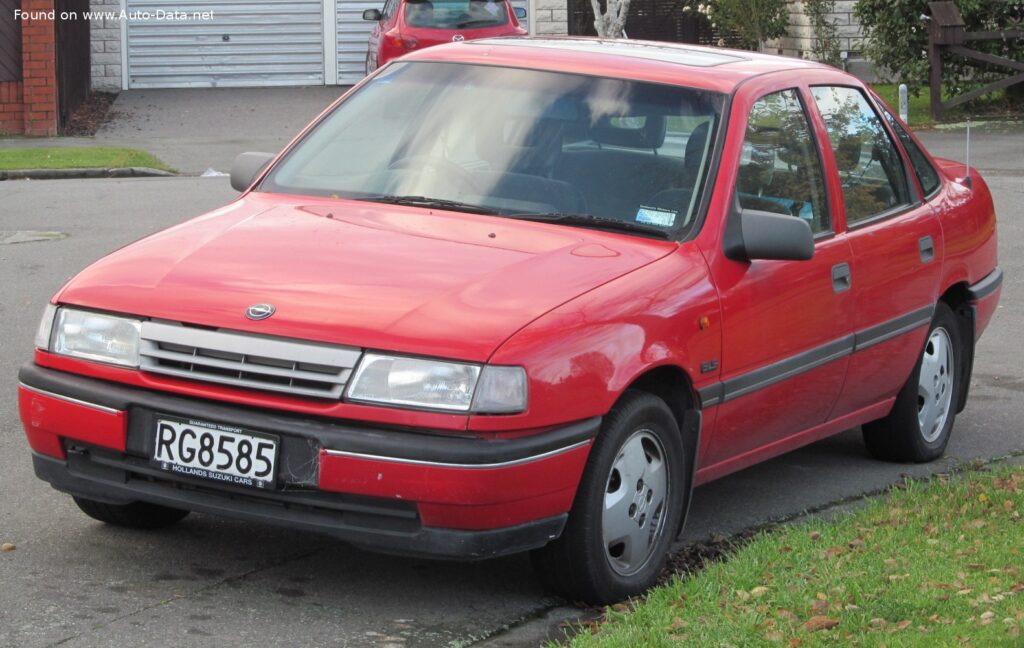
The Opel Vectra A, produced from 1988 to 1993, represented Opel’s entry into the mid-size family car segment, replacing the Ascona and Manta models. Positioned as a competitor to the Ford Mondeo, Vauxhall Cavalier (its British equivalent), and other European offerings, the Vectra A aimed to provide a modern, comfortable, and reliable vehicle for families and business users. The 1.8 S variant, equipped with a 1.8-liter engine producing 90 horsepower and an automatic transmission, was a popular choice for those prioritizing ease of driving over outright performance. While never officially sold in the United States, the Vectra A is significant as a key model in Opel’s history, showcasing advancements in design, safety, and technology for its time. It laid the groundwork for subsequent Vectra generations that would gain more international recognition.
Opel Vectra A 1.8 S: A Detailed Overview
Origins and Market Positioning
The Vectra A was a crucial model for Opel (and Vauxhall in the UK), marking a shift towards more aerodynamic and contemporary designs. The Ascona and Manta, while popular in their time, were beginning to show their age. The Vectra was designed to appeal to a broader audience, offering a more refined driving experience and a more modern aesthetic. In Europe, the mid-size segment was highly competitive, and the Vectra A needed to stand out. The 1.8 S trim level, with its automatic transmission, targeted buyers who valued convenience and comfort, often families or individuals who did not require the sporty characteristics of the higher-powered versions.
Engine & Performance
The heart of the Vectra A 1.8 S is its 1.8-liter inline-four cylinder engine. This engine, designated as the C18SE, produced 90 horsepower at 5,600 rpm and 107 lb-ft of torque at 3,600 rpm. While not a particularly powerful engine by modern standards, it provided adequate performance for everyday driving in the late 1980s and early 1990s. The engine featured a single overhead camshaft (SOHC) design and multi-point fuel injection, contributing to improved fuel efficiency and smoother operation compared to earlier Opel engines. The four-speed automatic transmission offered seamless gear changes, enhancing the car’s comfort and ease of use. Acceleration from 0 to 62 mph (0-100 km/h) took approximately 12.5 seconds, and the top speed was around 109 mph (175 km/h). The engine’s reliability was generally good, although regular maintenance was essential to ensure optimal performance. The automatic transmission, while convenient, did slightly impact fuel economy compared to the manual transmission options.
Design & Features
The Vectra A’s design was a significant departure from its predecessors. It featured a more streamlined, aerodynamic body shape, reflecting the design trends of the late 1980s. The exterior styling was relatively conservative, prioritizing practicality and functionality over flamboyant aesthetics. The 1.8 S trim level typically included features such as central locking, electric windows, and a basic audio system. Interior space was generous for a mid-size car, offering comfortable seating for five adults. Safety features, while limited by the standards of today, were improved compared to earlier Opel models. The Vectra A included a reinforced safety cage and side impact protection. However, features like airbags and anti-lock brakes (ABS) were not standard equipment and were often offered as optional extras. The dashboard layout was functional and straightforward, with clearly labeled controls. The materials used in the interior were durable but not particularly luxurious. The Vectra A was available as a four-door sedan and a five-door station wagon (Estate), offering versatility for families and those needing extra cargo space. The station wagon version was particularly popular in Europe, where practicality was highly valued.
Mechanical Components and Suspension
The Vectra A utilized a front-engine, front-wheel-drive layout. The suspension system consisted of MacPherson struts at the front and a semi-independent torsion beam at the rear. This setup provided a comfortable ride quality, although it wasn’t particularly sporty. The steering was power-assisted, making it easy to maneuver in urban environments. The braking system consisted of disc brakes at the front and drum brakes at the rear. While adequate for normal driving conditions, the braking performance wasn’t exceptional. The car’s chassis was relatively lightweight, contributing to its fuel efficiency and handling. The 1.8 S model typically came equipped with 175/70 R14 tires, providing a good balance between grip and ride comfort.
Technical Specifications
| Engine Type | 1.8L Inline-4 Cylinder (C18SE) |
| Displacement | 1799 cc (109.7 cubic inches) |
| Horsepower | 90 hp @ 5,600 rpm |
| Torque | 107 lb-ft @ 3,600 rpm |
| Fuel System | Multi-Point Fuel Injection |
| Transmission | 4-Speed Automatic |
| Drivetrain | Front-Wheel Drive |
| Brakes (Front/Rear) | Disc / Drum |
| Suspension (Front/Rear) | MacPherson Strut / Semi-Independent Torsion Beam |
| Curb Weight | 2,668 lbs (1,210 kg) approximately |
| Top Speed | 109 mph (175 km/h) approximately |
| 0-62 mph (0-100 km/h) | 12.5 seconds approximately |
| Fuel Consumption (Combined) | 28-32 mpg (8.4-7.3 L/100km) approximately |
| Body Style | 4-Door Sedan / 5-Door Station Wagon (Estate) |
| Production Years | 1988-1993 |
The Opel Vectra A, particularly the 1.8 S automatic variant, represents a significant step forward for Opel in the mid-size car segment. While not a performance car, it offered a comfortable, reliable, and practical transportation solution for European families and commuters. Its design and features were competitive for its time, and it laid the foundation for the subsequent generations of the Vectra, which would become more widely recognized internationally. The Vectra A remains a popular classic car among Opel enthusiasts, appreciated for its simplicity, durability, and nostalgic appeal.
