
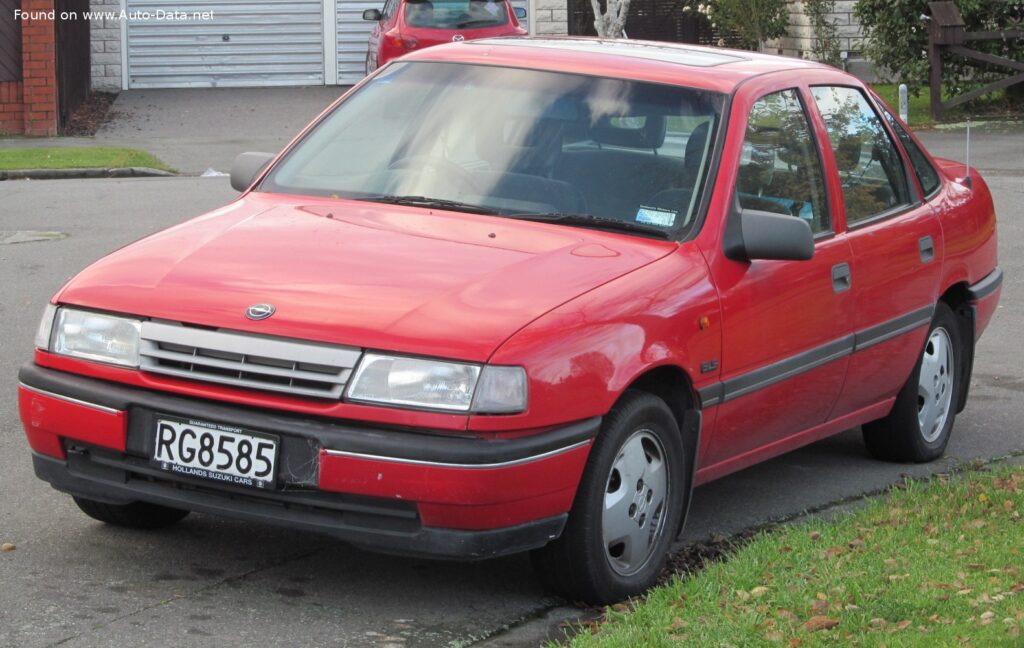
The Opel Vectra A 2.0i (129 Hp) represents a significant chapter in European automotive history, marking the debut of the first-generation Vectra nameplate. Launched in 1988 as a direct successor to the long-running Opel Ascona, the Vectra A was General Motors’ strategic answer to the highly competitive mid-size family car segment in Europe. While never officially sold in the United States under the Opel badge, the Vectra’s underlying engineering and design philosophy echoed GM’s global ambitions, often sharing platforms or components with other GM products worldwide. This particular variant, the 2.0i with 129 horsepower, stood out as a performance-oriented option within the broader Vectra A lineup during its initial production run from 1988 to 1989, blending practicality with a respectable level of driver engagement.
The Vectra A entered a market that demanded increasing levels of sophistication, fuel efficiency, and safety. Its design was a stark departure from its predecessor, embracing a more aerodynamic and modern aesthetic that would define many European cars of the late 1980s and early 1990s. Positioned to compete against formidable rivals like the Ford Sierra, Volkswagen Passat, and Renault 21, the Vectra A quickly established itself as a credible contender, offering a compelling package of space, comfort, and driving dynamics tailored for European roads. The 2.0i variant, with its potent inline-four engine, provided an appealing balance for buyers seeking more power without sacrificing the everyday usability expected of a family sedan.
The Opel Vectra A 2.0i: A Detailed Overview
Engine and Performance
At the heart of the Opel Vectra A 2.0i (129 Hp) lies the robust 20SEH engine, a naturally aspirated 2.0-liter (1998 cm³ or 121.93 cu. in.) inline-four powerplant. This engine, featuring an Overhead Camshaft (OHC) valvetrain and multi-port manifold injection, was a testament to GM’s engineering prowess in the late 1980s. It delivered a healthy 129 horsepower at 5600 revolutions per minute, providing a spirited driving experience for a car of its class and era. Torque output was equally impressive at 132.76 lb.-ft. (180 Nm), peaking at a usable range, which translated into confident acceleration and flexible in-gear performance.
Mated exclusively to a 5-speed manual transmission, the Vectra A 2.0i channeled its power to the front wheels, a common and efficient powertrain architecture for European family cars. This setup contributed to a maximum speed of 128 mph (206 km/h), making it one of the faster mainstream sedans of its time. The car’s relatively low curb weight of 2458.15 lbs. (1115 kg) resulted in a favorable weight-to-power ratio of 8.6 kg/Hp, or approximately 115.7 Hp per tonne, allowing for responsive handling and a lively feel on the road. Despite its performance capabilities, the Vectra A 2.0i also demonstrated commendable fuel efficiency for its segment. Its combined fuel economy was rated at 31.4 US mpg (7.5 l/100 km), with extra-urban cruising achieving an even more impressive 39.2 US mpg (6 l/100 km). This blend of performance and economy made the 2.0i a popular choice for drivers seeking a versatile and capable vehicle for both daily commutes and longer journeys.
Design and Features
The Opel Vectra A introduced a sleek and modern design language that set it apart from its more angular predecessor. Its four-door sedan body type offered seating for five occupants, emphasizing practicality and family utility. A notable design achievement was its remarkably low drag coefficient (Cd) of 0.29, which was exceptionally good for a production sedan in 1988. This aerodynamic efficiency not only contributed to its fuel economy but also reduced wind noise at higher speeds, enhancing cabin comfort.
Inside, the Vectra A prioritized functionality and ergonomics. While specific luxury features varied by trim, the general layout was driver-focused, with clear instrumentation and accessible controls. The car boasted generous interior space and a highly versatile trunk (boot) capacity, ranging from 18.72 cu. ft. (530 liters) with the rear seats in place to an expansive 29.66 cu. ft. (840 liters) when folded, making it well-suited for family trips or hauling cargo. For safety, the Vectra A was equipped with an Anti-lock Braking System (ABS), a significant advanced feature for a mainstream vehicle in the late 1980s, enhancing braking control in adverse conditions. The vehicle also featured hydraulic power steering, providing a balance of ease of maneuverability at low speeds and reassuring feedback at higher velocities. Its suspension system comprised coil springs at both the front and rear, providing a comfortable ride quality typical of European cars of the era, while still maintaining stable handling. The car rode on 195/60 R14 tires mounted on 14-inch wheel rims, a common specification for mid-size vehicles then.
Market Position and Legacy
The Opel Vectra A was a crucial model for GM in Europe, representing a significant investment in a modern, competitive family car. It aimed to consolidate Opel’s position in a market segment dominated by established players. The Vectra A’s success paved the way for subsequent generations, each building upon the foundation laid by the original. While the Opel brand never gained significant traction in the North American market, the Vectra’s engineering and design principles influenced other GM vehicles sold globally. The Vectra A, particularly the 2.0i variant, remains a fondly remembered vehicle among European car enthusiasts, appreciated for its blend of performance, practicality, and relatively modern features for its time.
Technical Specifications
| General Information | |
| Brand | Opel |
| Model | Vectra |
| Generation | Vectra A |
| Type (Engine) | 2.0i (129 Hp) |
| Start of Production | 1988 year |
| End of Production | 1989 year |
| Powertrain Architecture | Internal Combustion engine |
| Body type | Sedan |
| Seats | 5 |
| Doors | 4 |
| Performance Specs | |
| Fuel Consumption (Urban) | 21.8 US mpg (10.8 l/100 km) |
| Fuel Consumption (Extra Urban) | 39.2 US mpg (6 l/100 km) |
| Fuel Consumption (Combined) | 31.4 US mpg (7.5 l/100 km) |
| Fuel Type | Petrol (Gasoline) |
| Maximum Speed | 128 mph (206 km/h) |
| Weight-to-Power Ratio | 8.6 kg/Hp, 115.7 Hp/tonne |
| Weight-to-Torque Ratio | 6.2 kg/Nm, 161.4 Nm/tonne |
| Engine Specs | |
| Power | 129 Hp @ 5600 rpm |
| Power per Liter | 64.6 Hp/l |
| Torque | 132.76 lb.-ft. (180 Nm) |
| Engine Layout | Front, Transverse |
| Engine Model/Code | 20SEH |
| Engine Displacement | 2.0 liters (1998 cm³ / 121.93 cu. in.) |
| Number of Cylinders | 4 |
| Engine Configuration | Inline |
| Cylinder Bore | 3.39 in. (86 mm) |
| Piston Stroke | 3.39 in. (86 mm) |
| Compression Ratio | 9.2:1 |
| Number of Valves per Cylinder | 2 |
| Fuel Injection System | Multi-port manifold injection |
| Engine Aspiration | Naturally aspirated engine |
| Valvetrain | OHC |
| Engine Oil Capacity | 4.23 US qt (4 l) |
| Coolant Capacity | 7.61 US qt (7.2 l) |
| Space, Volume and Weights | |
| Kerb Weight | 2458.15 lbs. (1115 kg) |
