
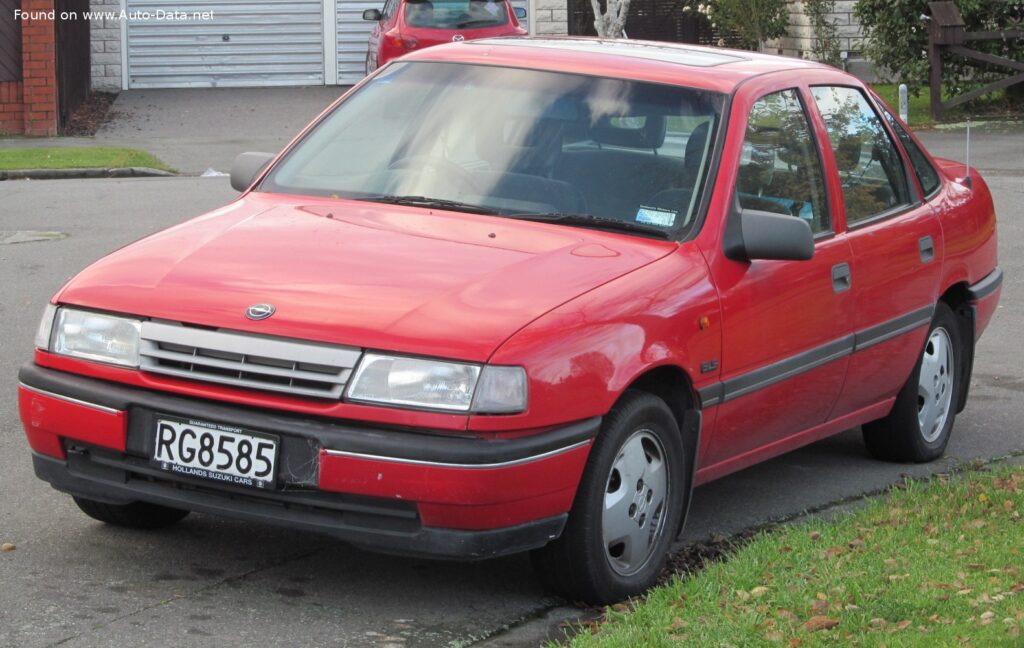
The Opel Vectra A 2.0i (129 Hp) 4×4: A European Mainstay with All-Wheel Drive Ambition
Opel Vectra A: A New Era for GM Europe
The Opel Vectra A, introduced in 1988, represented a pivotal moment for General Motors’ European arm, Opel. Designed to supersede the aging Ascona C, the Vectra A was strategically positioned within the highly competitive mid-size family car segment, directly challenging established rivals like the Ford Sierra and Volkswagen Passat. While never officially marketed in the United States, the Vectra A achieved widespread popularity throughout Europe, earning recognition for its contemporary design, practical interior layout, and dependable engineering. Among the diverse range of powertrains and configurations available, the Opel Vectra A 2.0i (129 Hp) 4×4 distinguishes itself as a particularly noteworthy variant, offering enhanced traction and stability through a sophisticated all-wheel-drive system – a feature relatively uncommon in mainstream sedans of that period. Produced for a limited time between 1988 and 1989, this model showcased Opel’s engineering expertise and forward-thinking approach to bringing advanced drivetrain technology to a broader consumer base.
Engine & Performance Characteristics
The Opel Vectra A 2.0i (129 Hp) 4×4 was powered by a naturally aspirated 2.0-liter inline-four engine, internally designated as the 20SEH. This engine was a well-established and highly regarded unit within the Opel portfolio, known for its inherent reliability and respectable performance capabilities. The engine featured a multi-port fuel injection system and an Overhead Camshaft (OHC) valvetrain with two valves per cylinder, generating a robust 129 horsepower at 5200 rpm. Peak torque output was rated at 132.76 lb.-ft. (180 Nm), delivered in a manner that provided a balanced driving experience suitable for both daily commutes and more spirited driving. The engine’s bore and stroke, both measuring 3.39 inches (86 mm), indicated a “square” design, often associated with a favorable balance between low-end torque and high-revving power. A compression ratio of 9.2:1 optimized the engine for use with regular unleaded gasoline.
The defining characteristic of this Vectra A variant was its all-wheel-drive (4×4) powertrain configuration. Power was transmitted to all four wheels through a five-speed manual transmission, a popular and engaging choice among European drivers. This drivetrain arrangement enabled the Vectra to achieve a top speed of 122.41 mph (197 km/h), a competitive figure for a family sedan in the late 1980s, particularly considering the inherent weight and complexity associated with an all-wheel-drive system. The vehicle’s weight-to-power ratio was 9.7 kg/Hp (103.6 Hp/tonne), reflecting a solid performance level for its class. Fuel economy figures for the 4×4 model were also respectable for the time, with a combined rating of 27.4 US mpg (8.6 l/100 km), demonstrating Opel’s commitment to balancing performance with efficiency, even with the added weight and drag of the AWD system. Urban fuel consumption was rated at 19.8 US mpg (11.9 l/100 km), while extra-urban driving could yield up to 32.7 US mpg (7.2 l/100 km).
Design and Key Features
The Opel Vectra A debuted with a sleek, aerodynamic design that embodied the automotive styling trends of the late 1980s. Its four-door sedan body style, offering seating for five passengers, projected an image of modernity and efficiency. The low drag coefficient (Cd) of 0.29 was remarkably impressive for a production car of its era, contributing not only to its aesthetic appeal but also to improved fuel efficiency and reduced wind noise at higher speeds. The vehicle’s dimensions – 174.49 inches (4432 mm) in length, 67.17 inches (1706 mm) in width, and 55.12 inches (1400 mm) in height, with a wheelbase of 102.36 inches (2600 mm) – provided a spacious and comfortable cabin for occupants.
Beyond its exterior styling, the Opel Vectra A 2.0i (129 Hp) 4×4 incorporated several key features that enhanced both safety and driving dynamics. A significant safety innovation for the time was the inclusion of an Anti-lock Braking System (ABS), which was still becoming increasingly prevalent in the late 1980s, particularly within the mid-size segment. This system helped prevent wheel lock-up during hard braking, allowing the driver to maintain steering control. The suspension system utilized coil springs at both the front and rear axles, providing a comfortable yet competent ride quality. Braking performance was delivered by ventilated discs at the front and solid discs at the rear, offering ample stopping power. Hydraulic power steering was standard equipment, ensuring ease of maneuverability at low speeds and a more connected feel at higher velocities. The car was equipped with 195/60 R14 tires mounted on 14-inch wheel rims, a common configuration for family cars of the period, balancing grip with ride comfort.
Technical Specifications: Opel Vectra A 2.0i (129 Hp) 4×4
| Category | Specification |
| Brand | Opel |
| Model | Vectra A |
| Type (Engine) | 2.0i (129 Hp) 4×4 |
| Production Start | 1988 |
| Production End | 1989 |
| Powertrain Architecture | Internal Combustion Engine |
| Body Type | Sedan |
| Seats | 5 |
| Doors | 4 |
| Fuel Type | Petrol (Gasoline) |
| Fuel Consumption (Urban) | 19.8 US mpg (11.9 l/100 km) |
| Fuel Consumption (Extra Urban) | 32.7 US mpg (7.2 l/100 km) |
| Fuel Consumption (Combined) | 27.4 US mpg (8.6 l/100 km) |
| Maximum Speed | 122.41 mph (197 km/h) |
| Power | 129 Hp @ 5200 rpm |
| Power per Liter | 64.6 Hp/l |
| Torque | 132.76 lb.-ft. (180 Nm) |
| Engine Layout | Front, Transverse |
| Engine Model/Code | 20SEH |
| Engine Displacement | 121.93 cu. in. (1998 cm3) |
| Number of Cylinders | 4 |
| Engine Configuration | Inline |
| Cylinder Bore | 3.39 in. (86 mm) |
| Piston Stroke | 3.39 in. (86 mm) |
| Compression Ratio | 9.2:1 |
| Valves per Cylinder | 2 |
| Fuel Injection System | Multi-port manifold injection |
| Engine Aspiration | Naturally aspirated engine |
| Valvetrain | OHC |
| Engine Oil Capacity | 4.23 US qt (4 l) |
| Coolant Capacity | 7.61 US qt (7.2 l) |
| Kerb Weight | 2744.76 lbs. (1245 kg) |
| Maximum Weight | 3858.09 lbs. (1750 kg) |
| Maximum Load | 1113.33 lbs. (505 kg) |
| Fuel Tank Capacity | 16.11 US gal (61 l) |
| Length | 174.49 in. (4432 mm) |
| Width | 67.17 in. (1706 mm) |
| Height | 55.12 in. (1400 mm) |
| Wheelbase | 102.36 in. (2600 mm) |
| Front Track | 56.1 in. (1425 mm) |
| Rear Track | 56.89 in. (1445 mm) |
| Drag Coefficient (Cd) | 0.29 |
| Drive Wheel | All-wheel drive (4×4) |
| Gearbox | 5 gears, manual transmission |
| Front Suspension | Coil spring |
| Rear Suspension | Coil spring |
| Front Brakes | Ventilated discs |
| Rear Brakes | Disc |
| Assisting Systems | ABS (Anti-lock braking system) |
| Power Steering | Hydraulic Steering |
| Tires Size | 195/60 R14 |
| Wheel Rims Size | 14 |
Legacy and Market Impact
The Opel Vectra A, in its front-wheel-drive configuration, achieved considerable sales success across Europe, establishing itself as a reliable and practical family car. The introduction of the Opel Vectra A 2.0i (129 Hp) 4×4 variant, however, represented a more specialized but technologically significant offering. In the late 1980s, all-wheel drive was largely associated with off-road vehicles or high-performance rally-inspired cars. Integrating such a system into a mainstream sedan like the Vectra A was a bold step, positioning Opel alongside manufacturers like Audi (with its Quattro system) and Ford (with the Sierra XR4x4) who were exploring AWD in passenger cars.
Competitors in this segment included the Ford Sierra, the Volkswagen Passat (which also offered a Syncro AWD option), and premium models from BMW and Mercedes-Benz, although the Vectra targeted a more budget-conscious buyer. The Vectra A 4×4 provided a distinct advantage in regions with challenging weather conditions, offering superior grip and stability on wet, snowy, or icy surfaces. This made it an attractive option for drivers in mountainous areas or countries experiencing harsh winters. While not a high-volume seller compared to its FWD counterparts, the 4×4 model significantly enhanced the Vectra’s reputation for safety and capability.
Historically, the Vectra A played a vital role in shaping Opel’s image as a manufacturer of modern, capable, and well-engineered vehicles. The 4×4 variant, despite its limited production run, demonstrated Opel’s willingness to innovate and provide advanced technology to its customers. It contributed to the growing trend of all-wheel-drive systems becoming more common in passenger cars throughout the 1990s and beyond, paving the way for the AWD sedans and crossovers available today. The Vectra A’s legacy is one of robust engineering, practical design, and a quiet pioneering spirit, particularly in its all-wheel-drive configuration, which remains a noteworthy chapter in European automotive history. Its presence highlighted the increasing demand for versatility and safety within the family car segment, proving that even a mainstream sedan could offer enhanced traction capabilities when needed.
