
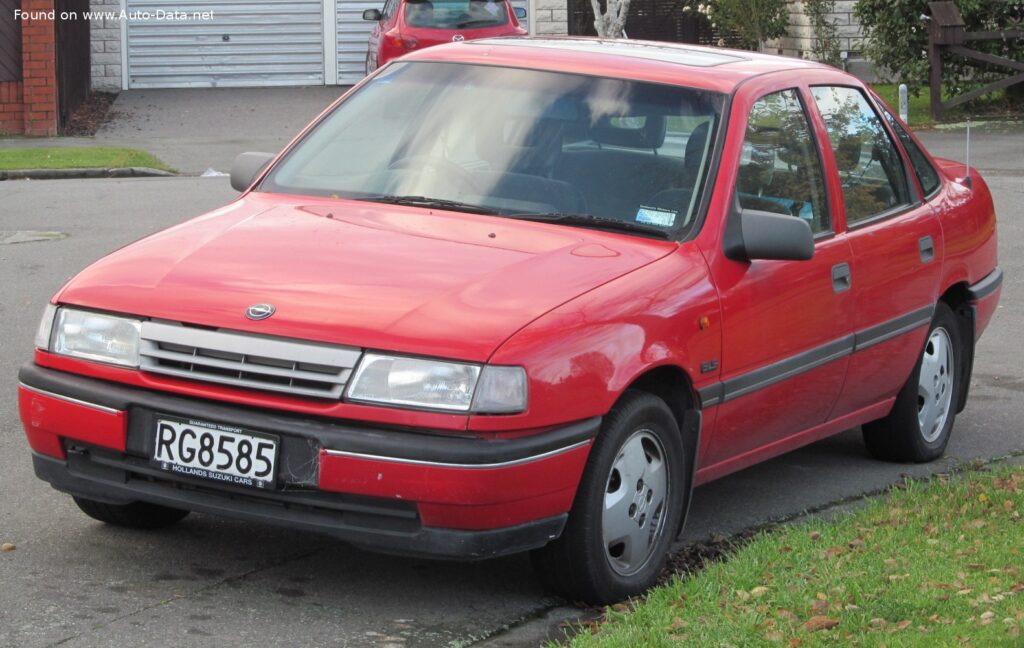
The Opel Vectra A 2.0i CAT (115 Hp), produced between 1988 and 1992, represents a significant step forward for Opel in the mid-size family car segment. Replacing the aging Ascona and Manta models, the Vectra A aimed to offer a more modern, aerodynamic, and technologically advanced package. While not officially sold in the United States, the Vectra was a popular choice in Europe, competing with vehicles like the Ford Mondeo, Volkswagen Passat, and Peugeot 405. It established a new design language for Opel and introduced features that would become hallmarks of the brand.
Opel Vectra A: A New Generation
The Vectra A marked a departure from Opel’s traditionally boxy designs, embracing a more streamlined and contemporary aesthetic. It was available as a four-door sedan and a five-door hatchback (the Caravan estate followed later). The 2.0i CAT model, equipped with a 2.0-liter inline-four engine and a catalytic converter (hence the “CAT” designation), was a popular choice, offering a balance of performance and fuel efficiency. The Vectra A was designed with a focus on practicality, comfort, and safety, appealing to families and business users alike.
Engine & Performance
The heart of the Vectra A 2.0i CAT is its 1998 cc (121.93 cu. in.) inline-four cylinder engine, designated the C20NE. This naturally aspirated engine produces 115 horsepower at 5200 rpm and 170 Nm (125.39 lb.-ft.) of torque at 2600 rpm. The engine features multi-port fuel injection and an overhead camshaft (OHC) valvetrain with two valves per cylinder. This configuration delivers a respectable power-to-weight ratio of 9.9 kg/Hp and a power per liter output of 57.6 Hp/l. Power is delivered to the front wheels via a five-speed manual transmission. Performance figures include a 0-100 km/h (0-62 mph) acceleration time of 10.5 seconds and a maximum speed of 198 km/h (123.03 mph). Fuel economy is rated at 7.7 l/100 km (30.5 US mpg) combined, with 9.8 l/100 km (24 US mpg) in urban driving and 6.1 l/100 km (38.6 US mpg) on the open road.
Design & Features
The Opel Vectra A sedan boasts a classic four-door body style with a relatively long wheelbase of 2600 mm (102.36 in.) and overall length of 4432 mm (174.49 in.). Its width is 1706 mm (67.17 in.) and height 1400 mm (55.12 in.). The design prioritized aerodynamic efficiency, achieving a drag coefficient of 0.29. Inside, the Vectra A offered a comfortable and spacious cabin for five passengers. While not laden with the advanced technology found in modern vehicles, the Vectra A did offer features considered relatively sophisticated for its time, including hydraulic power steering and an anti-lock braking system (ABS) as an option. The trunk provides a generous 530 liters (18.72 cu. ft.) of space, expandable to 840 liters (29.66 cu. ft.) with the rear seats folded down. The kerb weight of the vehicle is 1144 kg (2522.09 lbs), with a maximum permissible weight of 1670 kg (3681.72 lbs).
Technical Specifications
| Brand | Opel |
| Model | Vectra |
| Generation | Vectra A |
| Type (Engine) | 2.0i CAT (115 Hp) |
| Start of production | 1988 |
| End of production | 1992 |
| Powertrain Architecture | Internal Combustion engine |
| Body type | Sedan |
| Seats | 5 |
| Doors | 4 |
| Fuel consumption (urban) | 9.8 l/100 km (24 US mpg) |
| Fuel consumption (extra urban) | 6.1 l/100 km (38.6 US mpg) |
| Fuel consumption (combined) | 7.7 l/100 km (30.5 US mpg) |
| Fuel Type | Petrol (Gasoline) |
| Acceleration 0 – 100 km/h | 10.5 sec |
| Acceleration 0 – 62 mph | 10.5 sec |
| Acceleration 0 – 60 mph | 10 sec |
| Maximum speed | 198 km/h (123.03 mph) |
| Weight-to-power ratio | 9.9 kg/Hp |
| Weight-to-torque ratio | 6.7 kg/Nm |
| Power | 115 Hp @ 5200 rpm |
| Torque | 170 Nm @ 2600 rpm (125.39 lb.-ft. @ 2600 rpm) |
| Engine layout | Front, Transverse |
| Engine Model/Code | C20NE |
| Engine displacement | 1998 cm3 (121.93 cu. in.) |
| Number of cylinders | 4 |
| Engine configuration | Inline |
| Cylinder Bore | 86 mm (3.39 in.) |
| Piston Stroke | 86 mm (3.39 in.) |
| Compression ratio | 10.8:1 |
| Number of valves per cylinder | 2 |
| Fuel injection system | Multi-port manifold injection |
| Engine aspiration | Naturally aspirated |
| Valvetrain | OHC |
| Engine oil capacity | 4 l (4.23 US qt | 3.52 UK qt) |
| Coolant capacity | 7.2 l (7.61 US qt | 6.34 UK qt) |
| Kerb Weight | 1144 kg (2522.09 lbs.) |
| Max. weight | 1670 kg (3681.72 lbs.) |
| Max load | 526 kg (1159.63 lbs.) |
| Trunk (boot) space – minimum | 530 l (18.72 cu. ft.) |
| Trunk (boot) space – maximum | 840 l (29.66 cu. ft.) |
| Fuel tank capacity | 61 l (16.11 US gal | 13.42 UK gal) |
| Length | 4432 mm (174.49 in.) |
| Width | 1706 mm (67.17 in.) |
| Height | 1400 mm (55.12 in.) |
| Wheelbase | 2600 mm (102.36 in.) |
| Front track | 1426 mm (56.14 in.) |
| Rear track | 1432 mm (56.38 in.) |
| Drag coefficient (Cd) | 0.29 |
| Drive wheel | Front wheel drive |
| Number of gears | 5 gears, manual transmission |
| Front suspension | Wishbone |
| Rear suspension | Coil spring |
| Front brakes | Ventilated discs |
| Rear brakes | Disc |
| Assisting systems | ABS (Anti-lock braking system) |
| Steering type | Steering rack and pinion |
| Power steering | Hydraulic |
| Tires size | 195/60 R15 |
| Wheel rims size | 15 |
The Opel Vectra A 2.0i CAT, while not a performance icon, offered a solid and reliable package for European drivers. It represented a significant upgrade over its predecessors and laid the foundation for the successful Vectra B that followed. Its blend of practicality, comfort, and reasonable performance ensured its popularity in a competitive market segment.
