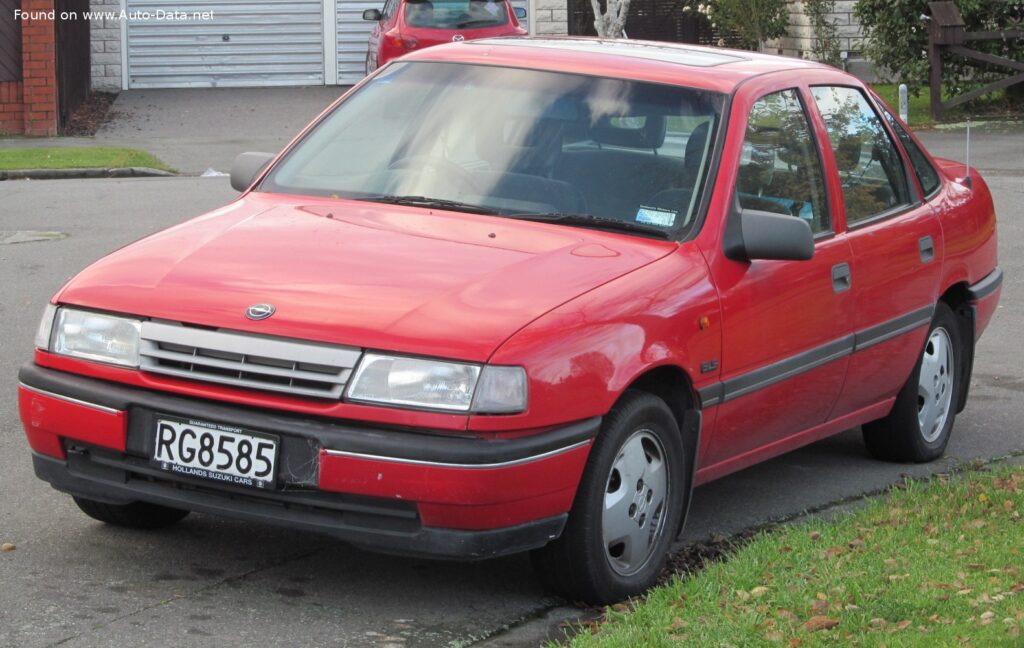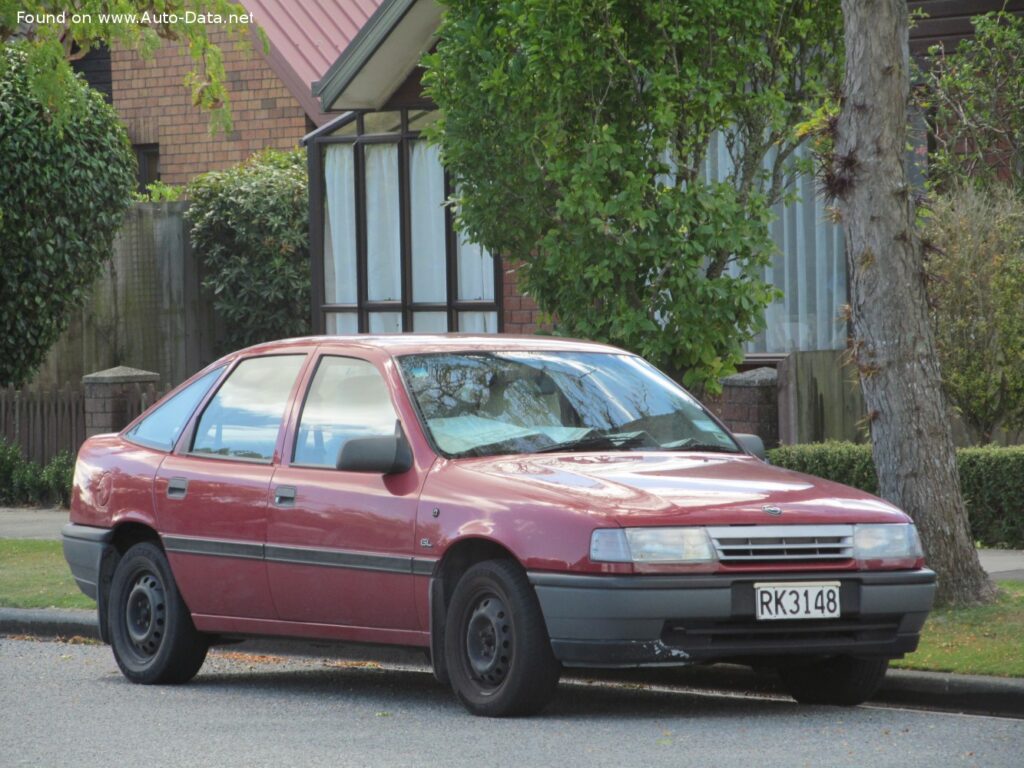
The Opel Vectra A CC 1.6i, produced from October 1988 to February 1989, represents the initial offering in the Vectra lineage, a mid-size car intended to replace the aging Ascona and Manta models. Positioned as a family-oriented vehicle, the Vectra A aimed to provide a modern and practical alternative within the competitive European automotive market. The “CC” designation signifies the ‘Caravan’ or station wagon body style, though a hatchback version was also available. This model, powered by a 1.6-liter inline-four engine, delivered 75 horsepower and served as a core variant in the Vectra A range, appealing to buyers seeking fuel efficiency and everyday usability.
Opel Vectra A CC 1.6i: A Detailed Overview
The Vectra A marked a significant step forward for Opel, incorporating contemporary design elements and engineering advancements. It was a crucial model for Opel as they sought to modernize their lineup and compete more effectively with rivals like the Ford Mondeo and Volkswagen Passat. While not a performance-oriented vehicle, the 1.6i variant offered a balance of affordability and practicality, making it a popular choice for families and commuters. The hatchback body style, combined with its relatively compact dimensions, made it easy to maneuver in urban environments.
Engine & Performance
At the heart of the Vectra A CC 1.6i lies a 1.598-liter (97.52 cubic inches) inline-four cylinder engine, designated the E16NZ. This naturally aspirated engine produces 75 horsepower at 5,200 rpm and 125 Nm (92.2 lb.-ft.) of torque at 2,600 rpm. The engine utilizes a single-point fuel injection system and an overhead camshaft (OHC) valvetrain with two valves per cylinder. Power is delivered to the front wheels via a five-speed manual transmission. Performance figures indicate a 0-100 km/h (0-62 mph) acceleration time of 14 seconds, and a top speed of 176 km/h (109.36 mph). The weight-to-power ratio is 13.6 kg/Hp, and the weight-to-torque ratio is 8.2 kg/Nm. Fuel economy is rated at 8.9 l/100 km (26.4 US mpg) in urban conditions, 5.2 l/100 km (45.2 US mpg) on the extra-urban cycle, and 6.8 l/100 km (34.6 US mpg) combined. CO2 emissions are 166 g/km.
Design & Features
The Opel Vectra A CC 1.6i is a five-door hatchback, offering practical access to the interior and a generous cargo area. The design, while somewhat conservative by modern standards, was considered contemporary for its time, featuring a streamlined silhouette and integrated headlights. Inside, the Vectra A prioritized functionality and comfort. The interior offered seating for five passengers and a trunk capacity ranging from 460 liters (16.24 cubic feet) with the rear seats up to 1290 liters (45.56 cubic feet) with the rear seats folded down. Safety features were relatively basic for the late 1980s, typically including seatbelts and a collapsible steering column. Hydraulic power steering was standard, enhancing driving ease. The vehicle’s kerb weight is 1020 kg (2248.72 lbs) and has a maximum authorized weight of 1550 kg (3417.17 lbs). The Vectra A’s design focused on providing a comfortable and practical driving experience for everyday use.
Technical Specifications
| Brand | Opel |
| Model | Vectra |
| Generation | Vectra A CC |
| Type (Engine) | 1.6i (75 Hp) |
| Start of production | October, 1988 |
| End of production | February, 1989 |
| Powertrain Architecture | Internal Combustion engine |
| Body type | Hatchback |
| Seats | 5 |
| Doors | 5 |
| Fuel consumption (urban) | 8.9 l/100 km (26.4 US mpg) |
| Fuel consumption (extra urban) | 5.2 l/100 km (45.2 US mpg) |
| Fuel consumption (combined) | 6.8 l/100 km (34.6 US mpg) |
| CO2 emissions | 166 g/km |
| Fuel Type | Petrol (Gasoline) |
| Acceleration 0 – 100 km/h | 14 sec |
| Acceleration 0 – 62 mph | 14 sec |
| Acceleration 0 – 60 mph | 13.3 sec |
| Maximum speed | 176 km/h (109.36 mph) |
| Weight-to-power ratio | 13.6 kg/Hp |
| Weight-to-torque ratio | 8.2 kg/Nm |
| Power | 75 Hp @ 5200 rpm |
| Torque | 125 Nm @ 2600 rpm (92.2 lb.-ft. @ 2600 rpm) |
| Engine layout | Front, Transverse |
| Engine Model/Code | E16NZ |
| Engine displacement | 1598 cm3 (97.52 cu. in.) |
| Number of cylinders | 4 |
| Engine configuration | Inline |
| Cylinder Bore | 79 mm (3.11 in.) |
| Piston Stroke | 81.5 mm (3.21 in.) |
| Compression ratio | 9.2:1 |
| Number of valves per cylinder | 2 |
| Fuel injection system | Single-point injection |
| Engine aspiration | Naturally aspirated |
| Valvetrain | OHC |
| Engine oil capacity | 3.5 l (3.7 US qt | 3.08 UK qt) |
| Coolant capacity | 5.8 l (6.13 US qt | 5.1 UK qt) |
| Kerb Weight | 1020 kg (2248.72 lbs) |
| Max. weight | 1550 kg (3417.17 lbs) |
| Max load | 530 kg (1168.45 lbs) |
| Trunk (boot) space – minimum | 460 l (16.24 cu. ft.) |
| Trunk (boot) space – maximum | 1290 l (45.56 cu. ft.) |
| Fuel tank capacity | 61 l (16.11 US gal | 13.42 UK gal) |
| Length | 4352 mm (171.34 in.) |
| Width | 1706 mm (67.17 in.) |
| Height | 1400 mm (55.12 in.) |
| Wheelbase | 2600 mm (102.36 in.) |
| Front track | 1420 mm (55.91 in.) |
| Rear track | 1423 mm (56.02 in.) |
| Drivetrain Architecture | Front wheel drive |
| Number of gears | 5 gears, manual transmission |
| Front suspension | Coil spring |
| Rear suspension | Coil spring |
| Front brakes | Disc |
| Rear brakes | Drum |
| Power steering | Hydraulic Steering |
| Tires size | 175/70 R14 |
| Wheel rims size | 14 |
The Opel Vectra A CC 1.6i, while not a groundbreaking vehicle, played a vital role in Opel’s product strategy during the late 1980s. It provided a solid and reliable option for families seeking a practical and affordable mid-size car, laying the foundation for the subsequent generations of the Vectra model.