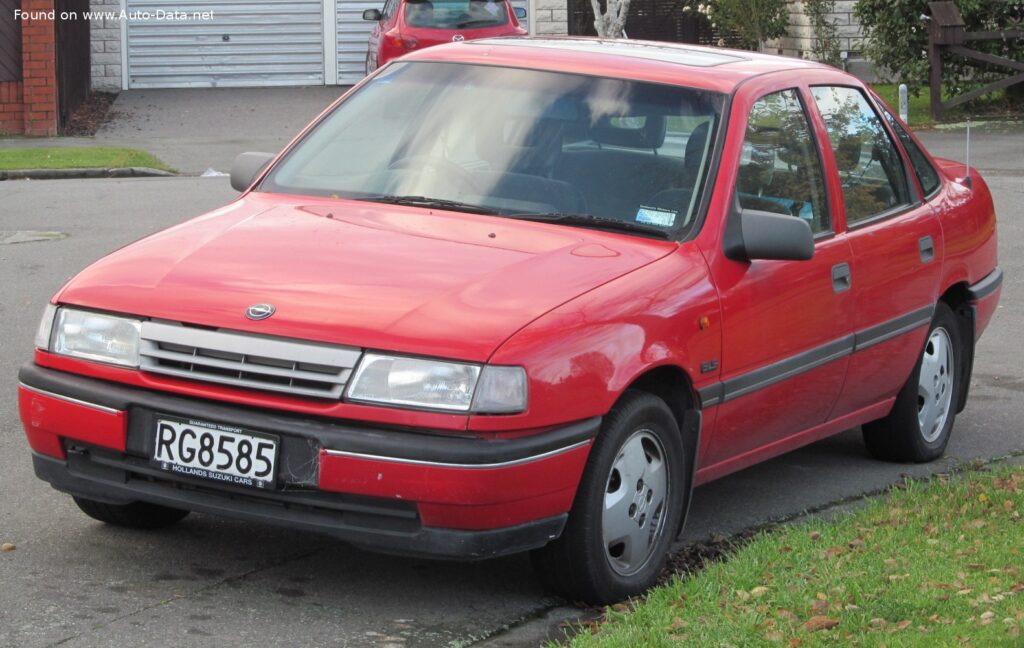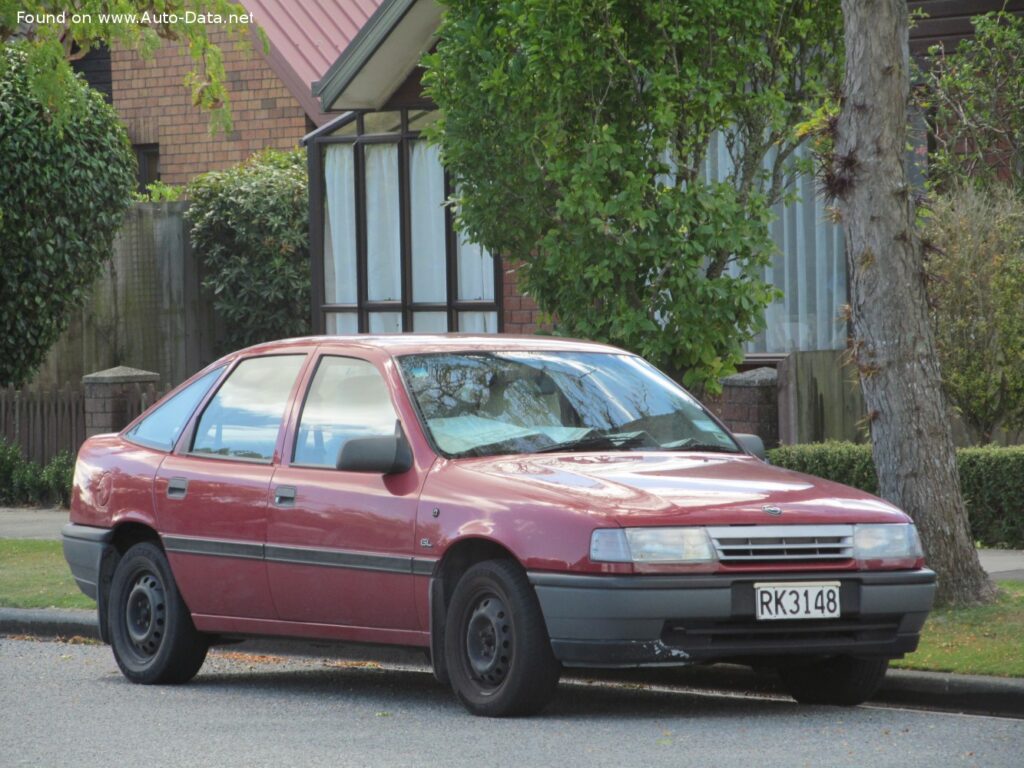
The Opel Vectra A CC 1.8i CAT (90 Hp), produced between 1990 and 1992, represents a significant step forward for Opel in the mid-size family car segment. As the first generation of the Vectra, it replaced the aging Ascona and Manta models, offering a more modern and refined package. While not officially sold in the United States, the Vectra was a popular choice in Europe, competing with vehicles like the Ford Mondeo and Volkswagen Passat. The “CC” designation stands for “Commodore Classic,” hinting at Opel’s intention to position the Vectra as a more upscale offering. This model, specifically the 1.8i CAT variant, was aimed at buyers seeking a balance of fuel efficiency and reasonable performance.
Opel Vectra A CC: A European Family Sedan
The Vectra A was a crucial model for Opel, marking a shift towards more contemporary design and engineering. It was available in several body styles, including a four-door sedan, a five-door hatchback (the focus of this article), and a station wagon. The hatchback version, with its practical layout and increased cargo capacity, proved particularly popular in European markets where space efficiency is highly valued. The 1.8i CAT engine, equipped with a catalytic converter (“CAT” in the model designation), was designed to meet increasingly stringent European emissions standards.
Engine & Performance
The Opel Vectra A CC 1.8i CAT is powered by a 1.8-liter inline four-cylinder engine, designated the C18NZ. This naturally aspirated engine produces 90 horsepower at 5400 rpm and 145 Nm (106.95 lb.-ft.) of torque at 3000 rpm. While not a performance powerhouse, the engine provides adequate power for everyday driving. The power-to-weight ratio of 12.5 kg/Hp (80.1 Hp/tonne) reflects the car’s modest performance capabilities. The engine utilizes a single-point fuel injection system, a common technology for the era, and features an overhead camshaft (OHC) valvetrain with two valves per cylinder. Acceleration from 0 to 100 km/h (0-62 mph) takes 12.5 seconds, and 0 to 60 mph is achieved in approximately 11.9 seconds. The top speed is rated at 183 km/h (113.71 mph). Fuel consumption is rated at 7.6 liters per 100 kilometers (30.9 US mpg, 37.2 UK mpg, 13.2 km/l), making it a relatively economical choice for its time.
Design & Features
The Vectra A CC features a practical and functional design typical of early 1990s European cars. The five-door hatchback body style offers easy access to the interior and a versatile cargo area. The trunk provides 460 liters (16.24 cu. ft.) of space with the rear seats up, expanding to a substantial 1290 liters (45.56 cu. ft.) when the rear seats are folded down. Safety features for the time included ventilated disc brakes on the front wheels and drum brakes on the rear, along with an Anti-lock Braking System (ABS) as an available option. Hydraulic power steering was standard, enhancing driving comfort and maneuverability. The interior is designed with practicality in mind, offering seating for five passengers. The car rides on a wheelbase of 2600 mm (102.36 in) and has a width of 1706 mm (67.17 in), providing a comfortable cabin space. The tires are size 175/70 R14, mounted on 14-inch wheel rims.
Technical Specifications
| Brand | Opel |
| Model | Vectra |
| Generation | Vectra A CC |
| Type (Engine) | 1.8i CAT (90 Hp) |
| Start of production | 1990 |
| End of production | 1992 |
| Powertrain Architecture | Internal Combustion engine |
| Body type | Hatchback |
| Seats | 5 |
| Doors | 5 |
| Fuel consumption (combined) | 7.6 l/100 km |
| Fuel consumption (US mpg) | 30.9 US mpg |
| Fuel consumption (UK mpg) | 37.2 UK mpg |
| Fuel consumption (km/l) | 13.2 km/l |
| Fuel Type | Petrol (Gasoline) |
| Acceleration 0 – 100 km/h | 12.5 sec |
| Acceleration 0 – 62 mph | 12.5 sec |
| Acceleration 0 – 60 mph | 11.9 sec |
| Maximum speed | 183 km/h (113.71 mph) |
| Weight-to-power ratio | 12.5 kg/Hp |
| Weight-to-torque ratio | 7.8 kg/Nm |
| Power | 90 Hp @ 5400 rpm |
| Power per litre | 50.1 Hp/l |
| Torque | 145 Nm @ 3000 rpm (106.95 lb.-ft. @ 3000 rpm) |
| Engine layout | Front, Transverse |
| Engine Model/Code | C18NZ |
| Engine displacement | 1796 cm3 (109.6 cu. in.) |
| Number of cylinders | 4 |
| Engine configuration | Inline |
| Cylinder Bore | 84.8 mm (3.34 in.) |
| Piston Stroke | 79.5 mm (3.13 in.) |
| Compression ratio | 9.2:1 |
| Number of valves per cylinder | 2 |
| Fuel injection system | Single-point injection |
| Engine aspiration | Naturally aspirated engine |
| Valvetrain | OHC |
| Engine oil capacity | 4 l (4.23 US qt | 3.52 UK qt) |
| Coolant capacity | 7.2 l (7.61 US qt | 6.34 UK qt) |
| Kerb Weight | 1124 kg (2478 lbs.) |
| Max. weight | 1630 kg (3593.53 lbs.) |
| Max load | 506 kg (1115.54 lbs.) |
| Trunk (boot) space – minimum | 460 l (16.24 cu. ft.) |
| Trunk (boot) space – maximum | 1290 l (45.56 cu. ft.) |
| Fuel tank capacity | 61 l (16.11 US gal | 13.42 UK gal) |
| Length | 4352 mm (171.34 in.) |
| Width | 1706 mm (67.17 in.) |
| Height | 1400 mm (55.12 in.) |
| Wheelbase | 2600 mm (102.36 in.) |
| Front track | 1420 mm (55.91 in.) |
| Rear track | 1423 mm (56.02 in.) |
| Drivetrain Architecture | Front wheel drive |
| Number of gears | 5 gears, manual transmission |
| Front suspension | Wishbone |
| Rear suspension | Coil spring |
| Front brakes | Ventilated discs |
| Rear brakes | Drum |
| Assisting systems | ABS (Anti-lock braking system) |
| Power steering | Hydraulic Steering |
| Tires size | 175/70 R14 |
| Wheel rims size | 14 |
The Opel Vectra A CC 1.8i CAT, while not a groundbreaking vehicle in terms of performance or technology, was a solid and reliable family car that played a significant role in Opel’s success during the early 1990s. It offered a practical and affordable option for European buyers, and its hatchback configuration provided a level of versatility that appealed to a wide range of customers.