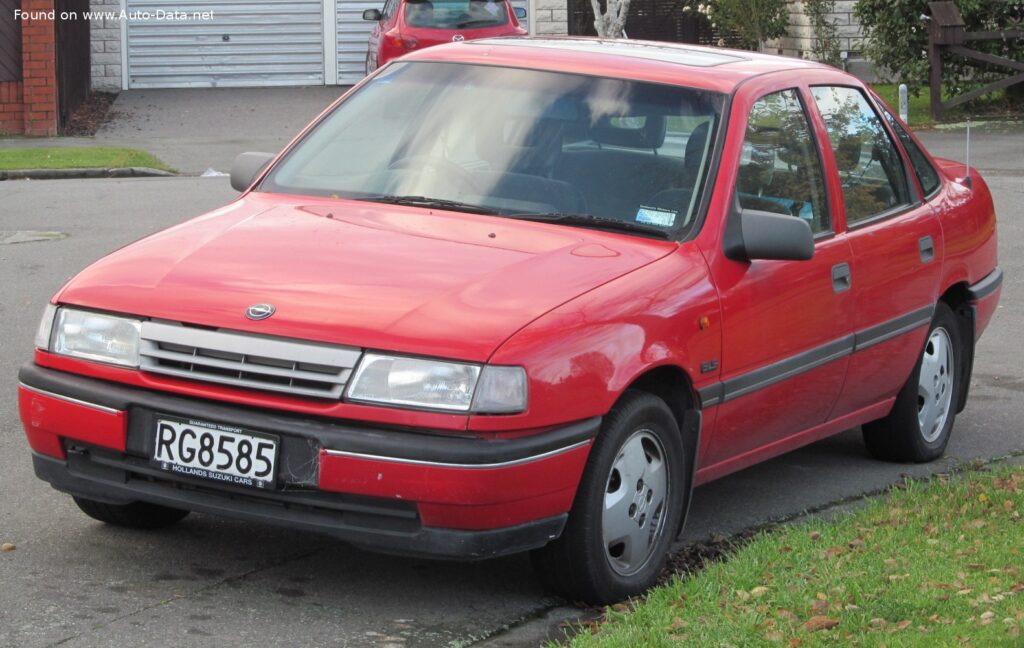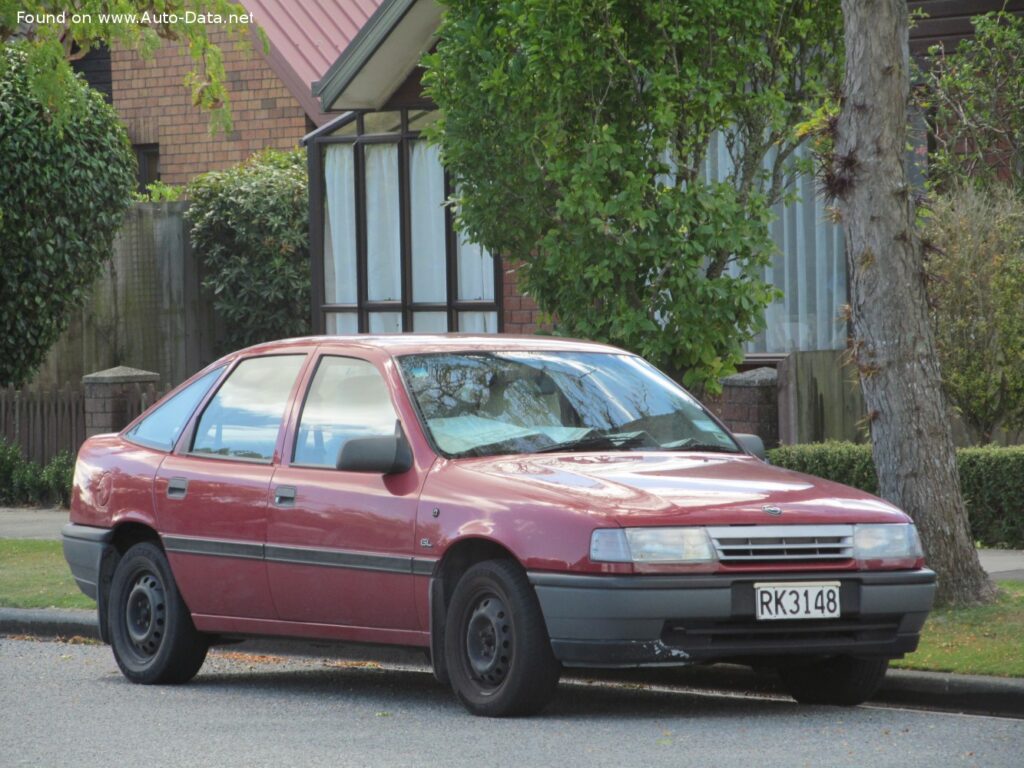
The Opel Vectra A CC 1.8i CAT, produced from 1990 to 1992, represents a significant step forward for Opel in the mid-size family car segment. As the first generation of the Vectra, it replaced the aging Ascona and Manta models, offering a more modern and refined package. While not officially sold in the United States, the Vectra was a popular choice in Europe, competing with vehicles like the Ford Mondeo and Volkswagen Passat. The “CC” designation stands for “Commodore Classic,” hinting at Opel’s intention to offer a comfortable and well-equipped vehicle. This particular variant, equipped with a 1.8-liter engine and automatic transmission, aimed to provide a balance of performance and convenience for everyday driving.
Opel Vectra A CC: A European Family Sedan
The Vectra A was a crucial model for Opel, marking a shift towards more contemporary design and engineering. It was available in several body styles, including a four-door sedan, a five-door hatchback (the CC variant discussed here), and a station wagon. The hatchback offered increased practicality with its larger cargo area and easier access, making it a popular choice for families. The Vectra A represented a move upmarket for Opel, with improved build quality and a more sophisticated interior compared to its predecessors. It laid the foundation for the subsequent generations of the Vectra, which would become a mainstay in the European car market for over two decades.
Engine & Performance
The Opel Vectra A CC 1.8i CAT is powered by the C18NZ engine, an inline four-cylinder, naturally aspirated gasoline engine displacing 1796 cubic centimeters (109.6 cubic inches). This engine produces 90 horsepower at 5400 rpm and 145 Newton-meters (106.95 lb.-ft.) of torque at 3000 rpm. The engine utilizes single-point fuel injection, a common technology for the time, and achieves a power-to-liter ratio of 50.1 hp/l. Paired with a four-speed automatic transmission, the Vectra A CC achieves a 0-60 mph (0-97 km/h) time of approximately 14.3 seconds and a top speed of 177 km/h (109.98 mph). While not particularly sporty, the powertrain provides adequate performance for everyday commuting and highway driving. Fuel economy is rated at 7.6 liters per 100 kilometers (30.9 US mpg), a respectable figure for a vehicle of its size and era. The weight-to-power ratio of 12.5 kg/Hp indicates a moderate power output relative to its weight.
Design & Features
The Opel Vectra A CC features a practical and functional five-door hatchback body style. Its design, while somewhat conservative by modern standards, was considered contemporary for the early 1990s. The interior prioritizes comfort and space, offering seating for five passengers. Key features include hydraulic power steering, ventilated disc brakes on the front wheels, and drum brakes on the rear. An Anti-lock Braking System (ABS) was available, enhancing safety by preventing wheel lockup during hard braking. The trunk offers a minimum capacity of 460 liters (16.24 cubic feet), expanding to 1290 liters (45.56 cubic feet) with the rear seats folded down, providing ample space for luggage and cargo. The vehicle’s dimensions are 4352 mm (171.34 in) in length, 1706 mm (67.17 in) in width, and 1400 mm (55.12 in) in height. The Vectra A CC aimed to provide a comfortable and practical driving experience, focusing on usability and reliability rather than outright performance or luxury.
Technical Specifications
| Brand | Opel |
| Model | Vectra |
| Generation | Vectra A CC |
| Type (Engine) | 1.8i CAT (90 Hp) Automatic |
| Start of production | 1990 |
| End of production | 1992 |
| Powertrain Architecture | Internal Combustion engine |
| Body type | Hatchback |
| Seats | 5 |
| Doors | 5 |
| Fuel consumption (combined) | 7.6 l/100 km |
| Fuel consumption (US mpg) | 30.9 US mpg |
| Fuel consumption (UK mpg) | 37.2 UK mpg |
| Fuel consumption (km/l) | 13.2 km/l |
| Fuel Type | Petrol (Gasoline) |
| Acceleration 0 – 100 km/h | 15 sec |
| Acceleration 0 – 62 mph | 15 sec |
| Acceleration 0 – 60 mph | 14.3 sec |
| Maximum speed | 177 km/h (109.98 mph) |
| Weight-to-power ratio | 12.5 kg/Hp |
| Weight-to-torque ratio | 7.8 kg/Nm |
| Power | 90 Hp @ 5400 rpm |
| Power per litre | 50.1 Hp/l |
| Torque | 145 Nm @ 3000 rpm (106.95 lb.-ft. @ 3000 rpm) |
| Engine layout | Front, Transverse |
| Engine Model/Code | C18NZ |
| Engine displacement | 1796 cm3 (109.6 cu. in.) |
| Number of cylinders | 4 |
| Engine configuration | Inline |
| Cylinder Bore | 84.8 mm (3.34 in.) |
| Piston Stroke | 79.5 mm (3.13 in.) |
| Compression ratio | 9.2:1 |
| Number of valves per cylinder | 2 |
| Fuel injection system | Single-point injection |
| Engine aspiration | Naturally aspirated engine |
| Valvetrain | OHC |
| Engine oil capacity | 4 l (4.23 US qt | 3.52 UK qt) |
| Coolant capacity | 7.2 l (7.61 US qt | 6.34 UK qt) |
| Kerb Weight | 1124 kg (2478 lbs.) |
| Max. weight | 1630 kg (3593.53 lbs.) |
| Max load | 506 kg (1115.54 lbs.) |
| Trunk (boot) space – minimum | 460 l (16.24 cu. ft.) |
| Trunk (boot) space – maximum | 1290 l (45.56 cu. ft.) |
| Fuel tank capacity | 61 l (16.11 US gal | 13.42 UK gal) |
| Length | 4352 mm (171.34 in.) |
| Width | 1706 mm (67.17 in.) |
| Height | 1400 mm (55.12 in.) |
| Wheelbase | 2600 mm (102.36 in.) |
| Front track | 1420 mm (55.91 in.) |
| Rear (Back) track | 1423 mm (56.02 in.) |
| Drivetrain Architecture | Front wheel drive |
| Number of gears and type of gearbox | 4 gears, automatic transmission |
| Front suspension | Wishbone |
| Rear suspension | Coil spring |
| Front brakes | Ventilated discs |
| Rear brakes | Drum |
| Assisting systems | ABS (Anti-lock braking system) |
| Power steering | Hydraulic Steering |
| Tires size | 175/70 R14 |
| Wheel rims size | 14 |