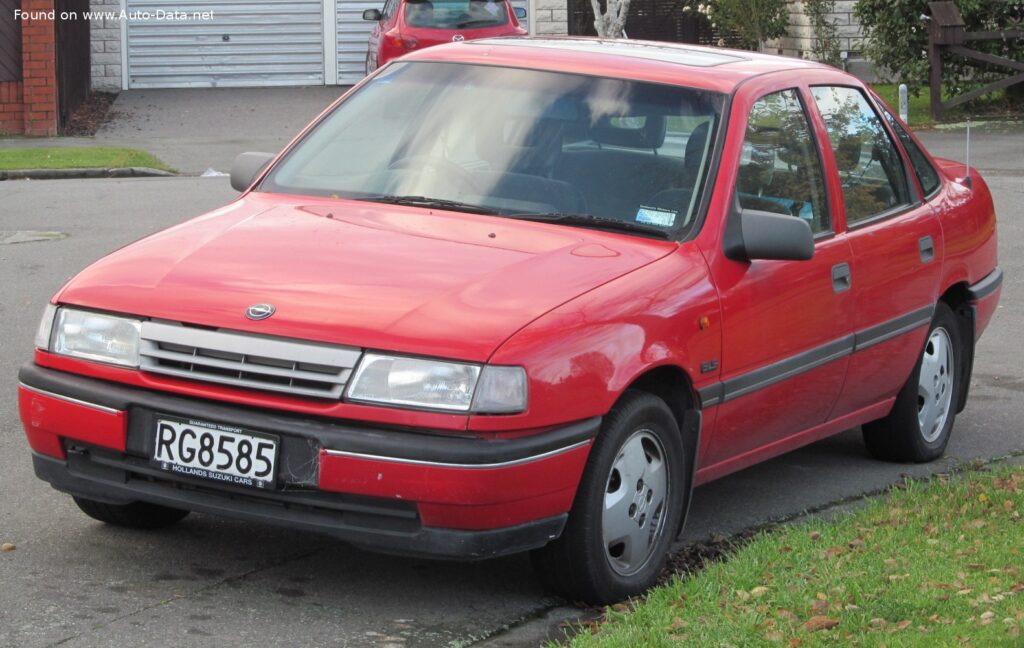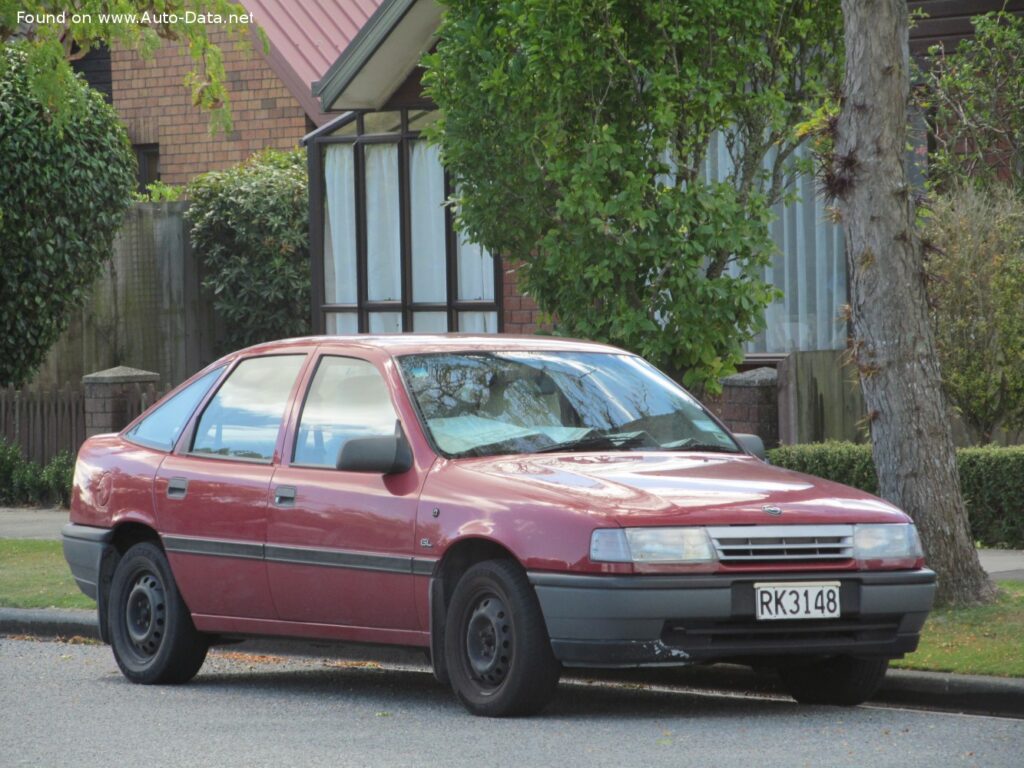
The Opel Vectra A CC 2.0i 16V, produced from 1988 to 1989, represents a significant step forward for Opel in the mid-size class. As the first generation of the Vectra, it replaced the aging Ascona and Manta models, offering a more modern and refined package. The “CC” designation stands for “Caravan Combi,” indicating this specific model is a five-door hatchback, offering a practical and versatile body style. While not officially sold in the United States, the Vectra was a popular choice in Europe, competing with vehicles like the Ford Mondeo and Volkswagen Passat. It aimed to provide a balance of comfort, performance, and affordability for family buyers.
Opel Vectra A CC: A Detailed Overview
The Vectra A marked a departure from Opel’s traditionally more conservative designs. It featured a more aerodynamic silhouette and a spacious interior, reflecting the evolving tastes of European car buyers. The 2.0i 16V variant, equipped with a 150 horsepower engine, was positioned as a performance-oriented option within the Vectra range, appealing to drivers seeking a more engaging driving experience. The introduction of the Vectra also signaled Opel’s commitment to incorporating more advanced technology and safety features into its vehicles.
Engine & Performance
The heart of the Vectra A CC 2.0i 16V is its 1998 cc (121.93 cu. in.) inline-four cylinder engine, designated the 20XEJ. This naturally aspirated engine produces 150 horsepower at 6000 rpm and 196 Nm (144.56 lb.-ft.) of torque at 4600 rpm. The engine utilizes multi-port fuel injection and a double overhead camshaft (DOHC) valvetrain with four valves per cylinder, contributing to its relatively high power output for its displacement – 75.1 hp per liter. Power is delivered to the front wheels via a five-speed manual transmission. This configuration allows for a 0-60 mph (0-96 km/h) acceleration time of approximately 8.1 seconds and a top speed of 217 km/h (134.84 mph). The weight-to-power ratio of 8.1 kg/hp and a weight-to-torque ratio of 6.2 kg/Nm contribute to a responsive and enjoyable driving experience. Fuel economy figures are rated at 7.9 l/100 km (29.8 US mpg) combined, 10.4 l/100 km (22.6 US mpg) in urban conditions, and 5.8 l/100 km (40.6 US mpg) on the extra-urban cycle.
Design & Features
The Opel Vectra A CC is a five-door hatchback, offering a practical and versatile body style. Its design prioritized aerodynamic efficiency, resulting in a sleek and modern appearance for its time. The interior was designed with practicality in mind, offering comfortable seating for five passengers and a generous amount of cargo space. The trunk capacity ranges from 460 liters (16.24 cu. ft.) with the rear seats up to 1290 liters (45.56 cu. ft.) with the rear seats folded down. Safety features, while not as comprehensive as modern standards, included an Anti-lock Braking System (ABS) as an available option, a significant advancement for the era. Hydraulic power steering was standard, enhancing maneuverability. The vehicle’s dimensions are 4352 mm (171.34 in.) in length, 1706 mm (67.17 in.) in width, and 1400 mm (55.12 in.) in height, with a wheelbase of 2600 mm (102.36 in.).
Technical Specifications
| Brand | Opel |
| Model | Vectra |
| Generation | Vectra A CC |
| Type (Engine) | 2.0i 16V (150 Hp) |
| Start of production | 1988 |
| End of production | 1989 |
| Powertrain Architecture | Internal Combustion engine |
| Body type | Hatchback |
| Seats | 5 |
| Doors | 5 |
| Fuel consumption (urban) | 10.4 l/100 km (22.6 US mpg) |
| Fuel consumption (extra urban) | 5.8 l/100 km (40.6 US mpg) |
| Fuel consumption (combined) | 7.9 l/100 km (29.8 US mpg) |
| Fuel Type | Petrol (Gasoline) |
| Acceleration 0 – 100 km/h | 8.5 sec |
| Acceleration 0 – 62 mph | 8.5 sec |
| Acceleration 0 – 60 mph | 8.1 sec |
| Maximum speed | 217 km/h (134.84 mph) |
| Weight-to-power ratio | 8.1 kg/Hp |
| Weight-to-torque ratio | 6.2 kg/Nm |
| Power | 150 Hp @ 6000 rpm |
| Torque | 196 Nm @ 4600 rpm (144.56 lb.-ft. @ 4600 rpm) |
| Engine layout | Front, Transverse |
| Engine Model/Code | 20XEJ |
| Engine displacement | 1998 cm3 (121.93 cu. in.) |
| Number of cylinders | 4 |
| Engine configuration | Inline |
| Cylinder Bore | 86 mm (3.39 in.) |
| Piston Stroke | 86 mm (3.39 in.) |
| Compression ratio | 10.5:1 |
| Number of valves per cylinder | 4 |
| Fuel injection system | Multi-port manifold injection |
| Engine aspiration | Naturally aspirated engine |
| Valvetrain | DOHC |
| Engine oil capacity | 4.5 l (4.76 US qt | 3.96 UK qt) |
| Coolant capacity | 7.2 l (7.61 US qt | 6.34 UK qt) |
| Kerb Weight | 1215 kg (2678.62 lbs.) |
| Max. weight | 1720 kg (3791.95 lbs.) |
| Max load | 505 kg (1113.33 lbs.) |
| Trunk (boot) space – minimum | 460 l (16.24 cu. ft.) |
| Trunk (boot) space – maximum | 1290 l (45.56 cu. ft.) |
| Fuel tank capacity | 61 l (16.11 US gal | 13.42 UK gal) |
| Length | 4352 mm (171.34 in.) |
| Width | 1706 mm (67.17 in.) |
| Height | 1400 mm (55.12 in.) |
| Wheelbase | 2600 mm (102.36 in.) |
| Front track | 1420 mm (55.91 in.) |
| Rear track | 1423 mm (56.02 in.) |
| Drivetrain Architecture | Front wheel drive |
| Number of gears | 5 |
| Gearbox type | Manual transmission |
| Front suspension | Coil spring |
| Rear suspension | Coil spring |
| Front brakes | Ventilated discs |
| Rear brakes | Disc |
| Assisting systems | ABS (Anti-lock braking system) |
| Power steering | Hydraulic Steering |
| Tires size | 195/60 R15 |
| Wheel rims size | 15 |
The Opel Vectra A CC 2.0i 16V, while not a performance icon, represented a solid and well-rounded offering in the European mid-size market. Its combination of practicality, reasonable performance, and modern features made it a popular choice for families and commuters alike. It laid the foundation for the subsequent generations of the Vectra, which would continue to evolve and refine Opel’s presence in this competitive segment.