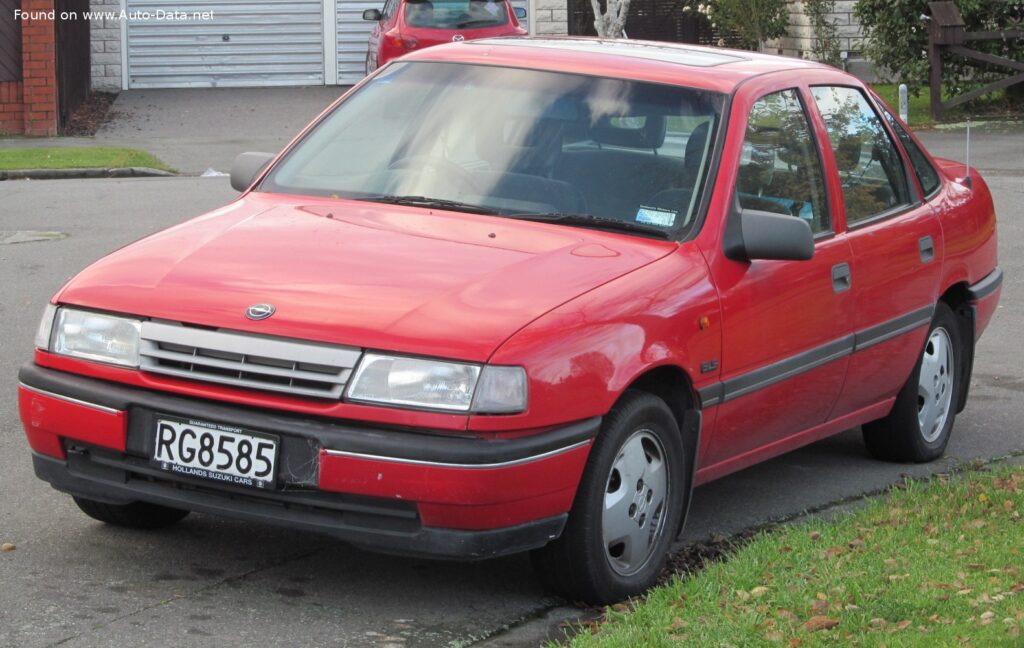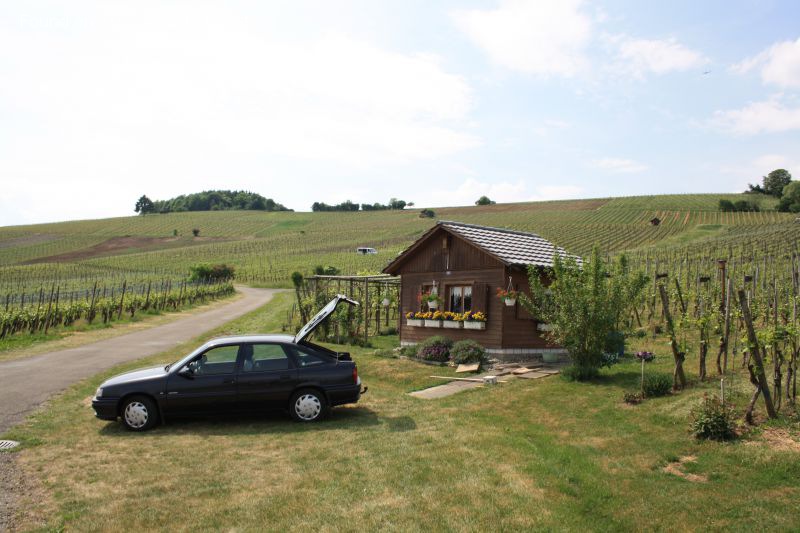
The Opel Vectra A CC (facelift 1992) 1.7 TD represents a significant iteration of Opel’s mid-size offering, positioned as a practical and economical family vehicle within the European market. Introduced in August 1992 and continuing through July 1995, this facelifted version of the Vectra A aimed to refine the original model with updated styling and, in this specific configuration, a fuel-efficient turbocharged diesel engine. While not officially sold in the United States, the Vectra was a key competitor to models like the Ford Mondeo and Volkswagen Passat in Europe, offering a blend of comfort, space, and affordability. The “CC” designation stands for “Comfort and Climate,” indicating a focus on passenger amenities.
Opel Vectra A CC (facelift 1992) 1.7 TD: An Overview
The Vectra A, launched in 1988, was Opel’s replacement for the Ascona and Manta models, consolidating their mid-size offerings into a single, more modern package. The 1992 facelift brought subtle but noticeable changes to the exterior, including revised headlights, grille, and bumpers. The 1.7 TD variant, powered by a 1.7-liter turbocharged diesel engine, was particularly popular in markets where fuel economy was a primary concern. This model catered to drivers seeking a balance between reasonable performance and low running costs, making it a common sight on European roads.
Engine & Performance
The heart of the Vectra A CC 1.7 TD is its 1686 cc (102.89 cu. in.) inline-four cylinder diesel engine, designated the 17DT. This engine produces 82 horsepower at 4400 rpm and 168 Nm (123.91 lb.-ft.) of torque at 2400 rpm. While not a performance-oriented vehicle, the turbocharger provides a noticeable boost in power compared to naturally aspirated diesel engines of the time. Acceleration from 0 to 100 km/h (0-62 mph) takes 14.5 seconds, and it achieves a maximum speed of 176 km/h (109.36 mph). The engine utilizes a precombustion chamber injection system, a common technology for diesel engines in the early 1990s, and features an overhead camshaft (OHC) valvetrain with two valves per cylinder. The engine’s power-to-weight ratio is 14.4 kg/Hp, and its torque-to-weight ratio is 7 kg/Nm. Fuel economy is a strong point, achieving 5.9 liters per 100 kilometers (39.9 US mpg), making it an economical choice for long-distance driving.
Design & Features
The Opel Vectra A CC (facelift 1992) is a five-door hatchback, offering a practical and versatile body style. Its design is typical of early 1990s European cars – functional and understated. The hatchback configuration provides easy access to the cargo area, and the rear seats can be folded down to increase luggage capacity. The interior is designed with practicality in mind, offering comfortable seating for five passengers. Key features for the era included hydraulic power steering and an Anti-lock Braking System (ABS), enhancing safety and driver control. The trunk offers a minimum of 460 liters (16.24 cu. ft.) of space, expanding to 1290 liters (45.56 cu. ft.) with the rear seats folded. The vehicle’s kerb weight is 1184 kg (2610.27 lbs), with a maximum permissible weight of 1650 kg (3637.63 lbs).
Technical Specifications
| Brand | Opel |
| Model | Vectra |
| Generation | Vectra A CC (facelift 1992) |
| Type (Engine) | 1.7 TD (82 Hp) |
| Start of production | August, 1992 |
| End of production | July, 1995 |
| Powertrain Architecture | Internal Combustion engine |
| Body type | Hatchback |
| Seats | 5 |
| Doors | 5 |
| Fuel consumption (combined) | 5.9 l/100 km |
| Fuel consumption (US mpg) | 39.9 US mpg |
| Fuel consumption (UK mpg) | 47.9 UK mpg |
| Fuel consumption (km/l) | 16.9 km/l |
| Fuel Type | Diesel |
| Acceleration 0 – 100 km/h | 14.5 sec |
| Acceleration 0 – 62 mph | 14.5 sec |
| Acceleration 0 – 60 mph | 13.8 sec |
| Maximum speed | 176 km/h |
| Maximum speed (mph) | 109.36 mph |
| Weight-to-power ratio | 14.4 kg/Hp |
| Weight-to-torque ratio | 7 kg/Nm |
| Power | 82 Hp @ 4400 rpm |
| Power per litre | 48.6 Hp/l |
| Torque | 168 Nm @ 2400 rpm |
| Torque (lb.-ft.) | 123.91 lb.-ft. @ 2400 rpm |
| Engine layout | Front, Transverse |
| Engine Model/Code | 17DT |
| Engine displacement | 1686 cm3 |
| Engine displacement (cu. in.) | 102.89 cu. in. |
| Number of cylinders | 4 |
| Engine configuration | Inline |
| Cylinder Bore | 79 mm |
| Cylinder Bore (in.) | 3.11 in. |
| Piston Stroke | 86 mm |
| Piston Stroke (in.) | 3.39 in. |
| Compression ratio | 22:1 |
| Number of valves per cylinder | 2 |
| Fuel injection system | Precombustion chamber injection |
| Engine aspiration | Turbocharger |
| Valvetrain | OHC |
| Engine oil capacity | 4.5 l |
| Engine oil capacity (US qt) | 4.76 US qt |
| Engine oil capacity (UK qt) | 3.96 UK qt |
| Coolant | 7.4 l |
| Coolant (US qt) | 7.82 US qt |
| Coolant (UK qt) | 6.51 UK qt |
| Kerb Weight | 1184 kg |
| Kerb Weight (lbs) | 2610.27 lbs. |
| Max. weight | 1650 kg |
| Max. weight (lbs) | 3637.63 lbs. |
| Max load | 466 kg |
| Max load (lbs) | 1027.35 lbs. |
| Trunk (boot) space – minimum | 460 l |
| Trunk (boot) space – minimum (cu. ft.) | 16.24 cu. ft. |
| Trunk (boot) space – maximum | 1290 l |
| Trunk (boot) space – maximum (cu. ft.) | 45.56 cu. ft. |
| Fuel tank capacity | 61 l |
| Fuel tank capacity (US gal) | 16.11 US gal |
| Fuel tank capacity (UK gal) | 13.42 UK gal |
| Length | 4352 mm |
| Length (in.) | 171.34 in. |
| Width | 1706 mm |
| Width (in.) | 67.17 in. |
| Height | 1400 mm |
| Height (in.) | 55.12 in. |
| Wheelbase | 2600 mm |
| Wheelbase (in.) | 102.36 in. |
| Front track | 1426 mm |
| Front track (in.) | 56.14 in. |
| Rear (Back) track | 1423 mm |
| Rear (Back) track (in.) | 56.02 in. |
| Drivetrain Architecture | The Internal combustion engine (ICE) drives the front wheels of the vehicle. |
| Drive wheel | Front wheel drive |
| Number of gears and type of gearbox | 5 gears, manual transmission |
| Front suspension | Wishbone |
| Rear suspension | Coil spring |
| Front brakes | Ventilated discs |
| Rear brakes | Drum |
| Assisting systems | ABS (Anti-lock braking system) |
| Power steering | Hydraulic Steering |
| Tires size | 175/70 R14 |
| Wheel rims size | 14 |
The Opel Vectra A CC 1.7 TD, while not a groundbreaking vehicle, represented a solid and dependable choice for European drivers in the early 1990s. Its combination of practicality, fuel efficiency, and reasonable comfort made it a popular option in a competitive market segment.