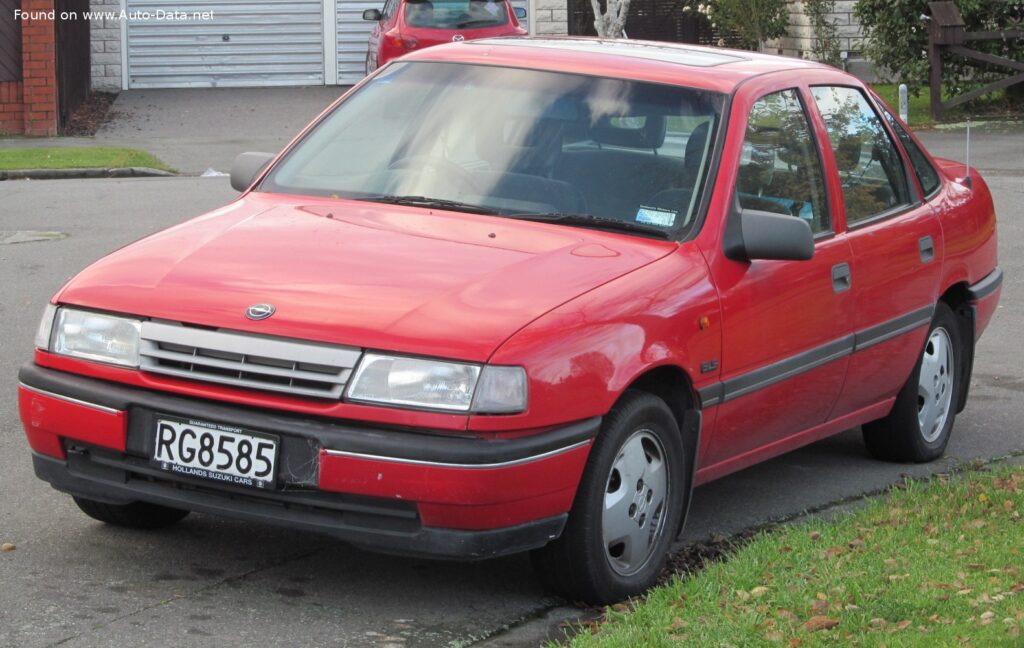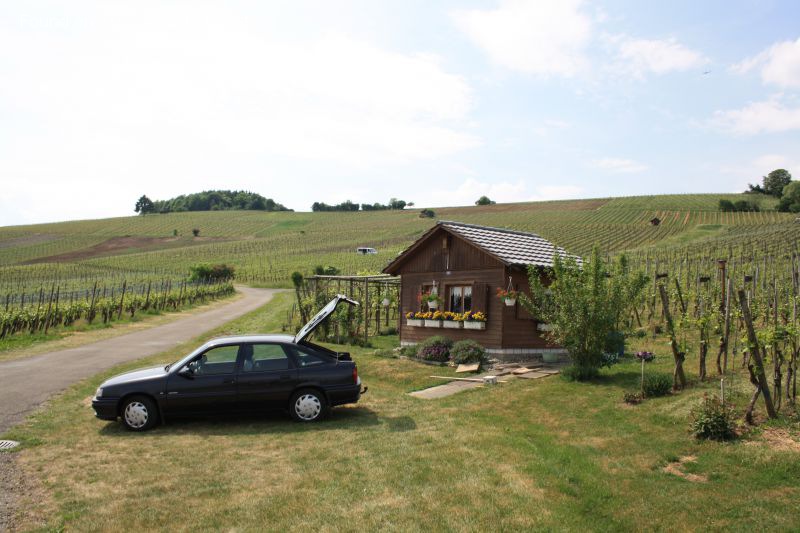
The Opel Vectra A CC (Comfort Coupé), particularly the facelifted version introduced in August 1992, represented a significant step forward for Opel in the mid-size car segment. Positioned as a practical and relatively affordable family vehicle, the Vectra A aimed to replace the aging Ascona and Manta models, offering a more modern design and improved technology. This generation, produced until July 1995, was primarily a European market vehicle. While not officially sold in the United States, understanding its specifications provides insight into the engineering trends of the early 1990s European automotive landscape. The 1.8i CAT model, equipped with a 90 horsepower engine and automatic transmission, was a popular choice for buyers seeking a balance of performance and convenience.
Opel Vectra A CC (Facelift 1992) 1.8i CAT: An Overview
The Vectra A CC facelift brought subtle but important changes to the original design, including revised front and rear styling, improved interior materials, and updated engine options. The “CC” designation signified the Comfort Coupé body style, a five-door hatchback offering a blend of practicality and a slightly more streamlined appearance than a traditional sedan. The 1.8i CAT variant, featuring a catalytic converter (hence the “CAT” designation), was designed to meet increasingly stringent European emissions standards. It served as a mainstream offering within the Vectra range, appealing to families and commuters alike.
Engine & Performance
The heart of the 1992 Opel Vectra A CC 1.8i CAT is an inline four-cylinder, 1.8-liter (1796 cm3 or 109.6 cu. in.) gasoline engine, designated the C18NZ. This naturally aspirated engine produces 90 horsepower (Hp) at 5400 rpm and 145 Newton-meters (106.95 lb.-ft.) of torque at 3000 rpm. Power per liter is rated at 50.1 Hp/l. The engine utilizes single-point fuel injection and an overhead camshaft (OHC) valvetrain with two valves per cylinder. Power is delivered to the front wheels via a four-speed automatic transmission. Performance figures include a 0-100 km/h (0-62 mph) acceleration time of 15 seconds and a maximum speed of 177 km/h (109.98 mph). The weight-to-power ratio is 12.5 kg/Hp, and the weight-to-torque ratio is 7.8 kg/Nm. While not a performance car, the 1.8i CAT offered adequate power for everyday driving and highway cruising.
Design & Features
The Opel Vectra A CC is a five-door hatchback, offering a practical and versatile body style. It seats five passengers and provides a generous amount of cargo space. The facelifted model featured a more rounded and aerodynamic front end compared to the original Vectra A. Inside, the cabin was designed with practicality in mind, featuring durable materials and a functional layout. Key features for this era included hydraulic power steering and an Anti-lock Braking System (ABS), enhancing both driver comfort and safety. The rear seats fold down to increase cargo capacity, expanding from a minimum of 460 liters (16.24 cu. ft.) to a maximum of 1290 liters (45.56 cu. ft.). The vehicle’s dimensions are 4352 mm (171.34 in.) in length, 1706 mm (67.17 in.) in width, and 1400 mm (55.12 in.) in height, with a wheelbase of 2600 mm (102.36 in.).
Technical Specifications
| Brand | Opel |
| Model | Vectra |
| Generation | Vectra A CC (facelift 1992) |
| Type (Engine) | 1.8i CAT (90 Hp) Automatic |
| Start of production | August, 1992 |
| End of production | July, 1995 |
| Powertrain Architecture | Internal Combustion engine |
| Body type | Hatchback |
| Seats | 5 |
| Doors | 5 |
| Fuel consumption (combined) | 7.6 l/100 km (30.9 US mpg, 37.2 UK mpg, 13.2 km/l) |
| Fuel Type | Petrol (Gasoline) |
| Acceleration 0 – 100 km/h | 15 sec |
| Acceleration 0 – 62 mph | 15 sec |
| Acceleration 0 – 60 mph | 14.3 sec |
| Maximum speed | 177 km/h (109.98 mph) |
| Weight-to-power ratio | 12.5 kg/Hp |
| Weight-to-torque ratio | 7.8 kg/Nm |
| Power | 90 Hp @ 5400 rpm |
| Power per litre | 50.1 Hp/l |
| Torque | 145 Nm @ 3000 rpm (106.95 lb.-ft. @ 3000 rpm) |
| Engine layout | Front, Transverse |
| Engine Model/Code | C18NZ |
| Engine displacement | 1796 cm3 (109.6 cu. in.) |
| Number of cylinders | 4 |
| Engine configuration | Inline |
| Cylinder Bore | 84.8 mm (3.34 in.) |
| Piston Stroke | 79.5 mm (3.13 in.) |
| Compression ratio | 9.2:1 |
| Number of valves per cylinder | 2 |
| Fuel injection system | Single-point injection |
| Engine aspiration | Naturally aspirated engine |
| Valvetrain | OHC |
| Engine oil capacity | 4 l (4.23 US qt | 3.52 UK qt) |
| Coolant capacity | 7.2 l (7.61 US qt | 6.34 UK qt) |
| Kerb Weight | 1124 kg (2478 lbs.) |
| Max. weight | 1630 kg (3593.53 lbs.) |
| Max load | 506 kg (1115.54 lbs.) |
| Trunk (boot) space – minimum | 460 l (16.24 cu. ft.) |
| Trunk (boot) space – maximum | 1290 l (45.56 cu. ft.) |
| Fuel tank capacity | 61 l (16.11 US gal | 13.42 UK gal) |
| Length | 4352 mm (171.34 in.) |
| Width | 1706 mm (67.17 in.) |
| Height | 1400 mm (55.12 in.) |
| Wheelbase | 2600 mm (102.36 in.) |
| Front track | 1420 mm (55.91 in.) |
| Rear track | 1423 mm (56.02 in.) |
| Drivetrain Architecture | Front wheel drive |
| Number of gears and type of gearbox | 4 gears, automatic transmission |
| Front suspension | Wishbone |
| Rear suspension | Coil spring |
| Front brakes | Ventilated discs |
| Rear brakes | Drum |
| Assisting systems | ABS (Anti-lock braking system), Hydraulic Power Steering |
| Tires size | 175/70 R14 |
| Wheel rims size | 14 |
The Opel Vectra A CC, in its various iterations, played a crucial role in establishing Opel as a major player in the European mid-size car market. The 1.8i CAT model, with its blend of practicality, affordability, and reasonable performance, was a popular choice for families and commuters during its production run.