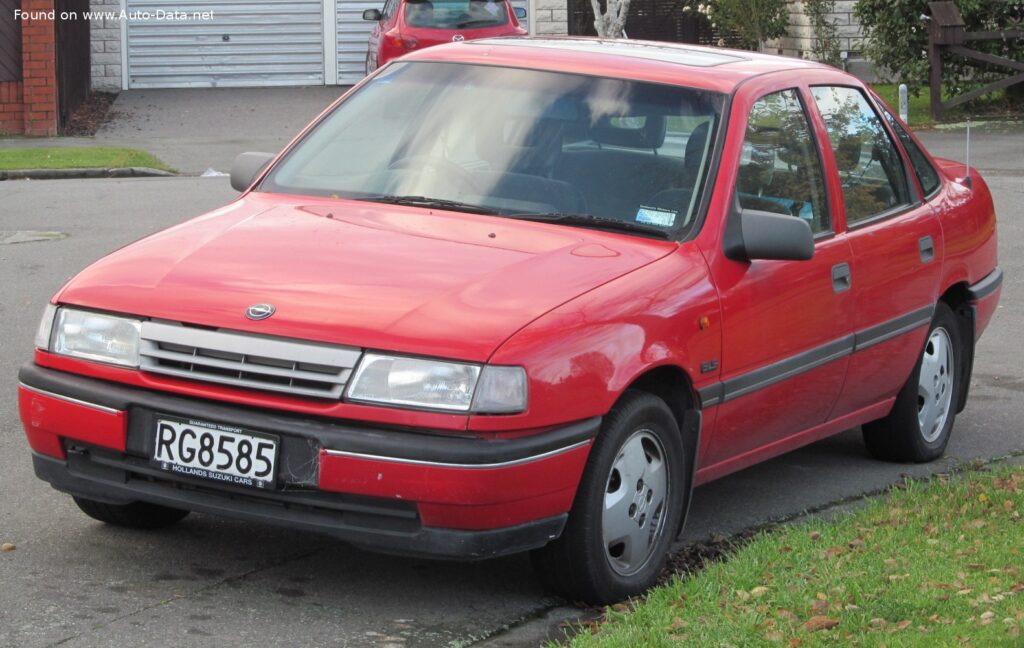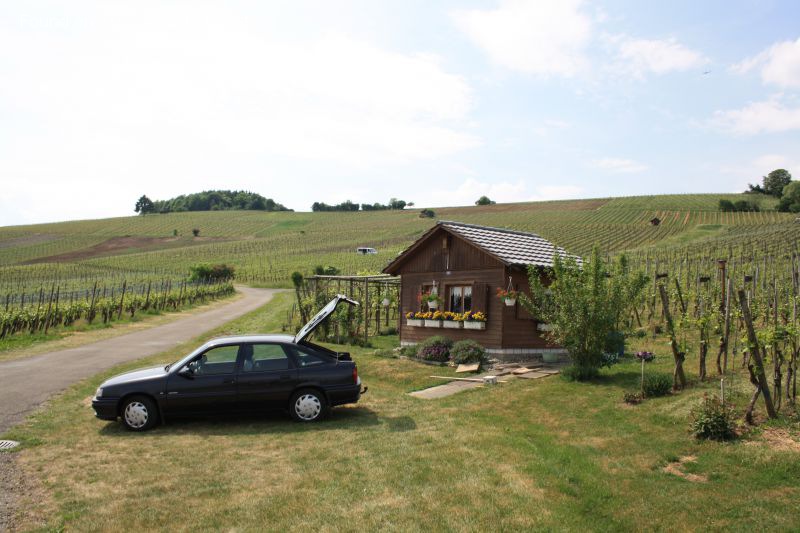
The Opel Vectra A CC (facelift 1992) 2.0i 16V represents a significant evolution in Opel’s mid-size offerings. Introduced in March 1994 and continuing through July 1995, this variant of the Vectra A aimed to provide a balance of performance, practicality, and modern features for the European market. While not officially sold in the United States, the Vectra A was a key competitor in the crowded European family car segment, battling rivals like the Ford Mondeo, Volkswagen Passat, and Peugeot 405. The “CC” designation stands for “Coupé Classic,” referring to the hatchback body style, which was increasingly popular for its versatility.
Opel Vectra A CC (facelift 1992): An Overview
The Vectra A, launched in 1988, was Opel’s replacement for the Ascona and Manta models. The 1992 facelift brought revised styling, improved aerodynamics, and updated engine options. The 2.0i 16V model, producing 136 horsepower, was positioned as a sporty and efficient choice within the Vectra range. It catered to drivers seeking a more engaging driving experience without sacrificing the practicality expected of a family vehicle. The Vectra A’s design represented a shift towards more rounded and aerodynamic shapes, reflecting contemporary automotive trends.
Engine & Performance
At the heart of the Vectra A CC 2.0i 16V lies the X20XEV inline-four cylinder engine, displacing 1998 cm³ (121.93 cu. in.). This naturally aspirated engine utilizes multi-port fuel injection and a double overhead camshaft (DOHC) valvetrain with four valves per cylinder. This configuration allows for a respectable power output of 136 Hp at 5600 rpm and 188 Nm (138.66 lb.-ft.) of torque at 3200 rpm. The engine’s power-to-liter ratio is 68.1 Hp/l. This powertrain delivers a 0-100 km/h (0-62 mph) acceleration time of 9.5 seconds and a top speed of 210 km/h (130.49 mph). The weight-to-power ratio of 9.2 kg/Hp and a weight-to-torque ratio of 6.6 kg/Nm contribute to a responsive driving experience. Power is delivered to the front wheels via a 5-speed manual transmission.
Design & Features
The Opel Vectra A CC is a five-door hatchback, offering a practical and versatile body style. Its design emphasizes aerodynamic efficiency, with a sloping roofline and integrated bumpers. The interior provides seating for five passengers and offers a reasonable level of comfort for its time. Key features included hydraulic power steering and an Anti-lock Braking System (ABS), which were becoming increasingly common safety features in the early 1990s. The hatchback configuration provides a generous amount of cargo space, ranging from 460 liters (16.24 cu. ft.) with the rear seats up to 1290 liters (45.56 cu. ft.) with the rear seats folded down. The vehicle’s dimensions are 4352 mm (171.34 in.) in length, 1706 mm (67.17 in.) in width, and 1400 mm (55.12 in.) in height. The wheelbase measures 2600 mm (102.36 in.).
Technical Specifications
| Brand | Opel |
| Model | Vectra |
| Generation | Vectra A CC (facelift 1992) |
| Type (Engine) | 2.0i 16V (136 Hp) |
| Start of production | March, 1994 |
| End of production | July, 1995 |
| Powertrain Architecture | Internal Combustion engine |
| Body type | Hatchback |
| Seats | 5 |
| Doors | 5 |
| Fuel consumption (combined) | 6.9 l/100 km |
| Fuel consumption (US mpg) | 34.1 US mpg |
| Fuel consumption (UK mpg) | 40.9 UK mpg |
| Fuel consumption (km/l) | 14.5 km/l |
| Fuel Type | Petrol (Gasoline) |
| Acceleration 0 – 100 km/h | 9.5 sec |
| Acceleration 0 – 62 mph | 9.5 sec |
| Acceleration 0 – 60 mph | 9 sec |
| Maximum speed | 210 km/h |
| Maximum speed (mph) | 130.49 mph |
| Weight-to-power ratio | 9.2 kg/Hp |
| Weight-to-torque ratio | 6.6 kg/Nm |
| Power | 136 Hp @ 5600 rpm |
| Power per litre | 68.1 Hp/l |
| Torque | 188 Nm @ 3200 rpm |
| Torque (lb.-ft.) | 138.66 lb.-ft. @ 3200 rpm |
| Engine layout | Front, Transverse |
| Engine Model/Code | X20XEV |
| Engine displacement | 1998 cm3 |
| Engine displacement (cu. in.) | 121.93 cu. in. |
| Number of cylinders | 4 |
| Engine configuration | Inline |
| Piston Stroke | 86 mm |
| Piston Stroke (in.) | 3.39 in. |
| Compression ratio | 10.8:1 |
| Number of valves per cylinder | 4 |
| Fuel injection system | Multi-port manifold injection |
| Engine aspiration | Naturally aspirated engine |
| Valvetrain | DOHC |
| Engine oil capacity | 4 l |
| Engine oil capacity (US qt) | 4.23 US qt |
| Engine oil capacity (UK qt) | 3.52 UK qt |
| Coolant | 7.2 l |
| Coolant (US qt) | 7.61 US qt |
| Coolant (UK qt) | 6.34 UK qt |
| Kerb Weight | 1245 kg |
| Kerb Weight (lbs.) | 2744.76 lbs. |
| Max. weight | 1755 kg |
| Max. weight (lbs.) | 3869.11 lbs. |
| Max load | 510 kg |
| Max load (lbs.) | 1124.36 lbs. |
| Trunk (boot) space – minimum | 460 l |
| Trunk (boot) space – minimum (cu. ft.) | 16.24 cu. ft. |
| Trunk (boot) space – maximum | 1290 l |
| Trunk (boot) space – maximum (cu. ft.) | 45.56 cu. ft. |
| Fuel tank capacity | 61 l |
| Fuel tank capacity (US gal) | 16.11 US gal |
| Fuel tank capacity (UK gal) | 13.42 UK gal |
| Length | 4352 mm |
| Length (in.) | 171.34 in. |
| Width | 1706 mm |
| Width (in.) | 67.17 in. |
| Height | 1400 mm |
| Height (in.) | 55.12 in. |
| Wheelbase | 2600 mm |
| Wheelbase (in.) | 102.36 in. |
| Front track | 1426 mm |
| Front track (in.) | 56.14 in. |
| Rear (Back) track | 1432 mm |
| Rear (Back) track (in.) | 56.38 in. |
| Drivetrain Architecture | The Internal combustion engine (ICE) drives the front wheels of the vehicle. |
| Drive wheel | Front wheel drive |
| Number of gears and type of gearbox | 5 gears, manual transmission |
| Front suspension | Wishbone |
| Rear suspension | Coil spring |
| Front brakes | Ventilated discs |
| Rear brakes | Disc |
| Assisting systems | ABS (Anti-lock braking system) |
| Power steering | Hydraulic Steering |
| Tires size | 195/60 R15 |
The Opel Vectra A CC 2.0i 16V, while not a high-performance sports car, offered a compelling package for European buyers seeking a practical, comfortable, and reasonably efficient family vehicle. Its blend of features and performance cemented its position as a popular choice in a competitive market segment.