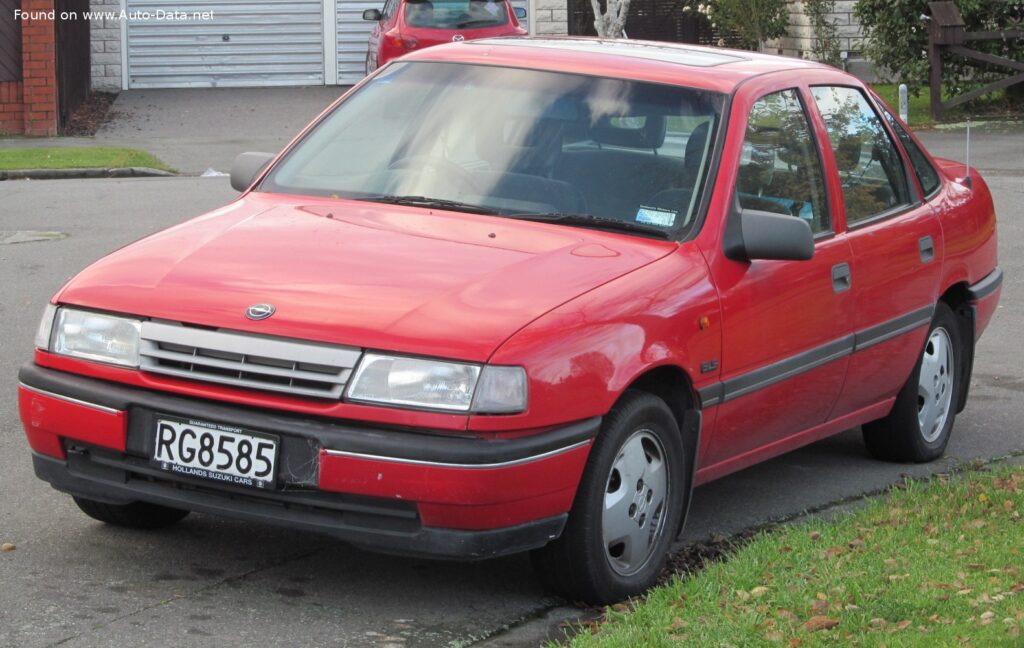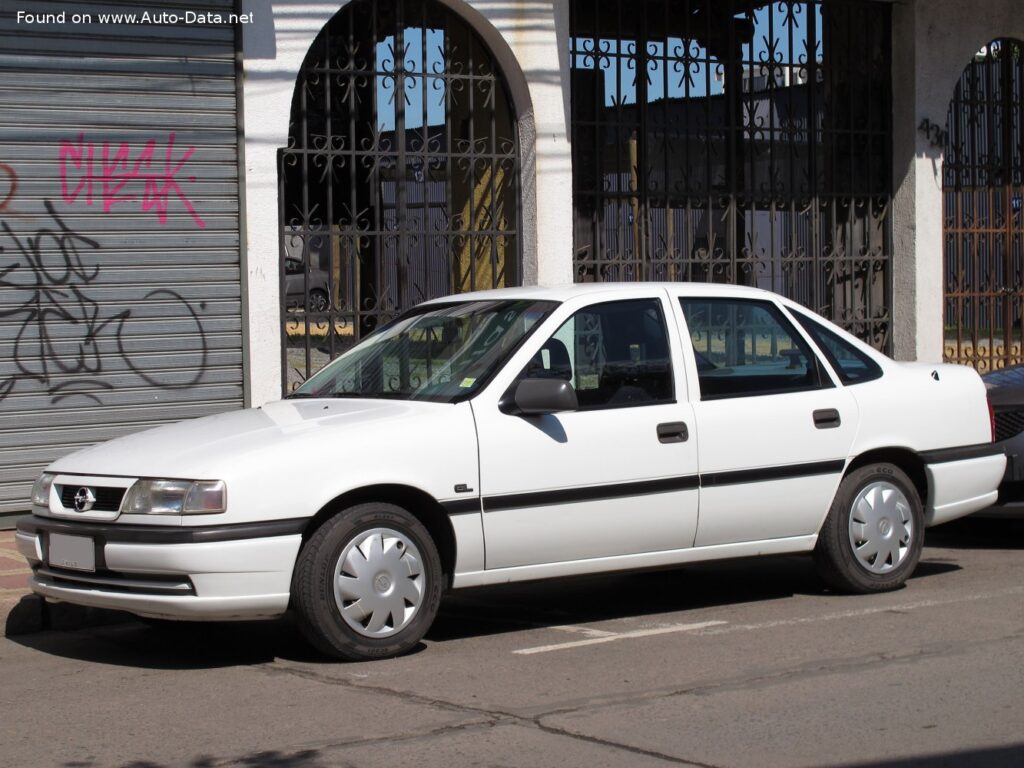
The Opel Vectra A (facelift 1992) 1.8i CAT (90 Hp) represents a significant evolution in Opel’s mid-size offerings. Introduced as a replacement for the Ascona and Manta, the Vectra aimed to provide a more modern and globally competitive vehicle. The “A” designation marks the first generation of the Vectra, and the 1992 facelift brought styling refinements and mechanical updates. While not initially sold in the United States, the Vectra was a key model for Opel in Europe, competing with vehicles like the Ford Mondeo and Volkswagen Passat. This model, specifically the 1.8i CAT variant, offered a balance of fuel efficiency and performance for the family car market.
Opel Vectra A (facelift 1992) 1.8i CAT: An Overview
The Vectra A, launched in 1988, was Opel’s attempt to consolidate its mid-size offerings into a single, more modern platform. The 1992 facelift was a crucial update, addressing some initial criticisms and enhancing the car’s appeal. The 1.8i CAT model, powered by a 1.8-liter inline-four engine, was a popular choice for buyers seeking a practical and reliable family sedan. The “CAT” designation refers to the catalytic converter, indicating an effort to meet increasingly stringent European emissions standards. This vehicle was primarily marketed in Europe and other regions, serving as a staple in Opel’s lineup during the early to mid-1990s.
Engine & Performance
The heart of the Vectra A 1.8i CAT is its 1796 cc (109.6 cu. in.) inline-four cylinder engine, designated C18NZ. This engine produces 90 horsepower (Hp) at 5400 rpm and 145 Newton-meters (106.95 lb.-ft.) of torque at 3000 rpm. The engine utilizes a single-point fuel injection system, a common technology for the era, and features an overhead camshaft (OHC) valvetrain with two valves per cylinder. While not a performance-oriented engine, it provided adequate power for everyday driving. Acceleration from 0 to 100 km/h (0-62 mph) takes 12.5 seconds, and 0 to 60 mph is achieved in approximately 11.9 seconds. The top speed is rated at 183 km/h (113.71 mph). The engine’s power-to-weight ratio is 11.8 kg/Hp, and its torque-to-weight ratio is 7.3 kg/Nm. The engine’s relatively modest output, combined with its fuel injection system, resulted in combined fuel economy figures of 7.1 l/100 km (33.1 US mpg, 39.8 UK mpg).
Design & Features
The Opel Vectra A (facelift 1992) is a four-door sedan with a traditional three-box design. The facelift brought subtle changes to the front and rear fascias, including a revised grille and taillights, giving the car a more contemporary appearance. The interior offers seating for five passengers and provides a practical amount of space for a family vehicle. The trunk (boot) space ranges from 530 liters (18.72 cu. ft.) with the rear seats up to 840 liters (29.66 cu. ft.) with the rear seats folded down. Safety features for the time included an Anti-lock Braking System (ABS), which was becoming increasingly common on European vehicles. Hydraulic power steering was also standard, enhancing driving comfort and maneuverability. The vehicle’s curb weight is 1060 kg (2336.9 lbs), and its maximum weight is 1610 kg (3549.44 lbs). The Vectra A prioritized practicality and affordability, offering a comfortable and reliable transportation solution for European families.
Technical Specifications
| Brand | Opel |
| Model | Vectra |
| Generation | Vectra A (facelift 1992) |
| Type (Engine) | 1.8i CAT (90 Hp) |
| Start of production | August, 1992 |
| End of production | July, 1995 |
| Powertrain Architecture | Internal Combustion engine |
| Body type | Sedan |
| Seats | 5 |
| Doors | 4 |
| Fuel consumption (urban) | 10.2 l/100 km (23.1 US mpg, 27.7 UK mpg, 9.8 km/l) |
| Fuel consumption (extra urban) | 5.5 l/100 km (42.8 US mpg, 51.4 UK mpg, 18.2 km/l) |
| Fuel consumption (combined) | 7.1 l/100 km (33.1 US mpg, 39.8 UK mpg, 14.1 km/l) |
| Fuel Type | Petrol (Gasoline) |
| Acceleration 0 – 100 km/h | 12.5 sec |
| Acceleration 0 – 62 mph | 12.5 sec |
| Acceleration 0 – 60 mph | 11.9 sec |
| Maximum speed | 183 km/h (113.71 mph) |
| Weight-to-power ratio | 11.8 kg/Hp |
| Weight-to-torque ratio | 7.3 kg/Nm |
| Power | 90 Hp @ 5400 rpm |
| Torque | 145 Nm @ 3000 rpm (106.95 lb.-ft. @ 3000 rpm) |
| Engine layout | Front, Transverse |
| Engine Model/Code | C18NZ |
| Engine displacement | 1796 cm3 (109.6 cu. in.) |
| Number of cylinders | 4 |
| Engine configuration | Inline |
| Cylinder Bore | 84.8 mm (3.34 in.) |
| Piston Stroke | 79.5 mm (3.13 in.) |
| Compression ratio | 9.2:1 |
| Number of valves per cylinder | 2 |
| Fuel injection system | Single-point injection |
| Engine aspiration | Naturally aspirated |
| Valvetrain | OHC |
| Engine oil capacity | 4 l (4.23 US qt | 3.52 UK qt) |
| Coolant capacity | 7.2 l (7.61 US qt | 6.34 UK qt) |
| Kerb Weight | 1060 kg (2336.9 lbs.) |
| Max. weight | 1610 kg (3549.44 lbs.) |
| Max load | 550 kg (1212.54 lbs.) |
| Trunk (boot) space – minimum | 530 l (18.72 cu. ft.) |
| Trunk (boot) space – maximum | 840 l (29.66 cu. ft.) |
| Fuel tank capacity | 61 l (16.11 US gal | 13.42 UK gal) |
| Length | 4432 mm (174.49 in.) |
| Width | 1706 mm (67.17 in.) |
| Height | 1400 mm (55.12 in.) |
| Wheelbase | 2600 mm (102.36 in.) |
| Front track | 1437 mm (56.57 in.) |
| Rear track | 1432 mm (56.38 in.) |
| Drag coefficient (Cd) | 0.29 |
| Drivetrain Architecture | ICE, Front wheel drive |
| Drive wheel | Front wheel drive |
| Number of gears | 5 gears, manual transmission |
| Front suspension | Coil spring |
| Rear suspension | Coil spring |
| Front brakes | Ventilated discs |
| Rear brakes | Drum |
| Assisting systems | ABS (Anti-lock braking system), Hydraulic Steering |
| Tires size | 175/70 R14 |
| Wheel rims size | 14 |