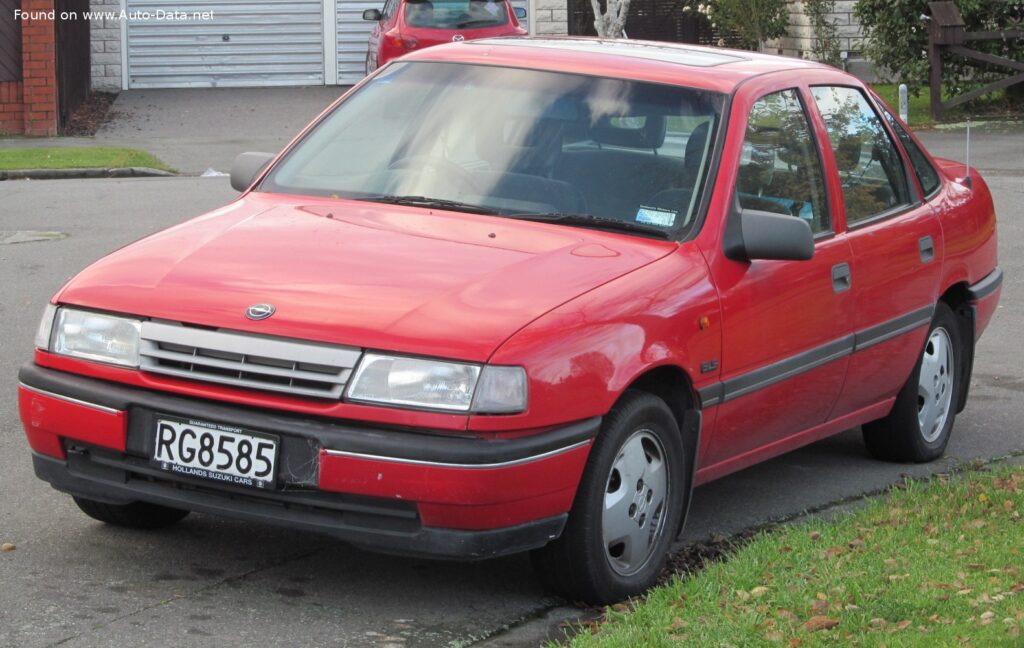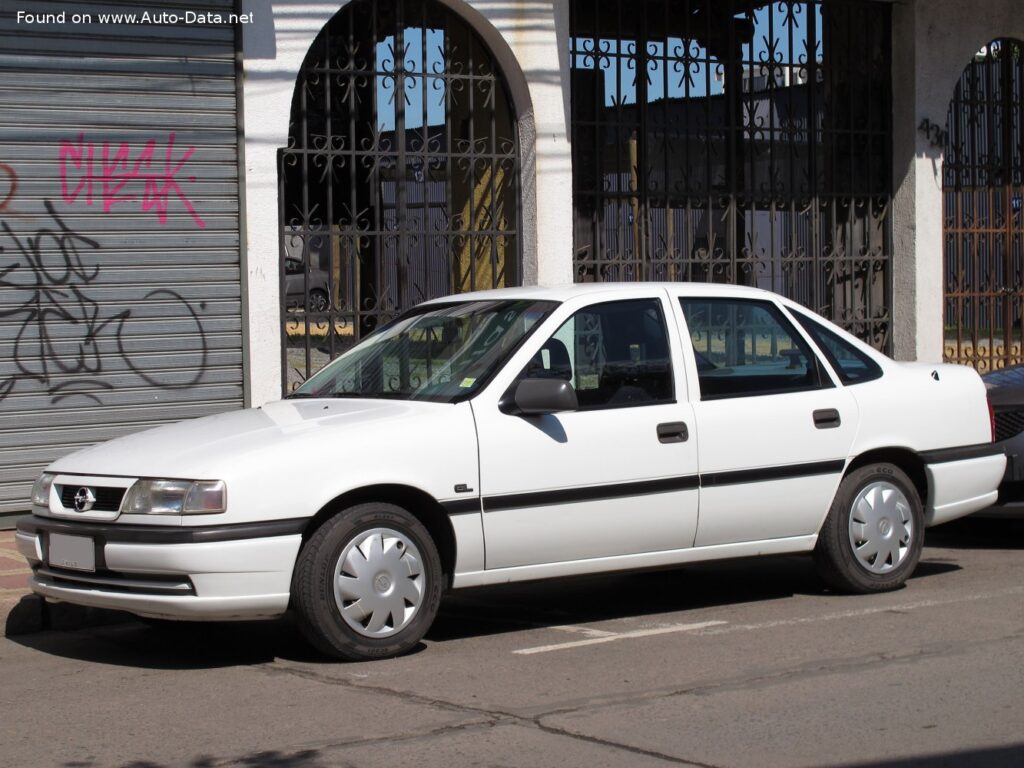
The Opel Vectra A (facelift 1992) 1.8i CAT represents a significant evolution in Opel’s mid-size offerings. Introduced in August 1992 and continuing through July 1995, this facelifted version of the original Vectra A aimed to refine the model’s aesthetics and address early criticisms. Positioned as a family sedan, the Vectra A competed with vehicles like the Ford Mondeo, Volkswagen Passat, and Peugeot 405. While not officially sold in the United States, the Vectra was a mainstay in European markets, offering a blend of practicality, comfort, and relatively modern technology for its time. This particular variant, the 1.8i CAT with an automatic transmission, was a popular choice for buyers seeking a balance between performance and ease of driving.
Opel Vectra A (facelift 1992): A Detailed Overview
The Vectra A was Opel’s attempt to consolidate its mid-size offerings, replacing the Ascona and Manta models. The ‘A’ designation signifies the first generation of the Vectra line. The 1992 facelift brought subtle but noticeable changes to the exterior, including revised headlights, a new grille, and updated interior trim. The “CAT” designation in the model name refers to the catalytic converter, indicating an effort to meet increasingly stringent European emissions standards. The availability of an automatic transmission broadened the appeal of the 1.8i model to drivers prioritizing convenience.
Engine & Performance
The heart of the Vectra A 1.8i CAT is an inline four-cylinder, 1.8-liter (1796 cm3 or 109.6 cu. in.) naturally aspirated gasoline engine. Designated the C18NZ, this engine produces 90 horsepower (Hp) at 5400 rpm and 145 Newton-meters (106.95 lb.-ft.) of torque at 3000 rpm. Power delivery is managed through a four-speed automatic transmission, directing power to the front wheels. While not a performance-oriented vehicle, the 1.8i CAT offers adequate acceleration, achieving 0-100 km/h (0-62 mph) in approximately 15 seconds. Top speed is rated at 177 km/h (109.98 mph). Fuel economy is reasonable for its era, with combined cycle consumption of 7.4 l/100 km (31.8 US mpg or 38.2 UK mpg). The engine’s single-point fuel injection system, while common for the early 1990s, is less efficient than modern multi-point or direct injection systems.
Design & Features
The Opel Vectra A (facelift 1992) is a four-door sedan with a traditional three-box design. The facelifted model features a more streamlined front end compared to the original A-series. The interior offers seating for five passengers and provides a practical level of space for a family vehicle. Trunk space is a notable feature, ranging from 530 liters (18.72 cu. ft.) with the rear seats up to 840 liters (29.66 cu. ft.) when folded down. Safety features for the time included an Anti-lock Braking System (ABS), which was becoming increasingly common on European vehicles. Hydraulic power steering was also standard, enhancing driving comfort. The vehicle’s curb weight of 1060 kg (2336.9 lbs) contributes to its manageable handling characteristics. The drag coefficient of 0.29 was respectable for a sedan of this period, aiding in fuel efficiency and reducing wind noise.
Technical Specifications
| Brand | Opel |
| Model | Vectra |
| Generation | Vectra A (facelift 1992) |
| Type (Engine) | 1.8i CAT (90 Hp) Automatic |
| Start of production | August, 1992 |
| End of production | July, 1995 |
| Powertrain Architecture | Internal Combustion engine |
| Body type | Sedan |
| Seats | 5 |
| Doors | 4 |
| Fuel consumption (urban) | 10.5 l/100 km (22.4 US mpg, 26.9 UK mpg, 9.5 km/l) |
| Fuel consumption (extra urban) | 5.9 l/100 km (39.9 US mpg, 47.9 UK mpg, 16.9 km/l) |
| Fuel consumption (combined) | 7.4 l/100 km (31.8 US mpg, 38.2 UK mpg, 13.5 km/l) |
| Fuel Type | Petrol (Gasoline) |
| Acceleration 0 – 100 km/h | 15 sec |
| Acceleration 0 – 62 mph | 15 sec |
| Acceleration 0 – 60 mph | 14.3 sec |
| Maximum speed | 177 km/h (109.98 mph) |
| Weight-to-power ratio | 11.8 kg/Hp, 84.9 Hp/tonne |
| Weight-to-torque ratio | 7.3 kg/Nm, 136.8 Nm/tonne |
| Power | 90 Hp @ 5400 rpm |
| Power per litre | 50.1 Hp/l |
| Torque | 145 Nm @ 3000 rpm (106.95 lb.-ft. @ 3000 rpm) |
| Engine layout | Front, Transverse |
| Engine Model/Code | C18NZ |
| Engine displacement | 1796 cm3 (109.6 cu. in.) |
| Number of cylinders | 4 |
| Engine configuration | Inline |
| Cylinder Bore | 84.8 mm (3.34 in.) |
| Piston Stroke | 79.5 mm (3.13 in.) |
| Compression ratio | 9.2:1 |
| Number of valves per cylinder | 2 |
| Fuel injection system | Single-point injection |
| Engine aspiration | Naturally aspirated engine |
| Valvetrain | OHC |
| Engine oil capacity | 4 l (4.23 US qt | 3.52 UK qt) |
| Coolant | 7.2 l (7.61 US qt | 6.34 UK qt) |
| Kerb Weight | 1060 kg (2336.9 lbs.) |
| Max. weight | 1610 kg (3549.44 lbs.) |
| Max load | 550 kg (1212.54 lbs.) |
| Trunk (boot) space – minimum | 530 l (18.72 cu. ft.) |
| Trunk (boot) space – maximum | 840 l (29.66 cu. ft.) |
| Fuel tank capacity | 61 l (16.11 US gal | 13.42 UK gal) |
| Length | 4432 mm (174.49 in.) |
| Width | 1706 mm (67.17 in.) |
| Height | 1400 mm (55.12 in.) |
| Wheelbase | 2600 mm (102.36 in.) |
| Front track | 1437 mm (56.57 in.) |
| Rear (Back) track | 1432 mm (56.38 in.) |
| Drag coefficient (Cd) | 0.29 |
| Drivetrain Architecture | The Internal combustion engine (ICE) drives the front wheels of the vehicle. |
| Drive wheel | Front wheel drive |
| Number of gears and type of gearbox | 4 gears, automatic transmission |
| Front suspension | Coil spring |
| Rear suspension | Coil spring |
| Front brakes | Ventilated discs |
| Rear brakes | Drum |
| Assisting systems | ABS (Anti-lock braking system) |
| Power steering | Hydraulic Steering |
| Tires size | 175/70 R14 |
| Wheel rims size | 14 |
The Opel Vectra A (facelift 1992) 1.8i CAT, while not a groundbreaking vehicle, represented a solid and reliable option in the European mid-size sedan segment. Its blend of practicality, reasonable performance, and improving safety features made it a popular choice for families and commuters alike. It laid the groundwork for subsequent Vectra generations, which would continue to evolve and incorporate more advanced technologies.