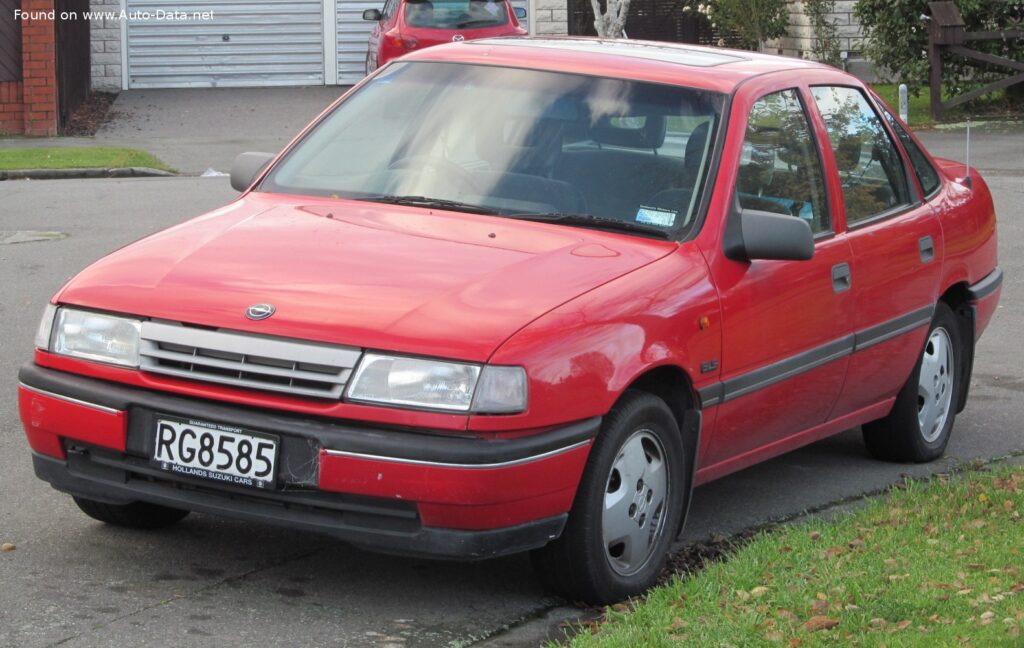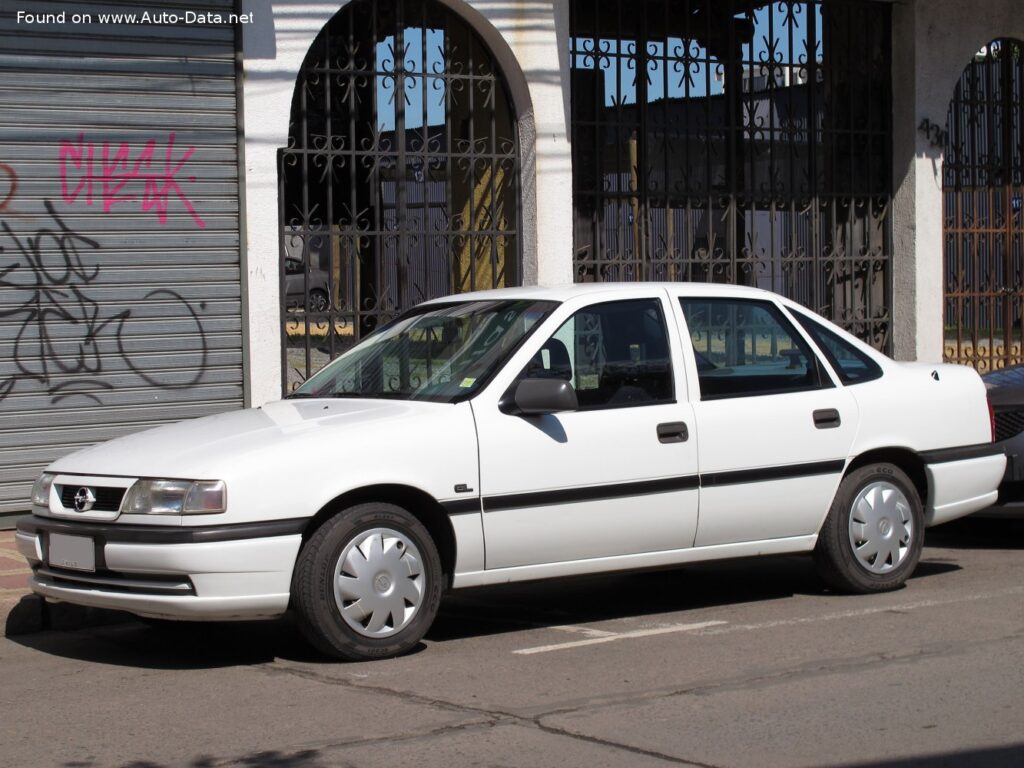
The Opel Vectra A (facelift 1992) 2.0i was a significant model in Opel’s lineup, representing a move towards a more modern and refined mid-size family car. Introduced in August 1992 and continuing in production until July 1995, this facelifted version of the original Vectra A aimed to address some of the criticisms leveled at the initial release, particularly regarding styling and interior quality. While not officially sold in the United States, the Vectra was a popular choice in Europe, competing with vehicles like the Ford Mondeo, Volkswagen Passat, and Peugeot 405. The 2.0i variant, producing 115 horsepower, offered a balance of performance and fuel economy, making it a practical option for families and commuters.
Opel Vectra A (facelift 1992) 2.0i: Overview
The Vectra A was Opel’s replacement for the Ascona and Manta models, consolidating the company’s offerings in the mid-size segment. The 1992 facelift brought revised front and rear styling, improved interior materials, and refinements to the chassis and suspension. The 2.0i model was positioned as a mainstream offering, appealing to buyers seeking a comfortable and reliable vehicle with adequate performance. It represented a key step in Opel’s evolution as a major European automotive manufacturer.
Engine & Performance
The heart of the Vectra A 2.0i is the C20NE, a 1,998 cc (121.93 cu. in.) inline-four cylinder gasoline engine. This naturally aspirated engine produces 115 horsepower at 5,200 rpm and 170 Nm (125.39 lb.-ft.) of torque at 2,600 rpm. Power is delivered to the front wheels via a five-speed manual transmission. The engine utilizes multi-port fuel injection and an overhead camshaft (OHC) valvetrain. Performance figures include a 0-100 km/h (0-62 mph) acceleration time of 10.5 seconds and a maximum speed of 210 km/h (130.49 mph). The weight-to-power ratio of 9.8 kg/Hp and a weight-to-torque ratio of 6.6 kg/Nm contribute to a reasonably responsive driving experience. Fuel economy is rated at 7.1 l/100 km (33.1 US mpg) combined, with 10.3 l/100 km (22.8 US mpg) in urban conditions and 5.6 l/100 km (42 US mpg) on the open road.
Design & Features
The Opel Vectra A (facelift 1992) is a four-door sedan with a traditional three-box design. The facelift brought a more streamlined appearance, with a revised front grille, headlights, and bumper. The interior was updated with improved materials and a more ergonomic layout. The vehicle offers seating for five passengers and a generous trunk capacity ranging from 450 liters (15.89 cu. ft.) to 840 liters (29.66 cu. ft.) with the rear seats folded down. Safety features for the time included ventilated disc brakes on the front wheels and disc brakes on the rear, along with hydraulic power steering. The McPherson independent front suspension and coil spring rear suspension provide a comfortable ride. The vehicle’s drag coefficient of 0.29 contributes to its aerodynamic efficiency. The 195/60 R14 tires mounted on 5.5J x 14 wheels provide adequate grip and handling.
Technical Specifications
| Brand | Opel |
| Model | Vectra |
| Generation | Vectra A (facelift 1992) |
| Type (Engine) | 2.0i (115 Hp) |
| Start of production | August, 1992 |
| End of production | July, 1995 |
| Powertrain Architecture | Internal Combustion engine |
| Body type | Sedan |
| Seats | 5 |
| Doors | 4 |
| Fuel consumption (urban) | 10.3 l/100 km (22.8 US mpg) |
| Fuel consumption (extra urban) | 5.6 l/100 km (42 US mpg) |
| Fuel consumption (combined) | 7.1 l/100 km (33.1 US mpg) |
| Fuel Type | Petrol (Gasoline) |
| Acceleration 0 – 100 km/h | 10.5 sec |
| Acceleration 0 – 62 mph | 10.5 sec |
| Acceleration 0 – 60 mph | 10 sec |
| Maximum speed | 210 km/h (130.49 mph) |
| Weight-to-power ratio | 9.8 kg/Hp |
| Weight-to-torque ratio | 6.6 kg/Nm |
| Power | 115 Hp @ 5200 rpm |
| Torque | 170 Nm @ 2600 rpm (125.39 lb.-ft. @ 2600 rpm) |
| Engine layout | Front, Transverse |
| Engine Model/Code | C20NE |
| Engine displacement | 1998 cm3 (121.93 cu. in.) |
| Number of cylinders | 4 |
| Engine configuration | Inline |
| Cylinder Bore | 86 mm (3.39 in.) |
| Piston Stroke | 86 mm (3.39 in.) |
| Compression ratio | 9.2:1 |
| Number of valves per cylinder | 2 |
| Fuel injection system | Multi-port manifold injection |
| Engine aspiration | Naturally aspirated engine |
| Valvetrain | OHC |
| Engine oil capacity | 4 l (4.23 US qt | 3.52 UK qt) |
| Coolant capacity | 7.2 l (7.61 US qt | 6.34 UK qt) |
| Kerb Weight | 1130 kg (2491.22 lbs.) |
| Max. weight | 1645 kg (3626.6 lbs.) |
| Max load | 515 kg (1135.38 lbs.) |
| Trunk (boot) space – minimum | 450 l (15.89 cu. ft.) |
| Trunk (boot) space – maximum | 840 l (29.66 cu. ft.) |
| Fuel tank capacity | 61 l (16.11 US gal | 13.42 UK gal) |
| Length | 4432 mm (174.49 in.) |
| Width | 1706 mm (67.17 in.) |
| Height | 1400 mm (55.12 in.) |
| Wheelbase | 2600 mm (102.36 in.) |
| Front track | 1437 mm (56.57 in.) |
| Rear track | 1432 mm (56.38 in.) |
| Drag coefficient (Cd) | 0.29 |
| Minimum turning circle | 12 m (39.37 ft.) |
| Drivetrain Architecture | Front wheel drive |
| Number of gears | 5 gears, manual transmission |
| Front suspension | Independent type McPherson |
| Rear suspension | Coil spring |
| Front brakes | Ventilated discs |
| Rear brakes | Disc |
| Steering type | Steering rack and pinion |
| Power steering | Hydraulic Steering |
| Tires size | 195/60 R14 |
| Wheel rims size | 5.5J x 14 |
The Opel Vectra A (facelift 1992) 2.0i, while not a groundbreaking vehicle, represented a solid and dependable choice in the European mid-size car market. Its blend of practicality, reasonable performance, and improved refinement made it a popular option for families and individuals alike. It laid the groundwork for subsequent Vectra generations, which would continue to evolve and compete in a highly competitive segment.