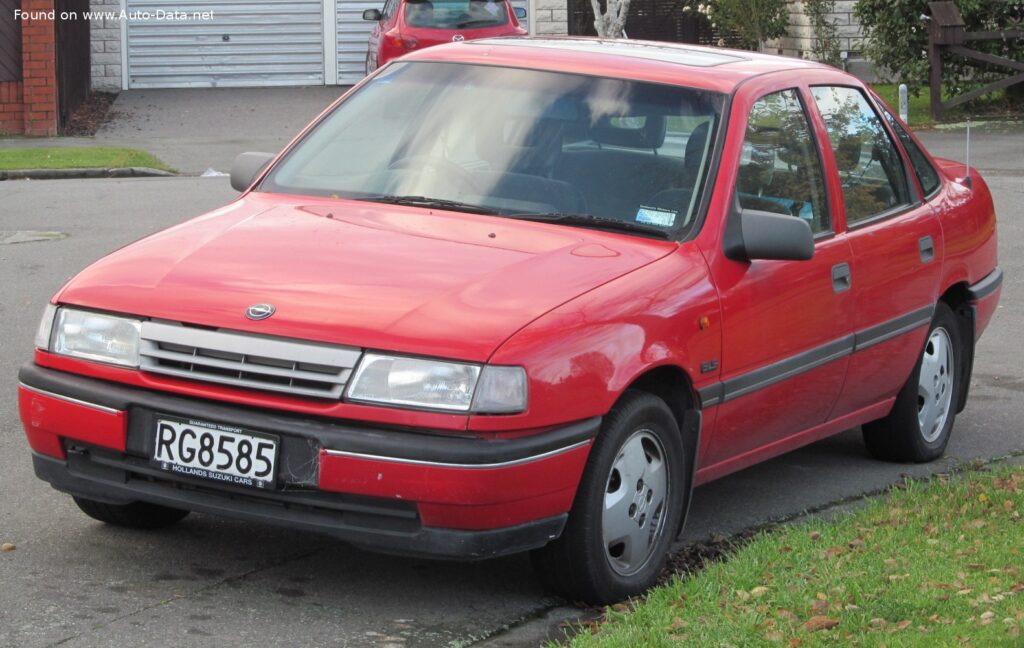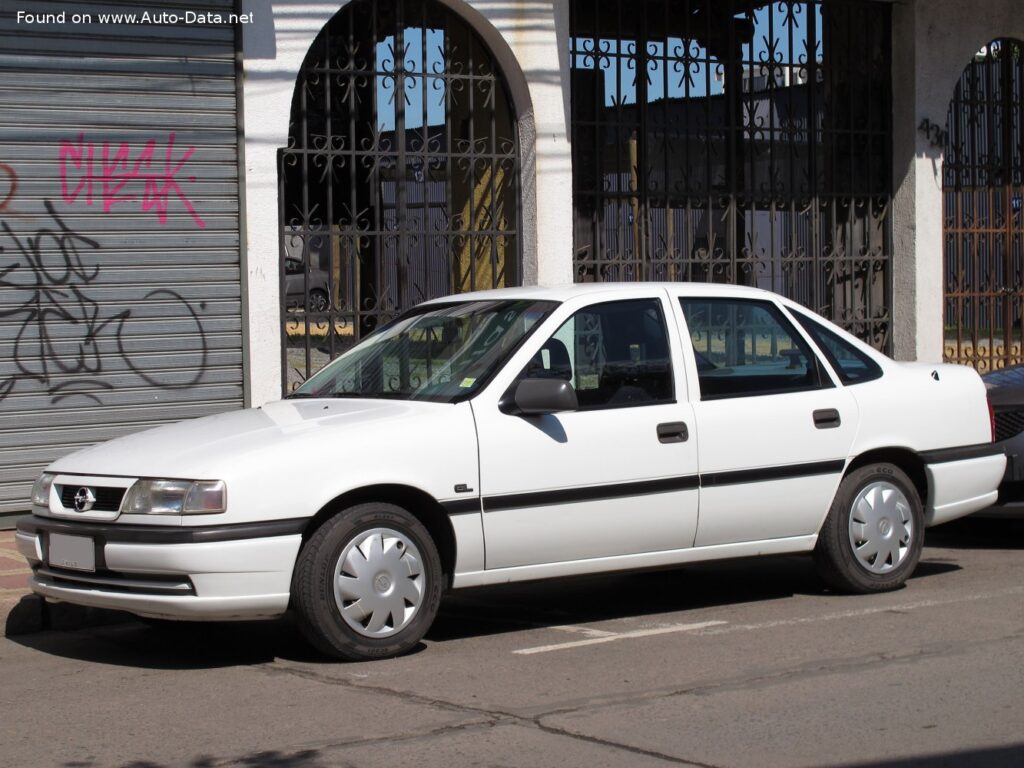
The Opel Vectra A (facelift 1992) 2.0i 16V represents a significant evolution in Opel’s mid-size offerings. Introduced in August 1992 and continuing through February 1994, this facelifted version of the original Vectra A aimed to refine the model and enhance its appeal in the competitive European market. Positioned as a family sedan, the Vectra A 2.0i 16V offered a blend of practicality, performance, and relatively modern technology for its time. While not officially sold in the United States, the Vectra was a key player in the D-segment (mid-size car) in Europe, competing with models like the Ford Mondeo, Volkswagen Passat, and Peugeot 405.
Opel Vectra A (facelift 1992) 2.0i 16V: An Overview
The Vectra A was Opel’s replacement for the Ascona and Manta models, consolidating their mid-size range into a single, more modern offering. The 1992 facelift brought subtle but important changes to the exterior styling, including revised headlights and grille, as well as improvements to the interior. The 2.0i 16V variant, powered by the C20XE engine, was a performance-oriented version of the Vectra A, offering a noticeable step up in power and driving dynamics compared to lower-spec models. This model aimed to attract buyers seeking a more engaging driving experience without sacrificing the practicality of a family sedan.
Engine & Performance
At the heart of the Vectra A 2.0i 16V lies the C20XE 2.0-liter inline four-cylinder engine. This naturally aspirated engine, a hallmark of Opel’s engineering in the early 1990s, produced 150 horsepower at 6000 rpm and 196 Nm (144.56 lb.-ft.) of torque at 4600 rpm. The engine featured multi-port fuel injection and a double overhead camshaft (DOHC) valvetrain, contributing to its responsive performance. The power-to-weight ratio of 8.1 kg/Hp and a torque-to-weight ratio of 6.2 kg/Nm allowed for brisk acceleration. The car could accelerate from 0 to 100 km/h (0-62 mph) in 8.5 seconds, and 0-60 mph in a calculated 8.1 seconds, reaching a top speed of 217 km/h (134.84 mph). The engine’s 10.5:1 compression ratio and 1998 cm³ (121.93 cu. in.) displacement were typical for performance engines of the era. The engine required 4.5 liters (4.76 US qt) of oil and 7.2 liters (7.61 US qt) of coolant.
Design & Features
The Opel Vectra A (facelift 1992) 2.0i 16V is a four-door sedan with a relatively conservative, yet functional design. The body style prioritized practicality and passenger comfort. The interior offered seating for five passengers and featured a standard layout for the time, with cloth upholstery and basic amenities. Key features included hydraulic power steering and an Anti-lock Braking System (ABS), which were becoming increasingly common on mid-size cars in the early 1990s. The trunk offered a generous 530 liters (18.72 cu. ft.) of space, expandable to 840 liters (29.66 cu. ft.) with the rear seats folded down. The car’s dimensions – 4432 mm (174.49 in.) in length, 1706 mm (67.17 in.) in width, and 1400 mm (55.12 in.) in height – positioned it squarely within the mid-size sedan segment. The vehicle rides on 195/60 R15 tires mounted on 5.5J x 15 wheels.
Technical Specifications
| Brand | Opel |
| Model | Vectra |
| Generation | Vectra A (facelift 1992) |
| Type (Engine) | 2.0i 16V (150 Hp) |
| Start of production | August, 1992 |
| End of production | February, 1994 |
| Powertrain Architecture | Internal Combustion engine |
| Body type | Sedan |
| Seats | 5 |
| Doors | 4 |
| Fuel consumption (combined) | 7.9 l/100 km |
| Fuel consumption (US mpg) | 29.8 US mpg |
| Fuel consumption (UK mpg) | 35.8 UK mpg |
| Fuel consumption (km/l) | 12.7 km/l |
| Fuel Type | Petrol (Gasoline) |
| Acceleration 0 – 100 km/h | 8.5 sec |
| Acceleration 0 – 62 mph | 8.5 sec |
| Acceleration 0 – 60 mph | 8.1 sec |
| Maximum speed | 217 km/h (134.84 mph) |
| Weight-to-power ratio | 8.1 kg/Hp |
| Weight-to-torque ratio | 6.2 kg/Nm |
| Power | 150 Hp @ 6000 rpm |
| Power per litre | 75.1 Hp/l |
| Torque | 196 Nm @ 4600 rpm (144.56 lb.-ft. @ 4600 rpm) |
| Engine layout | Front, Transverse |
| Engine Model/Code | C20XE |
| Engine displacement | 1998 cm3 (121.93 cu. in.) |
| Number of cylinders | 4 |
| Engine configuration | Inline |
| Cylinder Bore | 86 mm (3.39 in.) |
| Piston Stroke | 86 mm (3.39 in.) |
| Compression ratio | 10.5:1 |
| Number of valves per cylinder | 4 |
| Fuel injection system | Multi-port manifold injection |
| Engine aspiration | Naturally aspirated engine |
| Valvetrain | DOHC |
| Engine oil capacity | 4.5 l (4.76 US qt | 3.96 UK qt) |
| Coolant | 7.2 l (7.61 US qt | 6.34 UK qt) |
| Kerb Weight | 1215 kg (2678.62 lbs.) |
| Max. weight | 1720 kg (3791.95 lbs.) |
| Max load | 505 kg (1113.33 lbs.) |
| Trunk (boot) space – minimum | 530 l (18.72 cu. ft.) |
| Trunk (boot) space – maximum | 840 l (29.66 cu. ft.) |
| Fuel tank capacity | 61 l (16.11 US gal | 13.42 UK gal) |
| Length | 4432 mm (174.49 in.) |
| Width | 1706 mm (67.17 in.) |
| Height | 1400 mm (55.12 in.) |
| Wheelbase | 2600 mm (102.36 in.) |
| Front track | 1437 mm (56.57 in.) |
| Rear (Back) track | 1432 mm (56.38 in.) |
| Drivetrain Architecture | Front wheel drive |
| Number of gears and type of gearbox | 5 gears, manual transmission |
| Front suspension | Coil spring |
| Rear suspension | Coil spring |
| Front brakes | Ventilated discs |
| Rear brakes | Disc |
| Assisting systems | ABS (Anti-lock braking system), Hydraulic Steering |
| Tires size | 195/60 R15 |
| Wheel rims size | 5.5J x 15 |
The Opel Vectra A (facelift 1992) 2.0i 16V, while not a groundbreaking vehicle, represented a solid and well-engineered offering in the European mid-size market. Its combination of performance, practicality, and reasonable fuel economy made it a popular choice for families and individuals alike. The C20XE engine, in particular, is highly regarded by enthusiasts for its reliability and tunability, ensuring the Vectra A 2.0i 16V remains a sought-after classic among Opel aficionados.