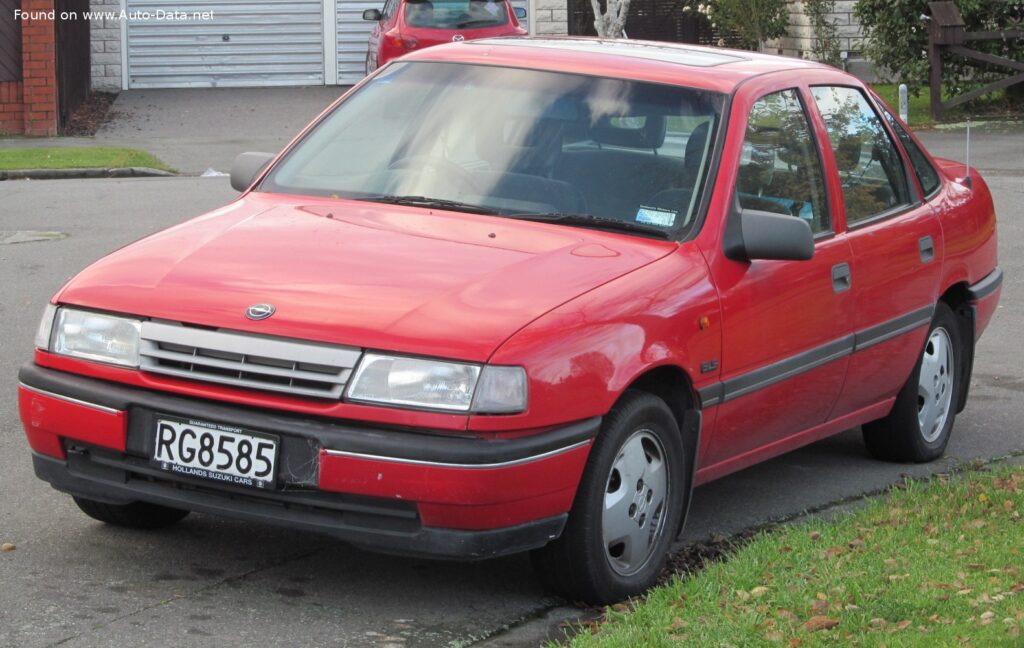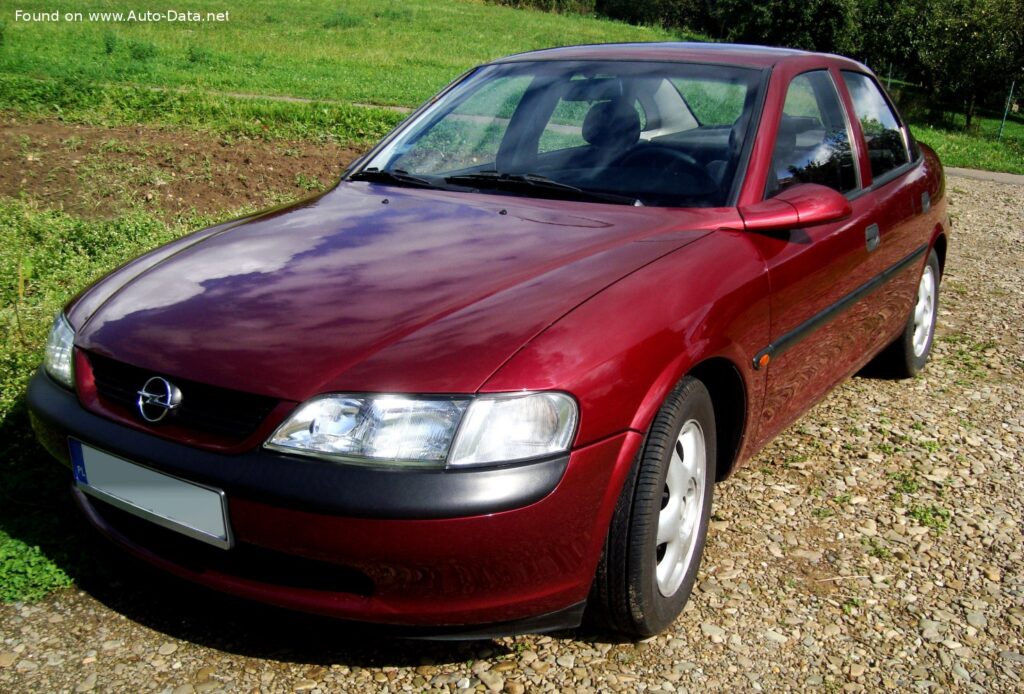
The Opel Vectra B 2.0 DI 16V, produced between 1996 and 1998, represents a significant evolution in Opel’s mid-size offerings. Part of the B generation of the Vectra, this model was primarily aimed at the European market as a practical and efficient family sedan. While not officially sold in the United States, the Vectra B was a popular choice for those seeking a comfortable, reliable, and relatively affordable vehicle. The 2.0 DI 16V variant specifically featured a direct injection diesel engine, prioritizing fuel economy and torque over outright horsepower, a common characteristic of European diesel vehicles of the era.
Opel Vectra B 2.0 DI 16V: A Detailed Overview
The Vectra B built upon the success of its predecessor, offering improved styling, enhanced safety features, and a more refined driving experience. It competed directly with vehicles like the Ford Mondeo, Volkswagen Passat, and Peugeot 406. The 2.0 DI 16V model distinguished itself with its modern diesel technology, offering a balance between performance and economy that appealed to drivers covering long distances or prioritizing fuel efficiency. This model was a key part of Opel’s strategy to offer a diverse range of powertrains to cater to varying customer needs.
Engine & Performance
The heart of the Vectra B 2.0 DI 16V is its 1995 cc inline-four cylinder diesel engine, designated the X20DTL. This engine utilizes direct injection technology, a relatively advanced feature for the mid-1990s, which improves combustion efficiency and reduces emissions. Producing 82 horsepower at 4300 rpm and 185 Nm (136.45 lb-ft) of torque at 1800 rpm, the engine prioritizes low-end grunt over peak power. This makes it well-suited for everyday driving and provides ample pulling power for overtaking maneuvers. The engine’s turbocharger further enhances torque delivery, contributing to its responsive feel. Acceleration from 0 to 100 km/h (0-62 mph) takes 15.5 seconds, while 0 to 60 mph is achieved in approximately 14.7 seconds. The top speed is rated at 178 km/h (110.6 mph). The engine’s power-to-weight ratio is 16.3 kg/Hp, and its torque-to-weight ratio is 7.2 kg/Nm.
Design & Features
The Opel Vectra B is a four-door sedan with a relatively conservative, yet modern, design for its time. Its styling reflects the design trends of the mid-1990s, with smooth lines and a focus on aerodynamic efficiency. The interior is functional and spacious, offering comfortable seating for five passengers. Key features included power steering, a five-speed manual transmission, and disc brakes on the front wheels paired with drum brakes on the rear. Safety features, while not as comprehensive as modern vehicles, included an Anti-lock Braking System (ABS) as standard equipment. The trunk offers a generous 500 liters (17.66 cu. ft.) of space, expandable to 790 liters (27.9 cu. ft.) with the rear seats folded down. The vehicle’s drag coefficient of 0.30 contributes to its fuel efficiency.
Technical Specifications
| Brand | Opel |
| Model | Vectra |
| Generation | Vectra B |
| Type (Engine) | 2.0 DI 16V (82 Hp) |
| Start of production | September, 1996 |
| End of production | November, 1998 |
| Powertrain Architecture | Internal Combustion engine |
| Body type | Sedan |
| Seats | 5 |
| Doors | 4 |
| Fuel consumption (urban) | 7.9 l/100 km (29.8 US mpg, 35.8 UK mpg, 12.7 km/l) |
| Fuel consumption (extra urban) | 4.8 l/100 km (49 US mpg, 58.9 UK mpg, 20.8 km/l) |
| Fuel consumption (combined) | 5.9 l/100 km (39.9 US mpg, 47.9 UK mpg, 16.9 km/l) |
| CO2 emissions | 205 g/km |
| Fuel Type | Diesel |
| Acceleration 0 – 100 km/h | 15.5 sec |
| Acceleration 0 – 62 mph | 15.5 sec |
| Acceleration 0 – 60 mph | 14.7 sec |
| Maximum speed | 178 km/h (110.6 mph) |
| Weight-to-power ratio | 16.3 kg/Hp |
| Weight-to-torque ratio | 7.2 kg/Nm |
| Power | 82 Hp @ 4300 rpm |
| Power per litre | 41.1 Hp/l |
| Torque | 185 Nm @ 1800 rpm (136.45 lb.-ft. @ 1800 rpm) |
| Engine layout | Front, Transverse |
| Engine Model/Code | X20DTL |
| Engine displacement | 1995 cm3 (121.74 cu. in.) |
| Number of cylinders | 4 |
| Engine configuration | Inline |
| Cylinder Bore | 84 mm (3.31 in.) |
| Piston Stroke | 90 mm (3.54 in.) |
| Compression ratio | 18.5:1 |
| Number of valves per cylinder | 4 |
| Fuel injection system | Direct injection |
| Engine aspiration | Turbocharger |
| Valvetrain | OHC |
| Engine oil capacity | 5.5 l (5.81 US qt | 4.84 UK qt) |
| Coolant | 7.4 l (7.82 US qt | 6.51 UK qt) |
| Kerb Weight | 1335 kg (2943.17 lbs.) |
| Max. weight | 1880 kg (4144.69 lbs.) |
| Max load | 545 kg (1201.52 lbs.) |
| Trunk (boot) space – minimum | 500 l (17.66 cu. ft.) |
| Trunk (boot) space – maximum | 790 l (27.9 cu. ft.) |
| Fuel tank capacity | 60 l (15.85 US gal | 13.2 UK gal) |
| Length | 4495 mm (176.97 in.) |
| Width | 1707 mm (67.2 in.) |
| Width including mirrors | 1841 mm (72.48 in.) |
| Height | 1425 mm (56.1 in.) |
| Wheelbase | 2637 mm (103.82 in.) |
| Front track | 1484 mm (58.43 in.) |
| Rear (Back) track | 1487 mm (58.54 in.) |
| Ride height (ground clearance) | 140 mm (5.51 in.) |
| Drag coefficient (Cd) | 0.30 |
| Drivetrain Architecture | ICE, Front wheel drive |
| Drive wheel | Front wheel drive |
| Number of gears and type of gearbox | 5 gears, manual transmission |
| Front suspension | Coil spring |
| Rear suspension | Coil spring |
| Front brakes | Disc |
| Rear brakes | Drum |
| Assisting systems | ABS (Anti-lock braking system) |
| Steering type | Steering rack and pinion |
| Power steering | Hydraulic Steering |
| Tires size | 195/65 R15 |
| Wheel rims size | 5.5J x 15 |
The Opel Vectra B 2.0 DI 16V, while not a performance icon, offered a compelling package of practicality, efficiency, and reliability for European drivers in the late 1990s. Its direct injection diesel engine and well-rounded design made it a popular choice in a competitive segment.