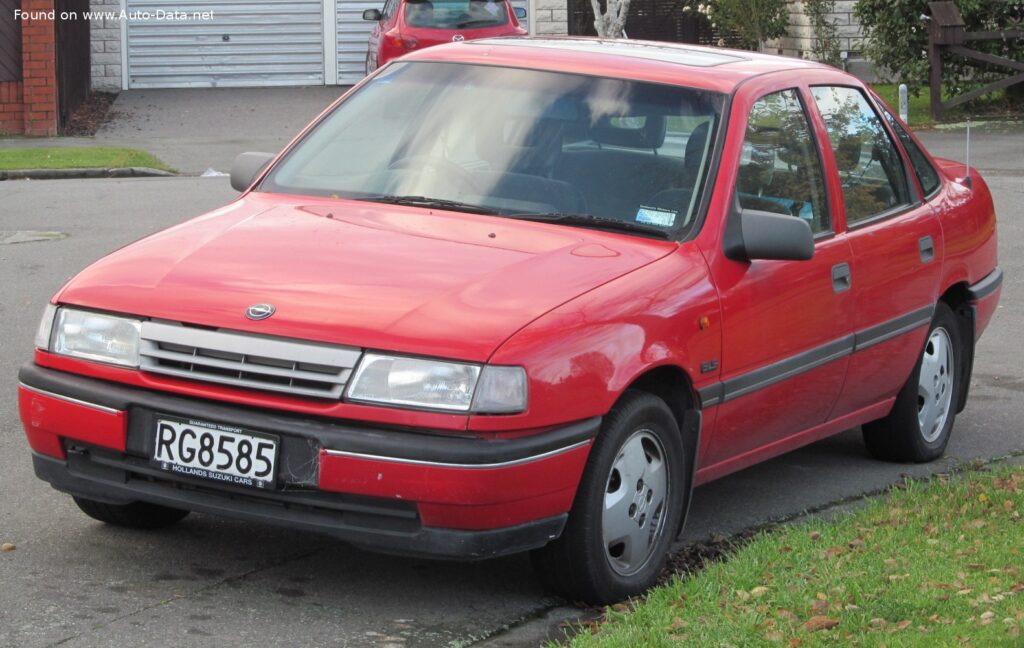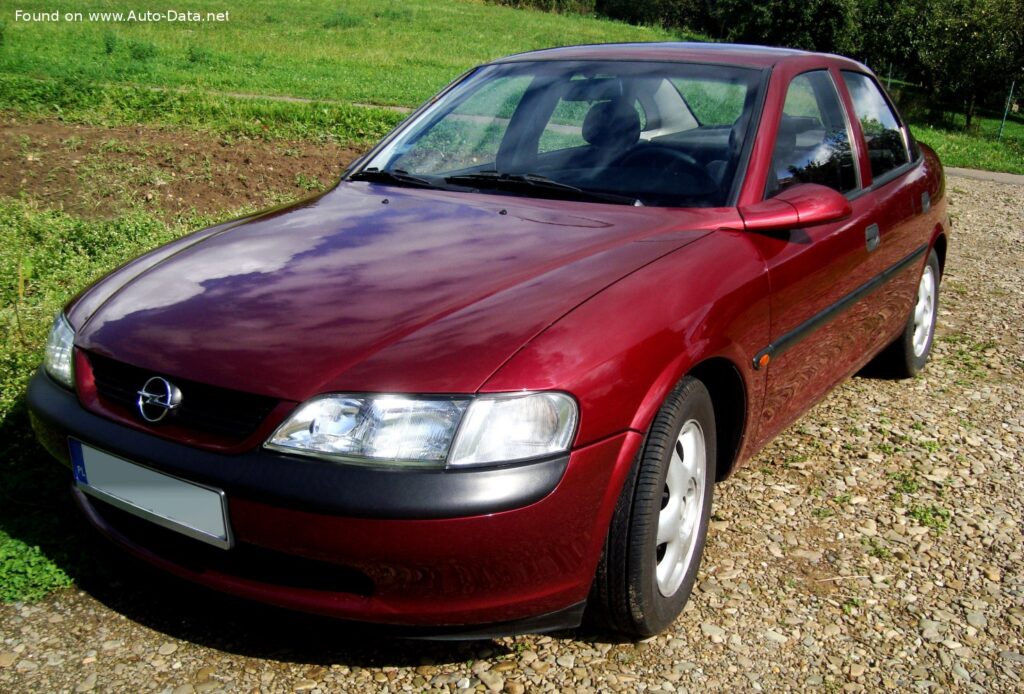
The Opel Vectra B 2.0i 16V, produced from October 1995 to November 1998, represents a significant evolution in Opel’s mid-size offerings. As the successor to the Vectra A, the B-series aimed to provide a more refined and modern driving experience, competing with established rivals like the Ford Mondeo and Volkswagen Passat in the European market. While not officially sold in the United States, the Vectra B was a popular choice for families and fleet buyers across Europe, known for its practicality, comfortable ride, and relatively affordable price point. This model, specifically the 2.0i 16V variant, offered a balance between performance and fuel economy, making it a versatile option for a wide range of drivers.
Opel Vectra B: A Detailed Overview
The Vectra B marked a departure from its predecessor with a more aerodynamic design and a focus on improved interior space and comfort. It was available in several body styles, including a sedan, hatchback (Liftback), and station wagon (Caravan). The 2.0i 16V engine was a key component of the lineup, providing a respectable 136 horsepower and 188 Nm of torque. This engine was known for its reliability and relatively straightforward maintenance, contributing to the Vectra B’s overall appeal.
Engine & Performance
At the heart of the Vectra B 2.0i 16V lies the X20XEV inline-four cylinder engine, displacing 1998 cm³ (121.93 cu. in.). This naturally aspirated engine utilizes multi-port fuel injection and a double overhead camshaft (DOHC) valvetrain with four valves per cylinder. It produces a maximum power output of 136 horsepower at 5600 rpm, and a peak torque of 188 Nm (138.66 lb.-ft.) at 3400 rpm. This configuration delivers a power-to-liter ratio of 68.1 hp/l. Performance figures include a 0-100 km/h (0-62 mph) acceleration time of 10 seconds, and a 0-60 mph time of approximately 9.5 seconds. The vehicle boasts a top speed of 215 km/h (133.59 mph). The engine’s weight-to-power ratio is 9.9 kg/Hp, and the weight-to-torque ratio is 7.2 kg/Nm. The engine requires 4 liters (4.23 US qt | 3.52 UK qt) of engine oil and 7.1 liters (7.5 US qt | 6.25 UK qt) of coolant.
Design & Features
The Opel Vectra B was primarily offered as a four-door sedan, providing comfortable seating for five passengers. Its design emphasized aerodynamic efficiency, achieving a drag coefficient of 0.30. The interior focused on practicality and ergonomics, offering a reasonable level of equipment for its price point. Standard features typically included power steering, front disc brakes, and an anti-lock braking system (ABS). The sedan body style offered a trunk capacity ranging from 500 liters (17.66 cu. ft.) to 790 liters (27.9 cu. ft.) with the rear seats folded down. Safety features, while not as advanced as modern vehicles, were a step forward for the mid-size segment in the late 1990s, with ABS being a key component. The vehicle’s dimensions are 4495 mm (176.97 in.) in length, 1707 mm (67.2 in.) in width, and 1425 mm (56.1 in.) in height, with a wheelbase of 2637 mm (103.82 in.).
Technical Specifications
| Brand | Opel |
| Model | Vectra |
| Generation | Vectra B |
| Type (Engine) | 2.0i 16V (136 Hp) |
| Start of production | October, 1995 |
| End of production | November, 1998 |
| Powertrain Architecture | Internal Combustion engine |
| Body type | Sedan |
| Seats | 5 |
| Doors | 4 |
| Fuel consumption (urban) | 12.3 l/100 km (19.1 US mpg, 23 UK mpg, 8.1 km/l) |
| Fuel consumption (extra urban) | 6.4 l/100 km (36.8 US mpg, 44.1 UK mpg, 15.6 km/l) |
| Fuel consumption (combined) | 8.5 l/100 km (27.7 US mpg, 33.2 UK mpg, 11.8 km/l) |
| CO2 emissions | 205 g/km |
| Fuel Type | Petrol (Gasoline) |
| Acceleration 0 – 100 km/h | 10 sec |
| Acceleration 0 – 62 mph | 10 sec |
| Acceleration 0 – 60 mph | 9.5 sec |
| Maximum speed | 215 km/h (133.59 mph) |
| Weight-to-power ratio | 9.9 kg/Hp |
| Weight-to-torque ratio | 7.2 kg/Nm |
| Power | 136 Hp @ 5600 rpm |
| Power per litre | 68.1 Hp/l |
| Torque | 188 Nm @ 3400 rpm (138.66 lb.-ft. @ 3400 rpm) |
| Engine layout | Front, Transverse |
| Engine Model/Code | X20XEV |
| Engine displacement | 1998 cm³ (121.93 cu. in.) |
| Number of cylinders | 4 |
| Engine configuration | Inline |
| Cylinder Bore | 86 mm (3.39 in.) |
| Piston Stroke | 86 mm (3.39 in.) |
| Compression ratio | 10.8:1 |
| Number of valves per cylinder | 4 |
| Fuel injection system | Multi-port manifold injection |
| Engine aspiration | Naturally aspirated engine |
| Valvetrain | DOHC |
| Engine oil capacity | 4 l (4.23 US qt | 3.52 UK qt) |
| Coolant | 7.1 l (7.5 US qt | 6.25 UK qt) |
| Kerb Weight | 1345 kg (2965.22 lbs.) |
| Max. weight | 1860 kg (4100.6 lbs.) |
| Max load | 515 kg (1135.38 lbs.) |
| Trunk (boot) space – minimum | 500 l (17.66 cu. ft.) |
| Trunk (boot) space – maximum | 790 l (27.9 cu. ft.) |
| Fuel tank capacity | 60 l (15.85 US gal | 13.2 UK gal) |
| Length | 4495 mm (176.97 in.) |
| Width | 1707 mm (67.2 in.) |
| Width including mirrors | 1841 mm (72.48 in.) |
| Height | 1425 mm (56.1 in.) |
| Wheelbase | 2637 mm (103.82 in.) |
| Front track | 1484 mm (58.43 in.) |
| Rear (Back) track | 1487 mm (58.54 in.) |
| Ride height (ground clearance) | 140 mm (5.51 in.) |
| Drag coefficient (Cd) | 0.30 |
| Drive wheel | Front wheel drive |
| Number of gears and type of gearbox | 5 gears, manual transmission |
| Front suspension | Coil spring |
| Rear suspension | Coil spring |
| Front brakes | Disc |
| Rear brakes | Disc |
| Assisting systems | ABS (Anti-lock braking system) |
| Steering type | Steering rack and pinion |
| Power steering | Hydraulic Steering |
| Tires size | 195/65 R15 |
| Wheel rims size | 5.5J x 15 |
The Opel Vectra B 2.0i 16V, while not a performance icon, offered a solid and reliable package for European drivers in the late 1990s. Its blend of practicality, comfort, and reasonable performance ensured its continued popularity throughout its production run, solidifying its place as a significant model in Opel’s history.