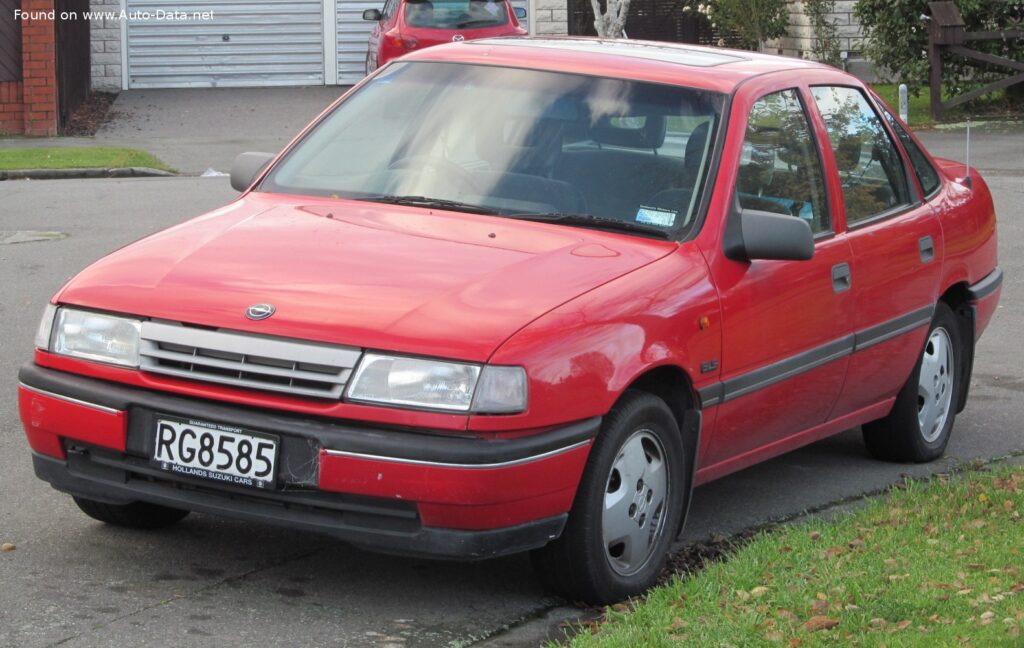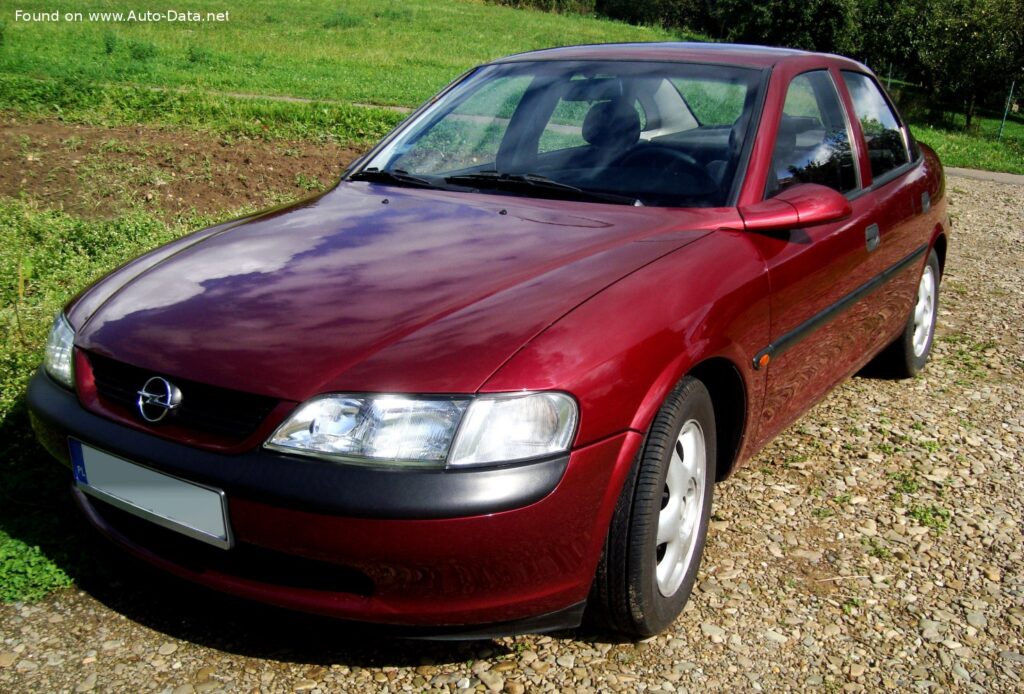
The Opel Vectra B 2.0i 16V Automatic, produced between 1995 and 1998, represents a significant step forward for Opel’s mid-size offering. Part of the B generation of the Vectra, this model aimed to provide a comfortable and practical family sedan with a focus on improved refinement and technology compared to its predecessor. While not officially sold in the United States, the Vectra B was a popular choice in Europe, competing with vehicles like the Ford Mondeo and Volkswagen Passat. It served as a key model in Opel’s lineup, demonstrating the brand’s commitment to delivering modern, well-equipped vehicles to the European market.
Opel Vectra B 2.0i 16V: A Detailed Overview
The Vectra B represented a substantial redesign for Opel’s mid-size car. Introduced in October 1995, it moved away from the more angular styling of the previous generation, adopting a smoother, more aerodynamic design. The 2.0i 16V Automatic variant, specifically, offered a balance between performance and convenience, appealing to drivers seeking a comfortable and capable daily driver. This model was positioned as a mainstream offering within the Vectra B range, providing a solid foundation of features and reliability.
Engine & Performance
At the heart of the Vectra B 2.0i 16V Automatic lies a 1998 cc (121.93 cu. in.) inline-four cylinder engine, designated the X20XEV. This naturally aspirated engine produces 136 horsepower (Hp) at 5600 rpm and 188 Nm (138.66 lb.-ft.) of torque at 3400 rpm. The engine features multi-port fuel injection and a double overhead camshaft (DOHC) valvetrain with four valves per cylinder, contributing to its relatively efficient operation and respectable power output. Power is delivered to the front wheels via a four-speed automatic transmission. Performance figures include a 0-100 km/h (0-62 mph) acceleration time of 11 seconds and a top speed of 212 km/h (131.73 mph). The weight-to-power ratio of 9.9 kg/Hp and a weight-to-torque ratio of 7.2 kg/Nm indicate a reasonably efficient powertrain for its time.
Design & Features
The Opel Vectra B 2.0i 16V is a four-door sedan with a five-seat configuration. Its body dimensions measure 4495 mm (176.97 in) in length, 1707 mm (67.2 in) in width, and 1425 mm (56.1 in) in height. The vehicle’s design prioritized aerodynamic efficiency, evidenced by its drag coefficient of 0.30. Inside, the Vectra B offered a practical and comfortable cabin. While not overtly luxurious, the interior was well-appointed for its class, with a focus on ergonomics and usability. Standard features included power steering, and an anti-lock braking system (ABS) for enhanced safety. The trunk offered a generous 500 liters (17.66 cu. ft.) of space, expandable to 790 liters (27.9 cu. ft.) with the rear seats folded down. The vehicle’s kerb weight is 1345 kg (2965.22 lbs), with a maximum permissible weight of 1860 kg (4100.6 lbs).
Technical Specifications
| Brand | Opel |
| Model | Vectra |
| Generation | Vectra B |
| Type (Engine) | 2.0i 16V (136 Hp) Automatic |
| Start of production | October, 1995 |
| End of production | November, 1998 |
| Powertrain Architecture | Internal Combustion engine |
| Body type | Sedan |
| Seats | 5 |
| Doors | 4 |
| Fuel consumption (urban) | 13.9 l/100 km (16.9 US mpg, 20.3 UK mpg, 7.2 km/l) |
| Fuel consumption (extra urban) | 6.8 l/100 km (34.6 US mpg, 41.5 UK mpg, 14.7 km/l) |
| Fuel Type | Petrol (Gasoline) |
| Acceleration 0 – 100 km/h | 11 sec |
| Acceleration 0 – 62 mph | 11 sec |
| Acceleration 0 – 60 mph | 10.5 sec |
| Maximum speed | 212 km/h (131.73 mph) |
| Weight-to-power ratio | 9.9 kg/Hp |
| Weight-to-torque ratio | 7.2 kg/Nm |
| Power | 136 Hp @ 5600 rpm |
| Torque | 188 Nm @ 3400 rpm (138.66 lb.-ft. @ 3400 rpm) |
| Engine layout | Front, Transverse |
| Engine Model/Code | X20XEV |
| Engine displacement | 1998 cm3 (121.93 cu. in.) |
| Number of cylinders | 4 |
| Engine configuration | Inline |
| Cylinder Bore | 86 mm (3.39 in.) |
| Piston Stroke | 86 mm (3.39 in.) |
| Compression ratio | 10.8:1 |
| Number of valves per cylinder | 4 |
| Fuel injection system | Multi-port manifold injection |
| Engine aspiration | Naturally aspirated |
| Valvetrain | DOHC |
| Engine oil capacity | 4 l (4.23 US qt | 3.52 UK qt) |
| Coolant capacity | 7.1 l (7.5 US qt | 6.25 UK qt) |
| Kerb Weight | 1345 kg (2965.22 lbs.) |
| Max. weight | 1860 kg (4100.6 lbs.) |
| Max load | 515 kg (1135.38 lbs.) |
| Trunk (boot) space – minimum | 500 l (17.66 cu. ft.) |
| Trunk (boot) space – maximum | 790 l (27.9 cu. ft.) |
| Fuel tank capacity | 60 l (15.85 US gal | 13.2 UK gal) |
| Length | 4495 mm (176.97 in.) |
| Width | 1707 mm (67.2 in.) |
| Width including mirrors | 1841 mm (72.48 in.) |
| Height | 1425 mm (56.1 in.) |
| Wheelbase | 2637 mm (103.82 in.) |
| Front track | 1484 mm (58.43 in.) |
| Rear track | 1487 mm (58.54 in.) |
| Drag coefficient (Cd) | 0.30 |
| Drivetrain Architecture | ICE, Front wheel drive |
| Drive wheel | Front wheel drive |
| Number of gears and type of gearbox | 4 gears, automatic transmission |
| Front suspension | Coil spring |
| Rear suspension | Coil spring |
| Front brakes | Disc |
| Rear brakes | Disc |
| Assisting systems | ABS (Anti-lock braking system) |
| Steering type | Steering rack and pinion |
| Power steering | Hydraulic |
| Tires size | 195/65 R15 |
| Wheel rims size | 5.5J x 15 |
The Opel Vectra B 2.0i 16V Automatic, while not a performance icon, offered a compelling package of practicality, comfort, and reasonable efficiency for European drivers in the late 1990s. Its blend of features and its position within Opel’s lineup solidified its place as a popular choice in the competitive mid-size segment.