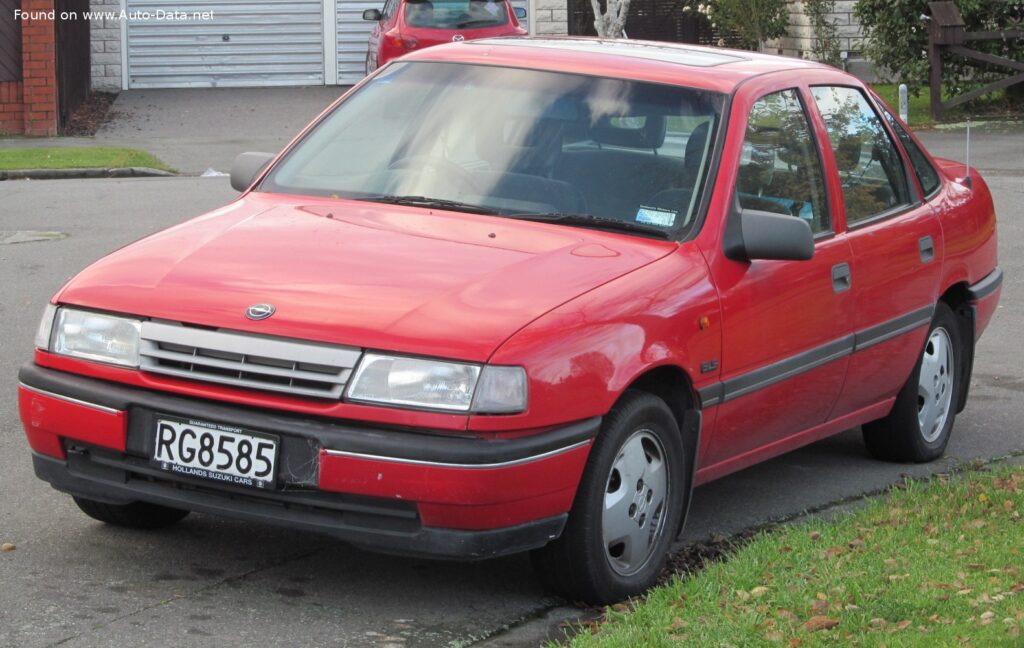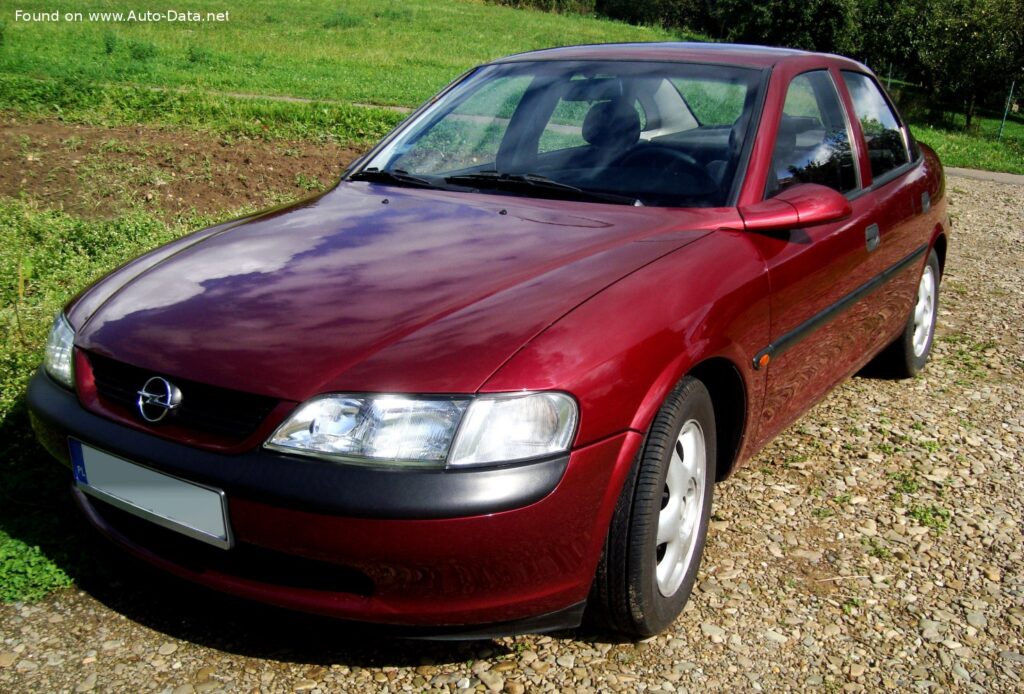
The Opel Vectra B 2.5i V6 (170 Hp), produced between 1995 and 1998, represents a significant evolution in Opel’s mid-size offerings. As the second generation of the Vectra, the ‘B’ model aimed to address criticisms of its predecessor with improved refinement, safety, and a wider range of engine options. While not officially sold in the United States, the Vectra was a popular choice in Europe as a practical and relatively affordable family sedan, competing with models like the Ford Mondeo and Volkswagen Passat. The 2.5i V6 variant, equipped with a naturally aspirated V6 engine, was positioned as a higher-performance option within the Vectra B lineup, offering a blend of comfort and respectable acceleration.
Opel Vectra B 2.5i V6: An Overview
The Vectra B was a crucial model for Opel (now part of Stellantis), as it sought to establish itself as a more competitive player in the European market. The B-series represented a substantial redesign over the original Vectra, with a focus on improving build quality and interior space. The 2.5i V6 model, with its smooth and relatively powerful engine, appealed to buyers seeking a more premium driving experience. It was available exclusively as a four-door sedan and a five-door station wagon (estate) in most European markets.
Engine & Performance
The heart of the Vectra B 2.5i V6 is its 2.5-liter, naturally aspirated V6 engine, designated the X25XE. This engine produces 170 horsepower at 5800 rpm and 230 Nm (169.64 lb-ft) of torque at 3200 rpm. The engine features a double overhead camshaft (DOHC) valvetrain with four valves per cylinder and multi-port fuel injection. This configuration delivers a relatively smooth power delivery and a characteristic V6 sound. The engine’s power-to-weight ratio of 8 kg/Hp and torque-to-weight ratio of 5.9 kg/Nm contribute to its respectable performance. Acceleration from 0 to 100 km/h (0-62 mph) takes approximately 8 seconds, while the 0-60 mph sprint is achieved in around 7.6 seconds. The vehicle boasts a maximum speed of 230 km/h (142.92 mph). Fuel economy is rated at 10.1 l/100 km (23.3 US mpg) combined, with 14.1 l/100 km (16.7 US mpg) in urban driving and 7.8 l/100 km (30.2 US mpg) on the open road. CO2 emissions are rated at 240 g/km.
Design & Features
The Opel Vectra B adopted a more rounded and aerodynamic design compared to its predecessor. The sedan body style offered a practical and spacious interior for five passengers. Key features of the 2.5i V6 model included standard equipment like power windows, central locking, and an upgraded audio system. Safety features, while not as comprehensive as modern standards, included ABS (Anti-lock Braking System) as standard equipment. The interior design focused on functionality and ergonomics, with a straightforward dashboard layout and comfortable seating. The trunk offered a generous 500 liters (17.66 cu. ft.) of space, expandable to 790 liters (27.9 cu. ft.) with the rear seats folded down. The vehicle rides on coil springs at both the front and rear, providing a comfortable ride quality. Steering is rack and pinion with hydraulic assistance. The standard tire size was 205/55 R16, mounted on 7J x 16 inch wheel rims.
Technical Specifications
| Brand | Opel |
| Model | Vectra |
| Generation | Vectra B |
| Type (Engine) | 2.5i V6 (170 Hp) |
| Start of production | October, 1995 |
| End of production | November, 1998 |
| Powertrain Architecture | Internal Combustion engine |
| Body type | Sedan |
| Seats | 5 |
| Doors | 4 |
| Fuel consumption (urban) | 14.1 l/100 km (16.7 US mpg, 20 UK mpg, 7.1 km/l) |
| Fuel consumption (extra urban) | 7.8 l/100 km (30.2 US mpg, 36.2 UK mpg, 12.8 km/l) |
| Fuel consumption (combined) | 10.1 l/100 km (23.3 US mpg, 28 UK mpg, 9.9 km/l) |
| CO2 emissions | 240 g/km |
| Fuel Type | Petrol (Gasoline) |
| Acceleration 0 – 100 km/h | 8 sec |
| Acceleration 0 – 62 mph | 8 sec |
| Acceleration 0 – 60 mph | 7.6 sec |
| Maximum speed | 230 km/h (142.92 mph) |
| Weight-to-power ratio | 8 kg/Hp, 125.5 Hp/tonne |
| Weight-to-torque ratio | 5.9 kg/Nm, 169.7 Nm/tonne |
| Power | 170 Hp @ 5800 rpm |
| Power per litre | 68.1 Hp/l |
| Torque | 230 Nm @ 3200 rpm (169.64 lb.-ft. @ 3200 rpm) |
| Engine layout | Front, Transverse |
| Engine Model/Code | X25XE |
| Engine displacement | 2498 cm3 (152.44 cu. in.) |
| Number of cylinders | 6 |
| Engine configuration | V-engine |
| Cylinder Bore | 81.6 mm (3.21 in.) |
| Piston Stroke | 79.6 mm (3.13 in.) |
| Compression ratio | 10:1 |
| Number of valves per cylinder | 4 |
| Fuel injection system | Multi-port manifold injection |
| Engine aspiration | Naturally aspirated engine |
| Valvetrain | DOHC |
| Engine oil capacity | 4.5 l (4.76 US qt | 3.96 UK qt) |
| Coolant | 7.7 l (8.14 US qt | 6.78 UK qt) |
| Kerb Weight | 1355 kg (2987.26 lbs.) |
| Max. weight | 1865 kg (4111.62 lbs.) |
| Max load | 510 kg (1124.36 lbs.) |
| Trunk (boot) space – minimum | 500 l (17.66 cu. ft.) |
| Trunk (boot) space – maximum | 790 l (27.9 cu. ft.) |
| Fuel tank capacity | 60 l (15.85 US gal | 13.2 UK gal) |
| Length | 4495 mm (176.97 in.) |
| Width | 1707 mm (67.2 in.) |
| Width including mirrors | 1841 mm (72.48 in.) |
| Height | 1425 mm (56.1 in.) |
| Wheelbase | 2637 mm (103.82 in.) |
| Front track | 1484 mm (58.43 in.) |
| Rear (Back) track | 1487 mm (58.54 in.) |
| Drag coefficient (Cd) | 0.30 |
| Drivetrain Architecture | The Internal combustion engine (ICE) drives the front wheels of the vehicle. |
| Drive wheel | Front wheel drive |
| Number of gears and type of gearbox | 5 gears, manual transmission |
| Front suspension | Coil spring |
| Rear suspension | Coil spring |
| Front brakes | Disc |
| Rear brakes | Disc |
| Assisting systems | ABS (Anti-lock braking system) |
| Steering type | Steering rack and pinion |
| Power steering | Hydraulic Steering |
| Tires size | 205/55 R16 |
| Wheel rims size | 7J x 16 |
The Opel Vectra B 2.5i V6, while not a high-performance sports sedan, offered a compelling package for buyers seeking a comfortable, well-equipped, and reasonably powerful family car in the European market. Its blend of practicality, refinement, and V6 power ensured its continued popularity throughout its production run.