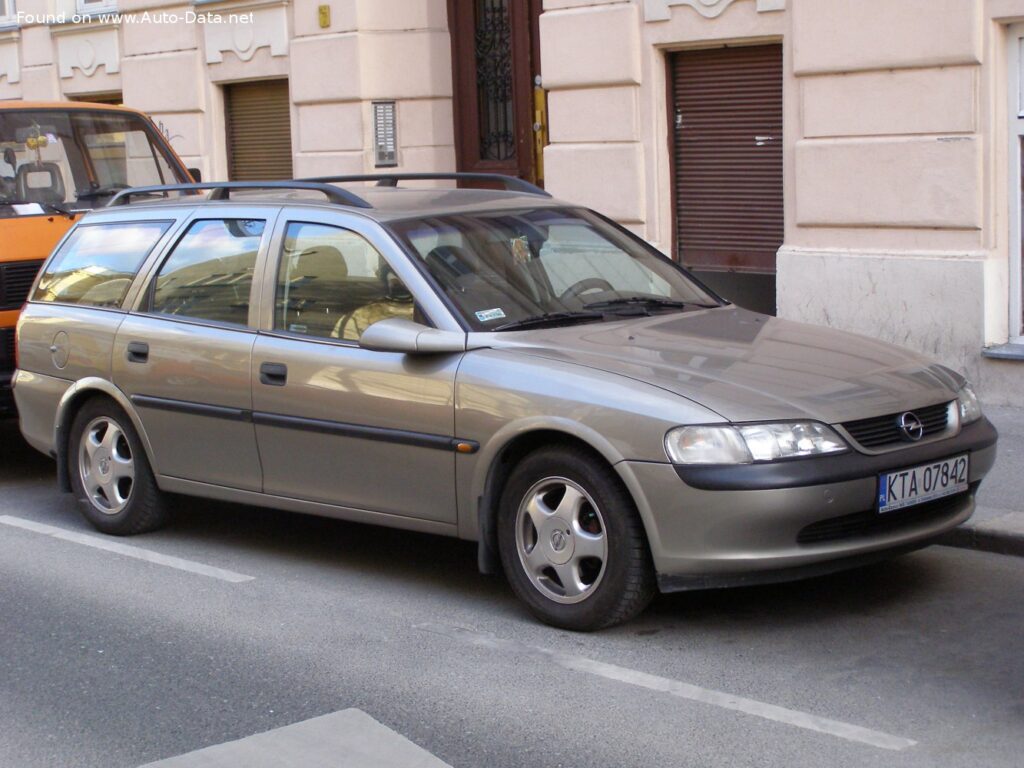
The Opel Vectra B Caravan 2.0i 16V, produced from 1995 to 1998, represents a significant evolution in Opel’s mid-size family car offerings. As part of the B generation of the Vectra, this model focused on providing a practical and comfortable vehicle for families, particularly in European markets. The “Caravan” designation signifies the station wagon (estate) body style, emphasizing cargo capacity and versatility. While not officially sold in the United States, the Vectra B competed with vehicles like the Ford Mondeo and Volkswagen Passat, offering a blend of practicality, affordability, and reasonable performance.
Opel Vectra B Caravan: A Detailed Overview
The Vectra B was a crucial model for Opel, aiming to modernize its image and appeal to a broader customer base. The Caravan variant specifically targeted buyers needing ample space for passengers and luggage. It was a popular choice for families and those requiring a vehicle for both daily commuting and longer journeys. The 2.0i 16V engine option provided a balance between fuel economy and performance, making it a well-rounded choice within the Vectra B lineup.
Engine & Performance
The heart of the Vectra B Caravan 2.0i 16V is its 1998 cc (121.93 cu. in.) inline-four cylinder engine, designated the X20XEV. This naturally aspirated engine produces 136 horsepower (Hp) at 5600 rpm and 188 Nm (138.66 lb.-ft.) of torque at 3200 rpm. The engine features multi-port fuel injection and a double overhead camshaft (DOHC) valvetrain with four valves per cylinder, contributing to its relatively efficient operation and respectable power output. Acceleration from 0 to 100 km/h (0-62 mph) takes approximately 10 seconds, while the 0-60 mph sprint is achieved in around 9.5 seconds. The vehicle boasts a maximum speed of 207 km/h (128.62 mph). The engine’s power-to-weight ratio is 98.7 Hp per tonne, and the torque-to-weight ratio is 136.4 Nm per tonne, indicating a reasonably responsive driving experience. Fuel consumption is rated at 12.4 l/100 km (19 US mpg) in urban conditions and 6.6 l/100 km (35.6 US mpg) on the open road.
Design & Features
The Opel Vectra B Caravan is a five-door station wagon designed to maximize interior space and practicality. Its exterior styling, typical of the mid-1990s, is characterized by smooth lines and a relatively understated aesthetic. The Caravan body style significantly increases cargo capacity compared to the sedan version. With the rear seats up, the trunk offers 460 liters (16.24 cu. ft.) of space, expanding to a substantial 1490 liters (52.62 cu. ft.) when the rear seats are folded down.
Inside, the Vectra B Caravan provides seating for five passengers. Features included hydraulic power steering, disc brakes on all four wheels, and an Anti-lock Braking System (ABS) for enhanced safety. The vehicle utilizes a five-speed manual transmission. The interior appointments, while functional, were generally focused on durability and practicality rather than luxury. The focus was on providing a comfortable and reliable vehicle for everyday use. Ride height is 160 mm (6.3 in), providing adequate ground clearance for typical road conditions. The drag coefficient of 0.32 contributes to reasonable aerodynamic efficiency.
Technical Specifications
| Brand | Opel |
| Model | Vectra |
| Generation | Vectra B Caravan |
| Type (Engine) | 2.0i 16V (136 Hp) |
| Start of production | October, 1995 |
| End of production | November, 1998 |
| Powertrain Architecture | Internal Combustion engine |
| Body type | Station wagon (estate) |
| Seats | 5 |
| Doors | 5 |
| Fuel consumption (urban) | 12.4 l/100 km (19 US mpg) |
| Fuel consumption (extra urban) | 6.6 l/100 km (35.6 US mpg) |
| Fuel Type | Petrol (Gasoline) |
| Acceleration 0 – 100 km/h | 10 sec |
| Acceleration 0 – 62 mph | 10 sec |
| Acceleration 0 – 60 mph | 9.5 sec |
| Maximum speed | 207 km/h (128.62 mph) |
| Weight-to-power ratio | 10.1 kg/Hp |
| Weight-to-torque ratio | 7.3 kg/Nm |
| Power | 136 Hp @ 5600 rpm |
| Torque | 188 Nm @ 3200 rpm (138.66 lb.-ft. @ 3200 rpm) |
| Engine layout | Front, Transverse |
| Engine Model/Code | X20XEV |
| Engine displacement | 1998 cm3 (121.93 cu. in.) |
| Number of cylinders | 4 |
| Engine configuration | Inline |
| Piston Stroke | 86 mm (3.39 in.) |
| Compression ratio | 10.8:1 |
| Number of valves per cylinder | 4 |
| Fuel injection system | Multi-port manifold injection |
| Engine aspiration | Naturally aspirated engine |
| Valvetrain | DOHC |
| Engine oil capacity | 4 l (4.23 US qt | 3.52 UK qt) |
| Coolant capacity | 7.1 l (7.5 US qt | 6.25 UK qt) |
| Kerb Weight | 1378 kg (3037.97 lbs.) |
| Max. weight | 1960 kg (4321.06 lbs.) |
| Max load | 582 kg (1283.09 lbs.) |
| Trunk (boot) space – minimum | 460 l (16.24 cu. ft.) |
| Trunk (boot) space – maximum | 1490 l (52.62 cu. ft.) |
| Fuel tank capacity | 60 l (15.85 US gal | 13.2 UK gal) |
| Length | 4490 mm (176.77 in.) |
| Width | 1707 mm (67.2 in.) |
| Width including mirrors | 1841 mm (72.48 in.) |
| Height | 1490 mm (58.66 in.) |
| Wheelbase | 2637 mm (103.82 in.) |
| Front track | 1484 mm (58.43 in.) |
| Rear track | 1473 mm (57.99 in.) |
| Ride height (ground clearance) | 160 mm (6.3 in.) |
| Drag coefficient (Cd) | 0.32 |
| Drive wheel | Front wheel drive |
| Number of gears | 5 gears, manual transmission |
| Front suspension | Coil spring |
| Rear suspension | Coil spring |
| Front brakes | Disc |
| Rear brakes | Disc |
| Assisting systems | ABS (Anti-lock braking system) |
| Steering type | Steering rack and pinion |
| Power steering | Hydraulic Steering |
| Tires size | 195/65 R15 |
| Wheel rims size | 5.5J x 15 |
The Opel Vectra B Caravan 2.0i 16V, while not a performance icon, offered a practical and reliable transportation solution for families in Europe during the late 1990s. Its blend of space, efficiency, and reasonable performance made it a popular choice in a competitive market segment.