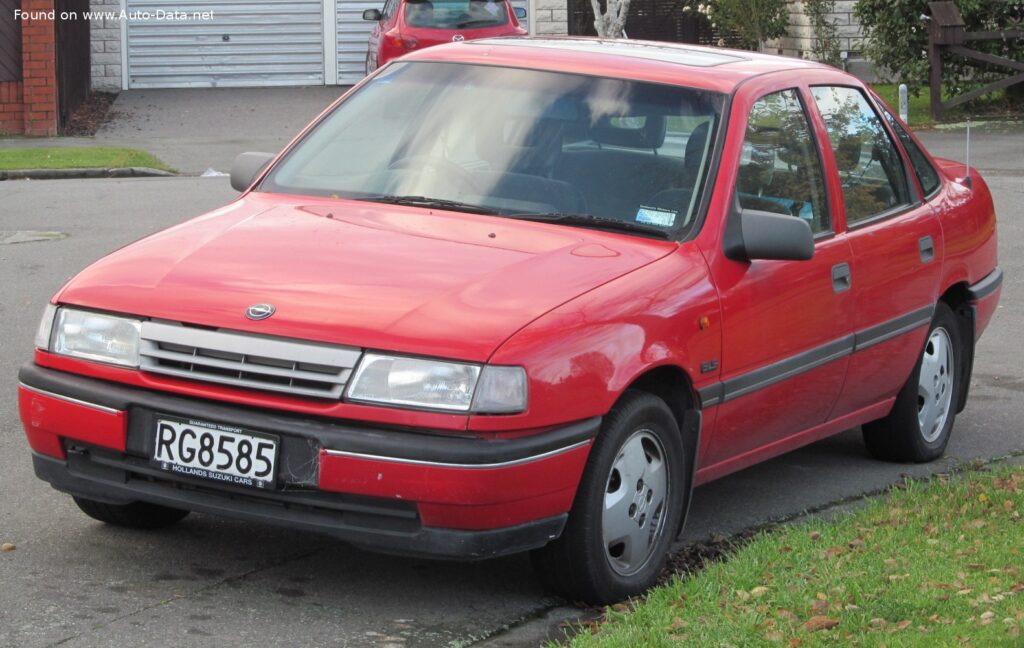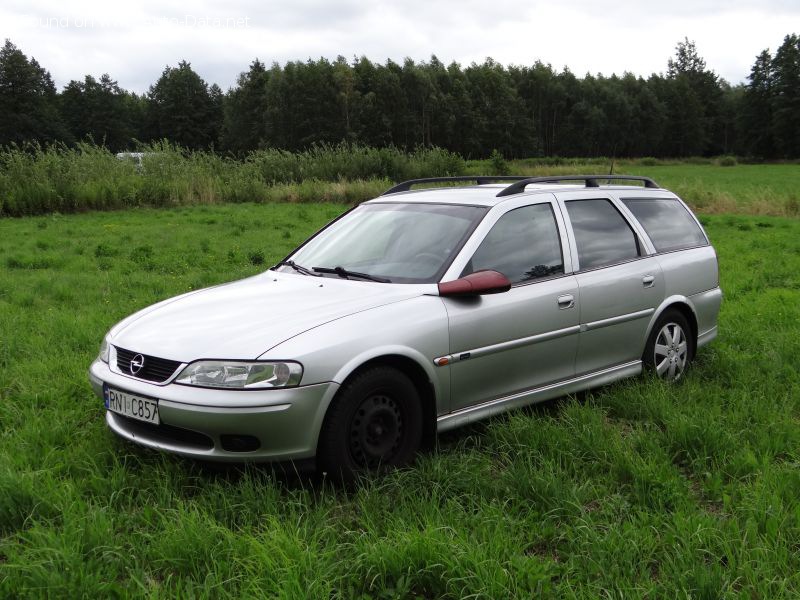
The Opel Vectra B Caravan (facelift 1999) 1.8i 16V Automatic represents a significant iteration of Opel’s mid-size family car, positioned as a practical and comfortable station wagon (estate) for European buyers. Introduced as a facelift to the already successful Vectra B, this version offered refinements in styling, technology, and engine options. While not officially sold in the United States, the Vectra B competed with models like the Ford Mondeo and Volkswagen Passat in the highly competitive European D-segment. The facelifted model, produced from January 1999 to February 2000, aimed to enhance the car’s appeal with updated aesthetics and improved features.
Opel Vectra B Caravan: A Detailed Overview
The Vectra B, launched in 1995, was a crucial model for Opel, representing a move upmarket in terms of design and engineering. The Caravan body style, essentially the station wagon variant, provided increased practicality and cargo space, appealing to families and those requiring versatile transportation. The 1999 facelift brought subtle but noticeable changes to the exterior, including revised headlights, grille, and bumpers. The interior also received minor updates, focusing on improved materials and ergonomics. This particular model, equipped with the 1.8-liter 16-valve engine and a four-speed automatic transmission, was designed to offer a balance of performance and fuel efficiency.
Engine & Performance
The heart of the Vectra B Caravan 1.8i 16V is an inline four-cylinder, naturally aspirated gasoline engine, designated X18XE1. Displacing 1796 cm³ (109.6 cubic inches), this engine produces 115 horsepower at 5600 rpm and 170 Nm (125.39 lb.-ft.) of torque at 3800 rpm. The engine features multi-port fuel injection and a double overhead camshaft (DOHC) valvetrain, contributing to its relatively smooth operation and decent power output. Paired with a four-speed automatic transmission, the powertrain delivers adequate performance for everyday driving. Acceleration from 0 to 100 km/h (0-62 mph) takes approximately 12 seconds, while reaching 0 to 60 mph takes 11.4 seconds. The vehicle achieves a maximum speed of 195 km/h (121.17 mph). The engine’s power-to-weight ratio is 11.4 kg/Hp, and the torque-to-weight ratio is 7.7 kg/Nm, indicating a reasonable balance between power and mass. Fuel consumption is rated at 7.8 l/100 km (30.2 US mpg) combined, with 10.7 l/100 km (22 US mpg) in urban conditions and 6.1 l/100 km (38.6 US mpg) on the extra-urban cycle. CO2 emissions are 188 g/km.
Design & Features
The Opel Vectra B Caravan is a five-door, five-seat station wagon. Its design prioritizes practicality and space, offering a generous trunk capacity of 460 liters (16.24 cubic feet) with the rear seats up, expanding to 1490 liters (52.62 cubic feet) when folded down. The vehicle’s dimensions are 4490 mm (176.77 inches) in length, 1707 mm (67.2 inches) in width, and 1490 mm (58.66 inches) in height. The wheelbase measures 2637 mm (103.82 inches). The front and rear tracks are 1484 mm (58.43 inches) and 1473 mm (57.99 inches) respectively. The vehicle’s curb weight is 1310 kg (2888.06 lbs), with a maximum permissible weight of 1905 kg (4199.81 lbs). Standard safety features for the era included an Anti-lock Braking System (ABS) and front disc brakes, with discs also used for the rear brakes. The steering system is a hydraulic power-assisted rack and pinion setup. The vehicle rides on 195/65 R15 tires mounted on 5.5J x 15 inch wheel rims.
Technical Specifications
| Brand | Opel |
| Model | Vectra |
| Generation | Vectra B Caravan (facelift 1999) |
| Type (Engine) | 1.8i 16V (115 Hp) Automatic |
| Start of production | January, 1999 |
| End of production | February, 2000 |
| Powertrain Architecture | Internal Combustion engine |
| Body type | Station wagon (estate) |
| Seats | 5 |
| Doors | 5 |
| Fuel consumption (urban) | 10.7 l/100 km (22 US mpg) |
| Fuel consumption (extra urban) | 6.1 l/100 km (38.6 US mpg) |
| Fuel consumption (combined) | 7.8 l/100 km (30.2 US mpg) |
| CO2 emissions | 188 g/km |
| Fuel Type | Petrol (Gasoline) |
| Acceleration 0 – 100 km/h | 12 sec |
| Acceleration 0 – 62 mph | 12 sec |
| Acceleration 0 – 60 mph | 11.4 sec |
| Maximum speed | 195 km/h (121.17 mph) |
| Weight-to-power ratio | 11.4 kg/Hp |
| Weight-to-torque ratio | 7.7 kg/Nm |
| Power | 115 Hp @ 5600 rpm |
| Torque | 170 Nm @ 3800 rpm (125.39 lb.-ft. @ 3800 rpm) |
| Engine layout | Front, Transverse |
| Engine Model/Code | X18XE1 |
| Engine displacement | 1796 cm3 (109.6 cu. in.) |
| Number of cylinders | 4 |
| Engine configuration | Inline |
| Cylinder Bore | 80.5 mm (3.17 in.) |
| Piston Stroke | 88.2 mm (3.47 in.) |
| Compression ratio | 10:1 |
| Number of valves per cylinder | 4 |
| Fuel injection system | Multi-port manifold injection |
| Engine aspiration | Naturally aspirated engine |
| Valvetrain | DOHC |
| Engine oil capacity | 4.25 l (4.49 US qt | 3.74 UK qt) |
| Coolant capacity | 6.7 l (7.08 US qt | 5.9 UK qt) |
| Kerb Weight | 1310 kg (2888.06 lbs.) |
| Max. weight | 1905 kg (4199.81 lbs.) |
| Max load | 595 kg (1311.75 lbs.) |
| Trunk (boot) space – minimum | 460 l (16.24 cu. ft.) |
| Trunk (boot) space – maximum | 1490 l (52.62 cu. ft.) |
| Fuel tank capacity | 60 l (15.85 US gal | 13.2 UK gal) |
| Length | 4490 mm (176.77 in.) |
| Width | 1707 mm (67.2 in.) |
| Width including mirrors | 1941 mm (76.42 in.) |
| Height | 1490 mm (58.66 in.) |
| Wheelbase | 2637 mm (103.82 in.) |
| Front track | 1484 mm (58.43 in.) |
| Rear track | 1473 mm (57.99 in.) |
| Ride height (ground clearance) | 160 mm (6.3 in.) |
| Drag coefficient (Cd) | 0.32 |
| Drive wheel | Front wheel drive |
| Number of gears | 4 gears, automatic transmission |
| Front suspension | Coil spring |
| Rear suspension | Coil spring |
| Front brakes | Disc |
| Rear brakes | Disc |
| Assisting systems | ABS (Anti-lock braking system) |
| Steering type | Steering rack and pinion |
| Power steering | Hydraulic Steering |
| Tires size | 195/65 R15 |
| Wheel rims size | 5.5J x 15 |
The Opel Vectra B Caravan 1.8i 16V Automatic, while not a performance car, offered a compelling package of practicality, comfort, and reasonable efficiency for European buyers in the late 1990s. Its spacious interior, ample cargo capacity, and standard safety features made it a popular choice for families and those seeking a versatile vehicle for everyday use.