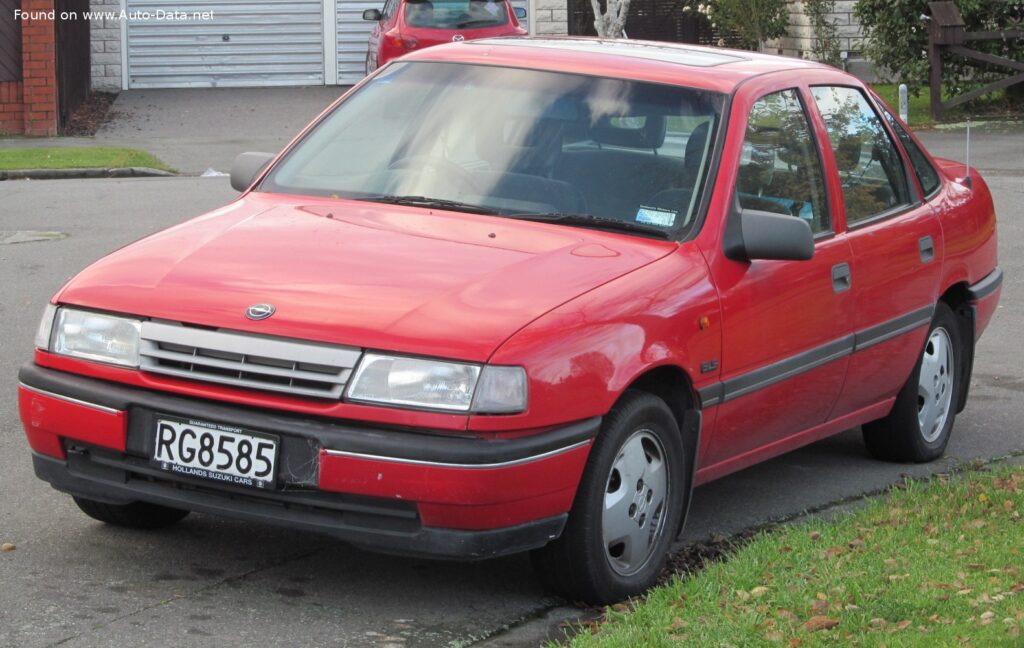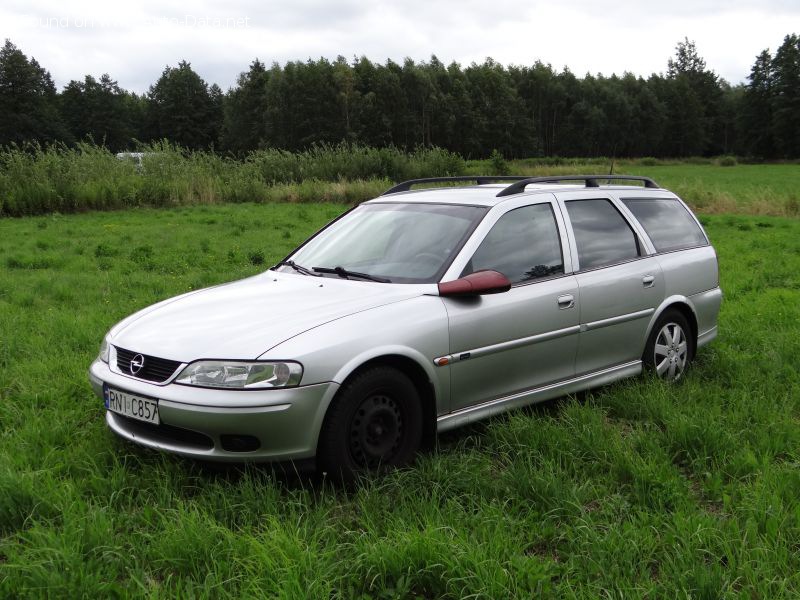
The Opel Vectra B Caravan (facelift 1999) 2.2 16V represents a significant iteration of Opel’s mid-size family car, the Vectra. Introduced as a facelift to the B generation, which ran from 1995 to 2002, this model aimed to refine the original design and enhance its appeal. The Vectra, in its various forms, was a mainstay of the European car market, competing with vehicles like the Ford Mondeo, Volkswagen Passat, and Peugeot 406. While not officially sold in the United States, understanding the Vectra B Caravan provides insight into the engineering and design trends prevalent in the European automotive landscape of the late 1990s and early 2000s. The “Caravan” designation signifies the station wagon (estate) body style, offering increased practicality and cargo space for families.
Opel Vectra B Caravan: A Detailed Overview
The Vectra B generation marked a departure from its predecessor, the Vectra A, with a more rounded and modern aesthetic. The 1999 facelift brought further refinements, including revised front and rear styling, updated interior materials, and improvements to the engine lineup. The 2.2 16V variant, producing 147 horsepower, was positioned as a strong performer within the range, offering a balance between fuel efficiency and driving enjoyment. This model was primarily targeted at buyers seeking a versatile and comfortable vehicle for both daily commuting and longer journeys.
Engine & Performance
At the heart of the Vectra B Caravan 2.2 16V lies a 2.2-liter inline four-cylinder gasoline engine, designated the Z22SE. This naturally aspirated engine delivers 147 horsepower at 5800 rpm and 203 Nm (149.73 lb.-ft.) of torque at 4000 rpm. The engine features multi-port fuel injection and a double overhead camshaft (DOHC) valvetrain, contributing to its responsive performance. Power is delivered to the front wheels via a five-speed manual transmission. Acceleration from 0 to 100 km/h (0-62 mph) takes approximately 10 seconds, while 0 to 60 mph is achieved in around 9.5 seconds. The vehicle boasts a maximum speed of 212 km/h (131.73 mph). The engine’s power-to-weight ratio is 9.7 kg/Hp, and the torque-to-weight ratio is 7 kg/Nm, indicating a reasonably efficient powertrain for its time.
Design & Features
The Vectra B Caravan is a five-door station wagon, offering seating for five passengers. Its body style prioritizes practicality, with a spacious interior and a large cargo area. The facelifted model features a more streamlined front fascia, updated headlights, and a revised grille. Inside, the cabin offers a comfortable and functional environment, with a focus on ergonomics and usability. Safety features, while not as comprehensive as those found in modern vehicles, included an Anti-lock Braking System (ABS) as standard equipment. The vehicle’s dimensions are as follows: length 4490 mm (176.77 in), width 1710 mm (67.32 in), and height 1490 mm (58.66 in). The wheelbase measures 2637 mm (103.82 in). The trunk offers a minimum capacity of 460 liters (16.24 cu. ft.), expanding to a substantial 1490 liters (52.62 cu. ft.) with the rear seats folded down, making it a highly practical vehicle for families and those requiring ample cargo space.
Technical Specifications
| Brand | Opel |
| Model | Vectra |
| Generation | Vectra B Caravan (facelift 1999) |
| Type (Engine) | 2.2 16V (147 Hp) |
| Start of production | July, 2000 |
| End of production | January, 2002 |
| Powertrain Architecture | Internal Combustion engine |
| Body type | Station wagon (estate) |
| Seats | 5 |
| Doors | 5 |
| Fuel consumption (urban) | 12.1 l/100 km (19.4 US mpg, 23.3 UK mpg, 8.3 km/l) |
| Fuel consumption (extra urban) | 6.5 l/100 km (36.2 US mpg, 43.5 UK mpg, 15.4 km/l) |
| Fuel consumption (combined) | 8.6 l/100 km (27.4 US mpg, 32.8 UK mpg, 11.6 km/l) |
| CO2 emissions | 207 g/km |
| Fuel Type | Petrol (Gasoline) |
| Acceleration 0 – 100 km/h | 10 sec |
| Acceleration 0 – 62 mph | 10 sec |
| Acceleration 0 – 60 mph | 9.5 sec |
| Maximum speed | 212 km/h (131.73 mph) |
| Weight-to-power ratio | 9.7 kg/Hp |
| Weight-to-torque ratio | 7 kg/Nm |
| Power | 147 Hp @ 5800 rpm |
| Power per litre | 66.9 Hp/l |
| Torque | 203 Nm @ 4000 rpm (149.73 lb.-ft. @ 4000 rpm) |
| Engine layout | Front, Transverse |
| Engine Model/Code | Z22SE |
| Engine displacement | 2198 cm3 (134.13 cu. in.) |
| Number of cylinders | 4 |
| Engine configuration | Inline |
| Cylinder Bore | 86 mm (3.39 in.) |
| Piston Stroke | 94.6 mm (3.72 in.) |
| Compression ratio | 10:1 |
| Number of valves per cylinder | 4 |
| Fuel injection system | Multi-port manifold injection |
| Engine aspiration | Naturally aspirated engine |
| Valvetrain | DOHC |
| Engine oil capacity | 5 l (5.28 US qt | 4.4 UK qt) |
| Coolant | 6.9 l (7.29 US qt | 6.07 UK qt) |
| Kerb Weight | 1423 kg (3137.18 lbs.) |
| Max. weight | 1980 kg (4365.15 lbs.) |
| Max load | 557 kg (1227.97 lbs.) |
| Trunk (boot) space – minimum | 460 l (16.24 cu. ft.) |
| Trunk (boot) space – maximum | 1490 l (52.62 cu. ft.) |
| Fuel tank capacity | 60 l (15.85 US gal | 13.2 UK gal) |
| Length | 4490 mm (176.77 in.) |
| Width | 1710 mm (67.32 in.) |
| Width including mirrors | 1841 mm (72.48 in.) |
| Height | 1490 mm (58.66 in.) |
| Wheelbase | 2637 mm (103.82 in.) |
| Front track | 1484 mm (58.43 in.) |
| Rear (Back) track | 1473 mm (57.99 in.) |
| Drag coefficient (Cd) | 0.32 |
| Drive wheel | Front wheel drive |
| Number of gears and type of gearbox | 5 gears, manual transmission |
| Front suspension | Coil spring |
| Rear suspension | Coil spring |
| Front brakes | Ventilated discs |
| Rear brakes | Disc |
| Assisting systems | ABS (Anti-lock braking system) |
| Steering type | Steering rack and pinion |
| Power steering | Hydraulic Steering |
| Tires size | 195/65 R15 |
| Wheel rims size | 15 |
The Opel Vectra B Caravan 2.2 16V, while not a performance icon, offered a compelling package of practicality, comfort, and reasonable performance for European buyers. Its spacious interior, ample cargo capacity, and efficient engine made it a popular choice for families and individuals seeking a versatile vehicle for everyday use. Though never officially available in the US market, it represents a significant example of European automotive engineering from the turn of the millennium.