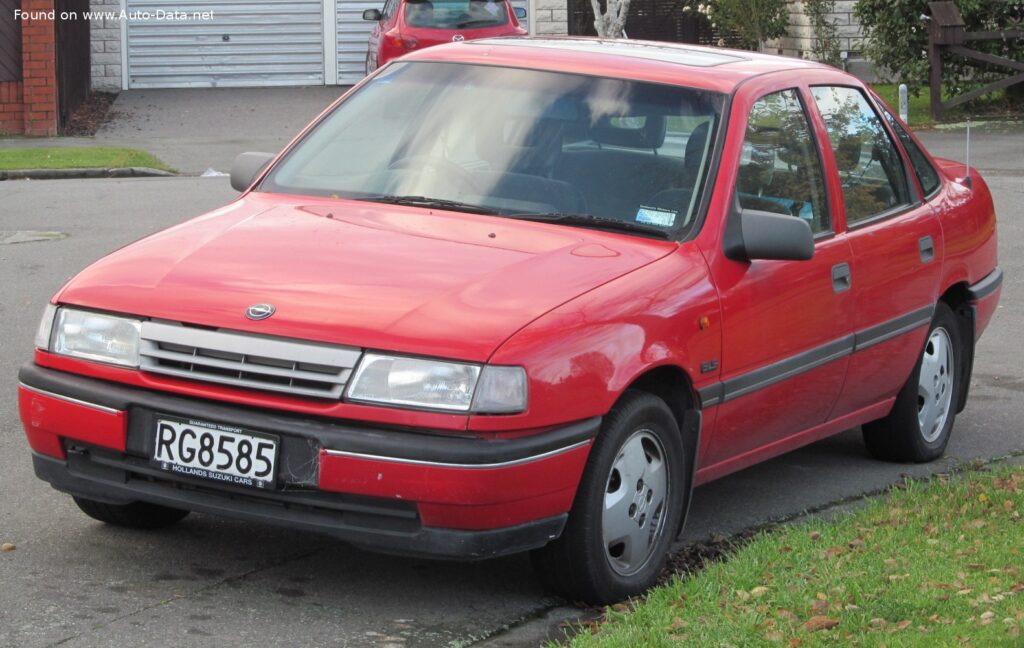
The Opel Vectra B CC 1.7 TD is a compact hatchback that was produced between 1995 and 1996. Representing the second generation of the Vectra, the “CC” designation stands for “Caravan Combi,” indicating a focus on practicality and versatility within the European market. While not officially sold in the United States, the Vectra B was a significant model for Opel, serving as a mainstream family car competing with vehicles like the Ford Mondeo and Volkswagen Passat. This particular variant, powered by a 1.7-liter turbocharged diesel engine, aimed to provide fuel efficiency and reasonable performance for everyday driving.
Opel Vectra B CC 1.7 TD: An Overview
The Vectra B represented a substantial leap forward for Opel in terms of design, technology, and build quality. Introduced in October 1995, it replaced the Vectra A and quickly gained popularity for its modern styling and improved interior space. The 1.7 TD model, while not the performance flagship of the range, offered an economical option for buyers prioritizing fuel consumption. It was particularly popular in European countries where diesel fuel was more affordable and tax incentives favored lower-emission vehicles. The Vectra B’s success helped solidify Opel’s position as a major player in the European automotive market.
Engine & Performance
The heart of the Vectra B CC 1.7 TD is its 1.7-liter inline-four cylinder diesel engine, designated the X17DT. This engine utilizes a turbocharger and precombustion chamber fuel injection to produce 82 horsepower at 4400 rpm and 168 Nm (123.91 lb.-ft.) of torque at 2400 rpm. While the horsepower figure may seem modest by modern standards, the turbocharger provides a useful boost in low-end torque, making the car reasonably drivable in everyday conditions. The engine’s compression ratio of 22:1 is typical for a diesel engine of this era, contributing to its fuel efficiency. Acceleration from 0 to 100 km/h (0-62 mph) takes 15.5 seconds, and 0 to 60 mph is achieved in approximately 14.7 seconds. The top speed is rated at 175 km/h (108.74 mph). The engine’s fuel consumption is rated at 5.9 liters per 100 kilometers (39.9 US mpg, 47.9 UK mpg, 16.9 km/l), making it an economical choice for long-distance travel.
Design & Features
The Opel Vectra B CC is a five-door hatchback, offering a practical and versatile body style. Its design was considered modern for its time, featuring a rounded silhouette and a relatively spacious interior. The hatchback configuration provides easy access to the cargo area, and the rear seats can be folded down to increase luggage capacity. Trunk space ranges from a minimum of 480 liters (16.95 cu. ft.) to a maximum of 790 liters (27.9 cu. ft.) with the rear seats folded. Safety features for the 1995 model year were relatively basic compared to modern standards, but the Vectra B CC did include an Anti-lock Braking System (ABS) as standard equipment. The car features hydraulic power steering and a five-speed manual transmission. The suspension utilizes coil springs on both the front and rear axles, providing a comfortable ride. The vehicle’s dimensions are 4495 mm (176.97 in.) in length, 1707 mm (67.2 in.) in width, and 1425 mm (56.1 in.) in height.
Technical Specifications
| Brand | Opel |
| Model | Vectra |
| Generation | Vectra B CC |
| Type (Engine) | 1.7 TD (82 Hp) |
| Start of production | October, 1995 |
| End of production | June, 1996 |
| Powertrain Architecture | Internal Combustion engine |
| Body type | Hatchback |
| Seats | 5 |
| Doors | 5 |
| Fuel consumption (combined) | 5.9 l/100 km (39.9 US mpg, 47.9 UK mpg, 16.9 km/l) |
| Fuel Type | Diesel |
| Acceleration 0 – 100 km/h | 15.5 sec |
| Acceleration 0 – 62 mph | 15.5 sec |
| Acceleration 0 – 60 mph | 14.7 sec |
| Maximum speed | 175 km/h (108.74 mph) |
| Weight-to-power ratio | 15.5 kg/Hp |
| Weight-to-torque ratio | 7.6 kg/Nm |
| Power | 82 Hp @ 4400 rpm |
| Power per litre | 48.6 Hp/l |
| Torque | 168 Nm @ 2400 rpm (123.91 lb.-ft. @ 2400 rpm) |
| Engine layout | Front, Transverse |
| Engine Model/Code | X17DT |
| Engine displacement | 1686 cm3 (102.89 cu. in.) |
| Number of cylinders | 4 |
| Engine configuration | Inline |
| Cylinder Bore | 79 mm (3.11 in.) |
| Piston Stroke | 86 mm (3.39 in.) |
| Compression ratio | 22:1 |
| Number of valves per cylinder | 2 |
| Fuel injection system | Precombustion chamber injection |
| Engine aspiration | Turbocharger |
| Valvetrain | OHC |
| Engine oil capacity | 5.5 l (5.81 US qt | 4.84 UK qt) |
| Coolant | 6.8 l (7.19 US qt | 5.98 UK qt) |
| Kerb Weight | 1275 kg (2810.89 lbs.) |
| Max. weight | 1805 kg (3979.34 lbs.) |
| Max load | 530 kg (1168.45 lbs.) |
| Trunk (boot) space – minimum | 480 l (16.95 cu. ft.) |
| Trunk (boot) space – maximum | 790 l (27.9 cu. ft.) |
| Fuel tank capacity | 60 l (15.85 US gal | 13.2 UK gal) |
| Length | 4495 mm (176.97 in.) |
| Width | 1707 mm (67.2 in.) |
| Width including mirrors | 1841 mm (72.48 in.) |
| Height | 1425 mm (56.1 in.) |
| Wheelbase | 2637 mm (103.82 in.) |
| Front track | 1484 mm (58.43 in.) |
| Rear (Back) track | 1487 mm (58.54 in.) |
| Drivetrain Architecture | Front wheel drive |
| Number of gears and type of gearbox | 5 gears, manual transmission |
| Front suspension | Coil spring |
| Rear suspension | Coil spring |
| Front brakes | Ventilated discs |
| Rear brakes | Disc |
| Assisting systems | ABS (Anti-lock braking system) |
| Steering type | Steering rack and pinion |
| Power steering | Hydraulic Steering |
| Tires size | 175/70 R14 |
| Wheel rims size | 14 |
The Opel Vectra B CC 1.7 TD, while not a high-performance vehicle, offered a compelling combination of fuel efficiency, practicality, and affordability in the mid-1990s European automotive landscape. It remains a representative example of the era’s engineering and design trends.