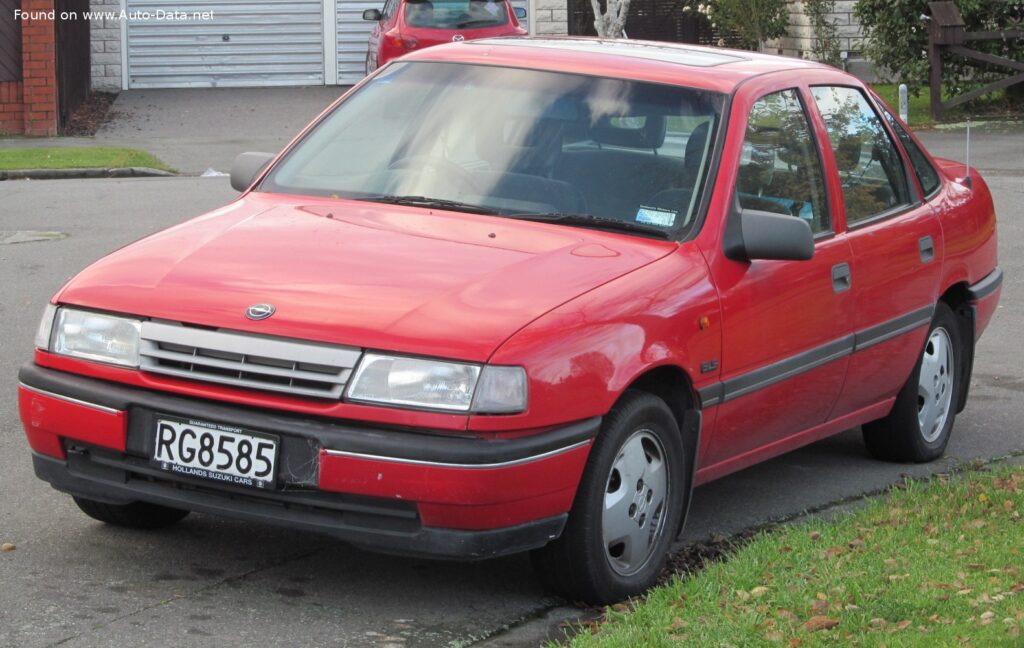
The Opel Vectra B CC 2.0i 16V, produced between 1995 and 1998, represents a significant evolution in Opel’s mid-size offerings. As a compact hatchback (CC – Compact Coupe, though functionally a five-door hatchback), it aimed to blend practicality with a more stylish design than its predecessor. While not officially sold in the United States, the Vectra B was a popular vehicle in Europe, competing with models like the Ford Mondeo, Volkswagen Passat, and Peugeot 406. It served as a crucial model for Opel, demonstrating their advancements in design, safety, and engine technology during the mid-1990s.
Opel Vectra B CC 2.0i 16V: An Overview
The Vectra B generation, launched in 1995, marked a departure from the more angular styling of the Vectra A. The CC variant, specifically, offered a sleeker, more aerodynamic profile, appealing to buyers seeking a more contemporary look. The 2.0i 16V model, equipped with a 2.0-liter inline-four engine, was a mainstay of the lineup, providing a balance of performance and fuel efficiency. This model was positioned as a versatile family vehicle, suitable for both daily commuting and longer journeys.
Engine & Performance
The heart of the Vectra B CC 2.0i 16V is its X20XEV 2.0-liter inline-four cylinder engine. This naturally aspirated engine produces 136 horsepower at 5600 rpm and 188 Nm (138.66 lb.-ft.) of torque at 3200 rpm. The engine features multi-port fuel injection and a double overhead camshaft (DOHC) valvetrain with four valves per cylinder, contributing to its relatively high power output for its displacement – 68.1 horsepower per liter. Power is delivered to the front wheels via a five-speed manual transmission. Performance figures include a 0-100 km/h (0-62 mph) acceleration time of 9.5 seconds and a maximum speed of 220 km/h (136.7 mph). The 0-60 mph time is calculated at 9 seconds. Fuel consumption is rated at 9 liters per 100 kilometers (26.1 US mpg) combined, with 12.1 l/100 km (19.4 US mpg) in urban conditions and 7 l/100 km (33.6 US mpg) on the open road.
Design & Features
The Vectra B CC boasts a five-door hatchback body style, offering a practical and accessible cabin. Its design emphasized aerodynamic efficiency, with a sloping roofline and integrated bumpers. Inside, the vehicle provides seating for five passengers and offers a generous 480 liters (16.95 cu. ft.) of trunk space, expandable to 790 liters (27.9 cu. ft.) with the rear seats folded down. Safety features for the era included an Anti-lock Braking System (ABS), which was becoming increasingly common on European vehicles. The interior appointments, while functional, were typical of the mid-1990s, focusing on durability and practicality rather than luxury. Hydraulic power steering provided ease of maneuverability. The vehicle rides on 15-inch wheels with tire size 195/65 R15.
Technical Specifications
| Brand | Opel |
| Model | Vectra |
| Generation | Vectra B CC |
| Type (Engine) | 2.0i 16V (136 Hp) |
| Start of production | 1995 |
| End of production | November, 1998 |
| Powertrain Architecture | Internal Combustion engine |
| Body type | Hatchback |
| Seats | 5 |
| Doors | 5 |
| Fuel consumption (urban) | 12.1 l/100 km (19.4 US mpg) |
| Fuel consumption (extra urban) | 7 l/100 km (33.6 US mpg) |
| Fuel consumption (combined) | 9 l/100 km (26.1 US mpg) |
| Fuel Type | Petrol (Gasoline) |
| Acceleration 0 – 100 km/h | 9.5 sec |
| Acceleration 0 – 62 mph | 9.5 sec |
| Acceleration 0 – 60 mph | 9 sec |
| Maximum speed | 220 km/h (136.7 mph) |
| Emission standard | Euro 2 |
| Weight-to-power ratio | 9.6 kg/Hp |
| Weight-to-torque ratio | 6.9 kg/Nm |
| Power | 136 Hp @ 5600 rpm |
| Torque | 188 Nm @ 3200 rpm (138.66 lb.-ft. @ 3200 rpm) |
| Engine layout | Front, Transverse |
| Engine Model/Code | X20XEV |
| Engine displacement | 1998 cm3 (121.93 cu. in.) |
| Number of cylinders | 4 |
| Engine configuration | Inline |
| Piston Stroke | 86 mm (3.39 in.) |
| Compression ratio | 10.8:1 |
| Number of valves per cylinder | 4 |
| Fuel injection system | Multi-port manifold injection |
| Engine aspiration | Naturally aspirated |
| Valvetrain | DOHC |
| Engine oil capacity | 4 l (4.23 US qt | 3.52 UK qt) |
| Coolant capacity | 7.1 l (7.5 US qt | 6.25 UK qt) |
| Kerb Weight | 1300 kg (2866.01 lbs.) |
| Max. weight | 1820 kg (4012.41 lbs.) |
| Max load | 520 kg (1146.4 lbs.) |
| Trunk (boot) space – minimum | 480 l (16.95 cu. ft.) |
| Trunk (boot) space – maximum | 790 l (27.9 cu. ft.) |
| Fuel tank capacity | 60 l (15.85 US gal | 13.2 UK gal) |
| Length | 4495 mm (176.97 in.) |
| Width | 1707 mm (67.2 in.) |
| Width including mirrors | 1841 mm (72.48 in.) |
| Height | 1425 mm (56.1 in.) |
| Wheelbase | 2637 mm (103.82 in.) |
| Front track | 1484 mm (58.43 in.) |
| Rear track | 1487 mm (58.54 in.) |
| Drivetrain Architecture | Front wheel drive |
| Number of gears | 5 gears, manual transmission |
| Front suspension | Coil spring |
| Rear suspension | Coil spring |
| Front brakes | Ventilated discs |
| Rear brakes | Disc |
| Assisting systems | ABS (Anti-lock braking system) |
| Steering type | Steering rack and pinion |
| Power steering | Hydraulic |
| Tires size | 195/65 R15 |
| Wheel rims size | 15 |
The Opel Vectra B CC 2.0i 16V, while never officially available in the US market, represents a well-rounded and practical vehicle that was popular in Europe. Its blend of performance, fuel efficiency, and practicality made it a compelling choice for families and commuters alike. It stands as a testament to Opel’s engineering capabilities during the 1990s and a significant step forward in the evolution of the Vectra model line.