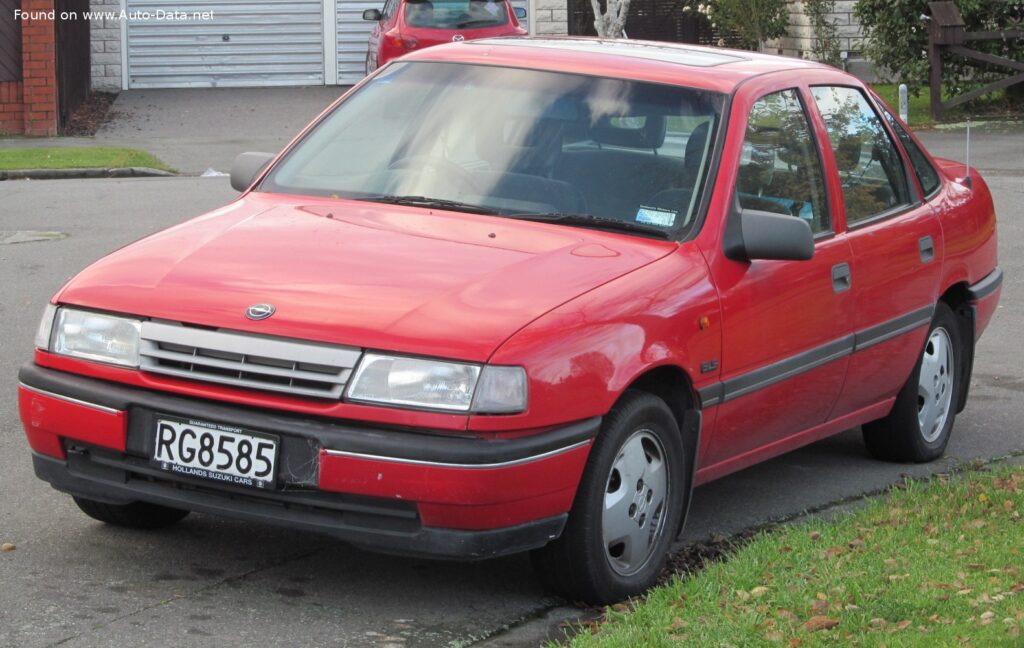
The Opel Vectra B CC 2.5i V6 was a mid-size hatchback produced by the German manufacturer Opel between 1995 and 1998. Representing the second generation of the Vectra, the “B” series brought significant advancements in design, safety, and technology compared to its predecessor. While not officially sold in the United States, the Vectra was a popular choice in Europe as a practical and relatively sporty family vehicle, competing with models like the Ford Mondeo and Volkswagen Passat. The “CC” designation denotes the “Caravan” or station wagon body style, offering increased cargo capacity. This particular variant, equipped with a 2.5-liter V6 engine producing 170 horsepower, was positioned as a higher-performance option within the Vectra B range.
Opel Vectra B CC 2.5i V6: An Overview
The Vectra B represented a substantial leap forward for Opel, moving away from the more angular styling of the previous generation towards a smoother, more aerodynamic design. It was available in several body styles, including a four-door sedan, a five-door hatchback (the focus of this article), and the aforementioned station wagon. The 2.5i V6 model aimed to provide a more engaging driving experience, appealing to buyers who desired a blend of practicality and performance. The Vectra B was a key model for Opel during a period of significant investment in new technologies and a drive to improve build quality and reliability.
Engine & Performance
The heart of the Vectra B CC 2.5i V6 is its 2.5-liter, naturally aspirated V6 engine, designated the X25XE. This engine produces 170 horsepower at 5800 rpm and 230 Nm (169.64 lb.-ft.) of torque at 3200 rpm. The engine features a double overhead camshaft (DOHC) valvetrain with four valves per cylinder and multi-port fuel injection. This configuration delivers a relatively high power output for its displacement, resulting in a power-to-liter ratio of 68.1 hp/l. The engine’s transverse front-wheel-drive layout contributes to good handling characteristics. Acceleration from 0 to 100 km/h (0-62 mph) takes 8.5 seconds, while 0 to 60 mph is achieved in a calculated 8.1 seconds. The vehicle boasts a maximum speed of 230 km/h (142.92 mph). The weight-to-power ratio of 8.1 kg/Hp and a weight-to-torque ratio of 6 kg/Nm further highlight the engine’s performance capabilities. Fuel consumption is rated at 13.8 l/100 km (17 US mpg) in urban driving and 7.6 l/100 km (30.9 US mpg) on the extra-urban cycle.
Design & Features
The Opel Vectra B CC is a five-door hatchback, offering a practical and versatile body style. Its design emphasized aerodynamic efficiency, contributing to improved fuel economy and reduced noise levels. The interior was designed with practicality in mind, offering comfortable seating for five passengers and a spacious cabin. The trunk (boot) space ranges from 480 liters (16.95 cu. ft.) with the rear seats up to 790 liters (27.9 cu. ft.) with the rear seats folded down. Safety features for the time included ABS (Anti-lock Braking System) as standard equipment. The Vectra B also featured hydraulic power steering and a five-speed manual transmission. The vehicle rides on coil springs at both the front and rear, providing a comfortable ride quality. The exterior styling was considered modern for its time, with a relatively understated but elegant appearance. The 2.5i V6 models often featured subtle styling cues to differentiate them from lower-spec variants.
Technical Specifications
| Brand | Opel |
| Model | Vectra |
| Generation | Vectra B CC |
| Type (Engine) | 2.5i V6 (170 Hp) |
| Start of production | 1995 |
| End of production | November, 1998 |
| Powertrain Architecture | Internal Combustion engine |
| Body type | Hatchback |
| Seats | 5 |
| Doors | 5 |
| Fuel consumption (urban) | 13.8 l/100 km (17 US mpg) |
| Fuel consumption (extra urban) | 7.6 l/100 km (30.9 US mpg) |
| Fuel Type | Petrol (Gasoline) |
| Acceleration 0 – 100 km/h | 8.5 sec |
| Acceleration 0 – 62 mph | 8.5 sec |
| Acceleration 0 – 60 mph | 8.1 sec |
| Maximum speed | 230 km/h (142.92 mph) |
| Weight-to-power ratio | 8.1 kg/Hp |
| Weight-to-torque ratio | 6 kg/Nm |
| Power | 170 Hp @ 5800 rpm |
| Torque | 230 Nm @ 3200 rpm (169.64 lb.-ft. @ 3200 rpm) |
| Engine layout | Front, Transverse |
| Engine Model/Code | X25XE |
| Engine displacement | 2498 cm3 (152.44 cu. in.) |
| Number of cylinders | 6 |
| Engine configuration | V-engine |
| Cylinder Bore | 81.6 mm (3.21 in.) |
| Piston Stroke | 79.6 mm (3.13 in.) |
| Compression ratio | 10:1 |
| Number of valves per cylinder | 4 |
| Fuel injection system | Multi-port manifold injection |
| Engine aspiration | Naturally aspirated engine |
| Valvetrain | DOHC |
| Engine oil capacity | 4.5 l (4.76 US qt | 3.96 UK qt) |
| Coolant capacity | 7.7 l (8.14 US qt | 6.78 UK qt) |
| Kerb Weight | 1370 kg (3020.33 lbs.) |
| Max. weight | 1875 kg (4133.67 lbs.) |
| Max load | 505 kg (1113.33 lbs.) |
| Trunk (boot) space – minimum | 480 l (16.95 cu. ft.) |
| Trunk (boot) space – maximum | 790 l (27.9 cu. ft.) |
| Fuel tank capacity | 60 l (15.85 US gal | 13.2 UK gal) |
| Length | 4495 mm (176.97 in.) |
| Width | 1707 mm (67.2 in.) |
| Width including mirrors | 1841 mm (72.48 in.) |
| Height | 1425 mm (56.1 in.) |
| Wheelbase | 2637 mm (103.82 in.) |
| Front track | 1484 mm (58.43 in.) |
| Rear track | 1487 mm (58.54 in.) |
| Drivetrain Architecture | Front wheel drive |
| Number of gears | 5 |
| Gearbox type | Manual transmission |
| Front suspension | Coil spring |
| Rear suspension | Coil spring |
| Front brakes | Ventilated discs |
| Rear brakes | Disc |
| Assisting systems | ABS (Anti-lock braking system) |
| Steering type | Steering rack and pinion |
| Power steering | Hydraulic Steering |
| Tires size | 205/55 R16 |
| Wheel rims size | 16 |
The Opel Vectra B CC 2.5i V6, while not a high-performance sports car, offered a compelling combination of practicality, comfort, and respectable performance for its time. It remains a popular choice among classic car enthusiasts in Europe, appreciated for its reliability, spaciousness, and relatively affordable running costs.