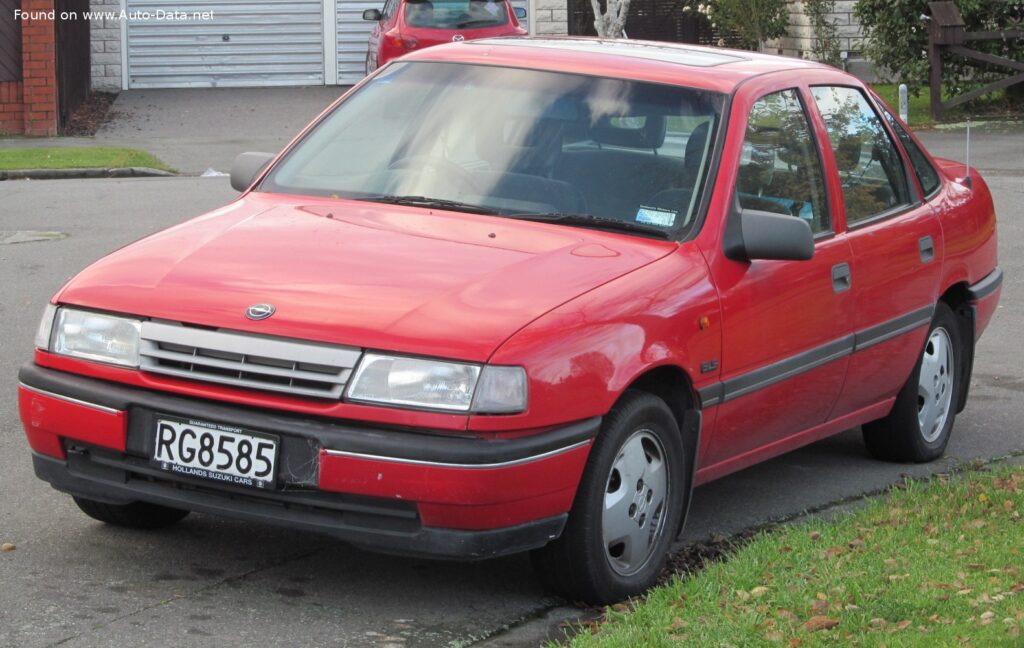
The Opel Vectra B CC (facelift 1999) 2.0i 16V represents a significant refinement of Opel’s mid-size offering, positioned as a competitor to vehicles like the Ford Mondeo and Volkswagen Passat in the European market. Introduced as a facelift to the already successful Vectra B, this iteration focused on enhancing styling, interior quality, and overall driving experience. The “CC” designation stands for “Comfort Coupe,” highlighting the model’s hatchback body style, which was particularly popular in Europe for its practicality and versatility. While not officially sold in the United States, understanding the Vectra B provides insight into Opel’s engineering capabilities and its role in shaping the European automotive landscape of the late 1990s and early 2000s.
Opel Vectra B CC (Facelift 1999) 2.0i 16V: A Detailed Overview
The Vectra B, launched in 1995, was a crucial model for Opel, aiming to modernize the brand’s image and appeal to a broader customer base. The facelift in 1999 brought noticeable changes to the front and rear fascias, including revised headlights, a new grille, and updated taillights. These cosmetic updates were accompanied by improvements to the interior, focusing on ergonomics and material quality. The 2.0i 16V variant, powered by the X20XEV engine, was a popular choice, offering a balance of performance and fuel efficiency. It served as a mainstay in Opel’s lineup during its production run from January 1999 to 2000.
Engine & Performance
At the heart of the Vectra B CC 2.0i 16V lies the X20XEV, a 1.998-liter (121.93 cubic inches) inline four-cylinder gasoline engine. This naturally aspirated engine produces 136 horsepower at 5600 rpm and 188 Nm (138.66 lb-ft) of torque at 3200 rpm. The engine features multi-port fuel injection and a double overhead camshaft (DOHC) valvetrain with four valves per cylinder, contributing to its responsive performance. Power is delivered to the front wheels via a five-speed manual transmission. Performance figures include a 0-100 km/h (0-62 mph) acceleration time of 10 seconds and a 0-60 mph time of 9.5 seconds, with a maximum speed of 215 km/h (133.59 mph). The engine’s power-to-weight ratio is 9.6 kg/Hp, and the torque-to-weight ratio is 6.9 kg/Nm, indicating a reasonably efficient powertrain for its time.
Design & Features
The Vectra B CC is a five-door hatchback, offering a practical and spacious interior for five occupants. Its design prioritizes functionality and aerodynamic efficiency. The facelifted model boasts a more modern and streamlined appearance compared to its predecessor. Inside, the cabin is designed with driver comfort in mind, featuring supportive seats and a logically laid-out dashboard. Standard features included power steering, anti-lock braking system (ABS), and a decent-sized trunk with a minimum capacity of 480 liters (16.95 cubic feet), expandable to 790 liters (27.9 cubic feet) with the rear seats folded down. Safety features, while not as comprehensive as modern vehicles, were considered adequate for the period, with ABS being a key component. The vehicle’s dimensions are 4495 mm (176.97 inches) in length, 1707 mm (67.2 inches) in width, and 1425 mm (56.1 inches) in height, with a wheelbase of 2637 mm (103.82 inches).
Technical Specifications
| Brand | Opel |
| Model | Vectra |
| Generation | Vectra B CC (facelift 1999) |
| Type (Engine) | 2.0i 16V (136 Hp) |
| Start of production | January, 1999 |
| End of production | 2000 |
| Powertrain Architecture | Internal Combustion engine |
| Body type | Hatchback |
| Seats | 5 |
| Doors | 5 |
| Fuel consumption (urban) | 12.3 l/100 km (19.1 US mpg, 23 UK mpg, 8.1 km/l) |
| Fuel consumption (extra urban) | 6.4 l/100 km (36.8 US mpg, 44.1 UK mpg, 15.6 km/l) |
| Fuel consumption (combined) | 8.6 l/100 km (27.4 US mpg, 32.8 UK mpg, 11.6 km/l) |
| CO2 emissions | 207 g/km |
| Fuel Type | Petrol (Gasoline) |
| Acceleration 0 – 100 km/h | 10 sec |
| Acceleration 0 – 62 mph | 10 sec |
| Acceleration 0 – 60 mph | 9.5 sec |
| Maximum speed | 215 km/h (133.59 mph) |
| Emission standard | Euro 2 |
| Weight-to-power ratio | 9.6 kg/Hp |
| Weight-to-torque ratio | 6.9 kg/Nm |
| Power | 136 Hp @ 5600 rpm |
| Torque | 188 Nm @ 3200 rpm (138.66 lb.-ft. @ 3200 rpm) |
| Engine layout | Front, Transverse |
| Engine Model/Code | X20XEV |
| Engine displacement | 1998 cm3 (121.93 cu. in.) |
| Number of cylinders | 4 |
| Engine configuration | Inline |
| Piston Stroke | 86 mm (3.39 in.) |
| Compression ratio | 10.8:1 |
| Number of valves per cylinder | 4 |
| Fuel injection system | Multi-port manifold injection |
| Engine aspiration | Naturally aspirated engine |
| Valvetrain | DOHC |
| Engine oil capacity | 4 l (4.23 US qt | 3.52 UK qt) |
| Coolant | 7.1 l (7.5 US qt | 6.25 UK qt) |
| Kerb Weight | 1300 kg (2866.01 lbs.) |
| Max. weight | 1820 kg (4012.41 lbs.) |
| Max load | 520 kg (1146.4 lbs.) |
| Trunk (boot) space – minimum | 480 l (16.95 cu. ft.) |
| Trunk (boot) space – maximum | 790 l (27.9 cu. ft.) |
| Fuel tank capacity | 60 l (15.85 US gal | 13.2 UK gal) |
| Length | 4495 mm (176.97 in.) |
| Width | 1707 mm (67.2 in.) |
| Width including mirrors | 1841 mm (72.48 in.) |
| Height | 1425 mm (56.1 in.) |
| Wheelbase | 2637 mm (103.82 in.) |
| Front track | 1484 mm (58.43 in.) |
| Rear (Back) track | 1487 mm (58.54 in.) |
| Drivetrain Architecture | Front wheel drive |
| Number of gears and type of gearbox | 5 gears, manual transmission |
| Front suspension | Coil spring |
| Rear suspension | Coil spring |
| Front brakes | Ventilated discs |
| Rear brakes | Disc |
| Assisting systems | ABS (Anti-lock braking system) |
| Steering type | Steering rack and pinion |
| Power steering | Hydraulic Steering |
| Tires size | 195/65 R15 |
| Wheel rims size | 15 |
The Opel Vectra B CC (facelift 1999) 2.0i 16V, while never officially available in the US market, represents a well-engineered and practical vehicle that was popular in Europe. Its combination of a responsive engine, comfortable interior, and versatile hatchback body style made it a compelling choice for families and individuals alike. It stands as a testament to Opel’s commitment to providing reliable and efficient transportation during a period of significant automotive development.