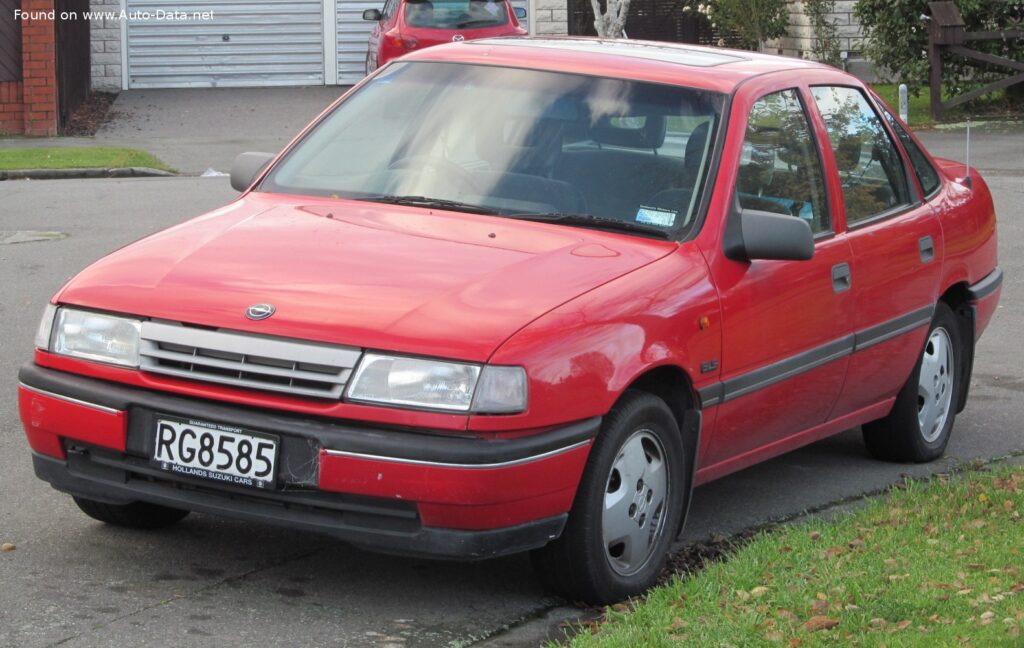
The Opel Vectra B CC (facelift 1999) 2.2 16V Automatic is a front-wheel-drive, five-door hatchback that represented a significant evolution in Opel’s mid-size offerings. Produced from 2000 to 2002, this variant of the Vectra B aimed to blend practicality, comfort, and a degree of performance for the European market. While not officially sold in the United States, the Vectra B was a popular choice for families and fleet buyers in Europe, competing with vehicles like the Ford Mondeo and Volkswagen Passat. The “CC” designation stands for “Comfort and Cruise,” highlighting the model’s focus on a refined driving experience.
Opel Vectra B CC: A Detailed Overview
The Vectra B, launched in 1995, was a crucial model for Opel, representing a move upmarket in terms of design and technology. The facelifted version in 1999, and specifically the 2.2 16V Automatic, brought updated styling, improved safety features, and refined engine options. This generation aimed to address criticisms of the original Vectra B, offering a more appealing and competitive package. The 2.2-liter engine, coupled with a four-speed automatic transmission, provided a balance between fuel efficiency and adequate performance for everyday driving.
Engine & Performance
The heart of the Vectra B CC 2.2 16V is a 2.2-liter (2198 cm3 or 134.13 cu. in.) inline four-cylinder gasoline engine, designated the Z22SE. This naturally aspirated engine produces 147 horsepower (Hp) at 5800 rpm and 203 Newton-meters (149.73 lb.-ft.) of torque at 4000 rpm. The engine utilizes multi-port fuel injection and a double overhead camshaft (DOHC) valvetrain with four valves per cylinder. This configuration allows for efficient combustion and a relatively broad powerband.
Performance figures indicate a 0-100 km/h (0-62 mph) acceleration time of 9.5 seconds, and a 0-60 mph time of approximately 9 seconds. The vehicle boasts a maximum speed of 218 km/h (135.46 mph). The weight-to-power ratio of 8.8 kg/Hp and a weight-to-torque ratio of 6.4 kg/Nm suggest a reasonably responsive driving experience, although not overtly sporty. Fuel consumption is rated at 8.4 liters per 100 kilometers (28 US mpg or 33.6 UK mpg), making it a fairly economical option for its class and era.
Design & Features
The Vectra B CC is a five-door hatchback, offering a practical and versatile body style. Its design, updated with the 1999 facelift, features a more streamlined front end and revised rear styling compared to the original B model. The interior is designed with comfort in mind, offering seating for five passengers.
Key features of the Vectra B CC included hydraulic power steering, ventilated front disc brakes, and disc brakes on the rear wheels. An Anti-lock Braking System (ABS) was standard, enhancing safety. The trunk (boot) space is a notable feature, offering 480 liters (16.95 cu. ft.) with the rear seats up and expanding to 1423 liters (50.25 cu. ft.) with the rear seats folded down. The vehicle’s dimensions are 4495 mm (176.97 in.) in length, 1707 mm (67.2 in.) in width, and 1425 mm (56.1 in.) in height. The curb weight is 1290 kg (2843.96 lbs), with a maximum permissible weight of 1815 kg (4001.39 lbs).
Technical Specifications
| Brand | Opel |
| Model | Vectra |
| Generation | Vectra B CC (facelift 1999) |
| Type (Engine) | 2.2 16V (147 Hp) Automatic |
| Start of production | July, 2000 |
| End of production | January, 2002 |
| Powertrain Architecture | Internal Combustion engine |
| Body type | Hatchback |
| Seats | 5 |
| Doors | 5 |
| Fuel consumption (combined) | 8.4 l/100 km |
| Fuel consumption (US mpg) | 28 US mpg |
| Fuel consumption (UK mpg) | 33.6 UK mpg |
| Fuel consumption (km/l) | 11.9 km/l |
| Fuel Type | Petrol (Gasoline) |
| Acceleration 0 – 100 km/h | 9.5 sec |
| Acceleration 0 – 62 mph | 9.5 sec |
| Acceleration 0 – 60 mph | 9 sec |
| Maximum speed | 218 km/h (135.46 mph) |
| Weight-to-power ratio | 8.8 kg/Hp |
| Weight-to-torque ratio | 6.4 kg/Nm |
| Power | 147 Hp @ 5800 rpm |
| Power per litre | 66.9 Hp/l |
| Torque | 203 Nm @ 4000 rpm (149.73 lb.-ft. @ 4000 rpm) |
| Engine layout | Front, Transverse |
| Engine Model/Code | Z22SE |
| Engine displacement | 2198 cm3 (134.13 cu. in.) |
| Number of cylinders | 4 |
| Engine configuration | Inline |
| Cylinder Bore | 86 mm (3.39 in.) |
| Piston Stroke | 94.6 mm (3.72 in.) |
| Compression ratio | 10:1 |
| Number of valves per cylinder | 4 |
| Fuel injection system | Multi-port manifold injection |
| Engine aspiration | Naturally aspirated engine |
| Valvetrain | DOHC |
| Engine oil capacity | 5 l (5.28 US qt | 4.4 UK qt) |
| Coolant capacity | 6.9 l (7.29 US qt | 6.07 UK qt) |
| Kerb Weight | 1290 kg (2843.96 lbs.) |
| Max. weight | 1815 kg (4001.39 lbs.) |
| Max load | 525 kg (1157.43 lbs.) |
| Trunk (boot) space – minimum | 480 l (16.95 cu. ft.) |
| Trunk (boot) space – maximum | 1423 l (50.25 cu. ft.) |
| Fuel tank capacity | 60 l (15.85 US gal | 13.2 UK gal) |
| Length | 4495 mm (176.97 in.) |
| Width | 1707 mm (67.2 in.) |
| Width including mirrors | 1841 mm (72.48 in.) |
| Height | 1425 mm (56.1 in.) |
| Wheelbase | 2637 mm (103.82 in.) |
| Front track | 1484 mm (58.43 in.) |
| Rear (Back) track | 1487 mm (58.54 in.) |
| Drivetrain Architecture | Front wheel drive |
| Number of gears and type of gearbox | 4 gears, automatic transmission |
| Front suspension | Coil spring |
| Rear suspension | Coil spring |
| Front brakes | Ventilated discs |
| Rear brakes | Disc |
| Assisting systems | ABS (Anti-lock braking system) |
| Steering type | Steering rack and pinion |
| Power steering | Hydraulic Steering |
| Tires size | 195/65 R15 |
| Wheel rims size | 15 |
The Opel Vectra B CC 2.2 16V Automatic, while not a performance icon, offered a solid and reliable package for European drivers. Its blend of practicality, comfort, and reasonable efficiency made it a popular choice in its segment. Although never officially available in the US market, it represents a significant chapter in Opel’s history and a testament to European automotive engineering of the early 2000s.