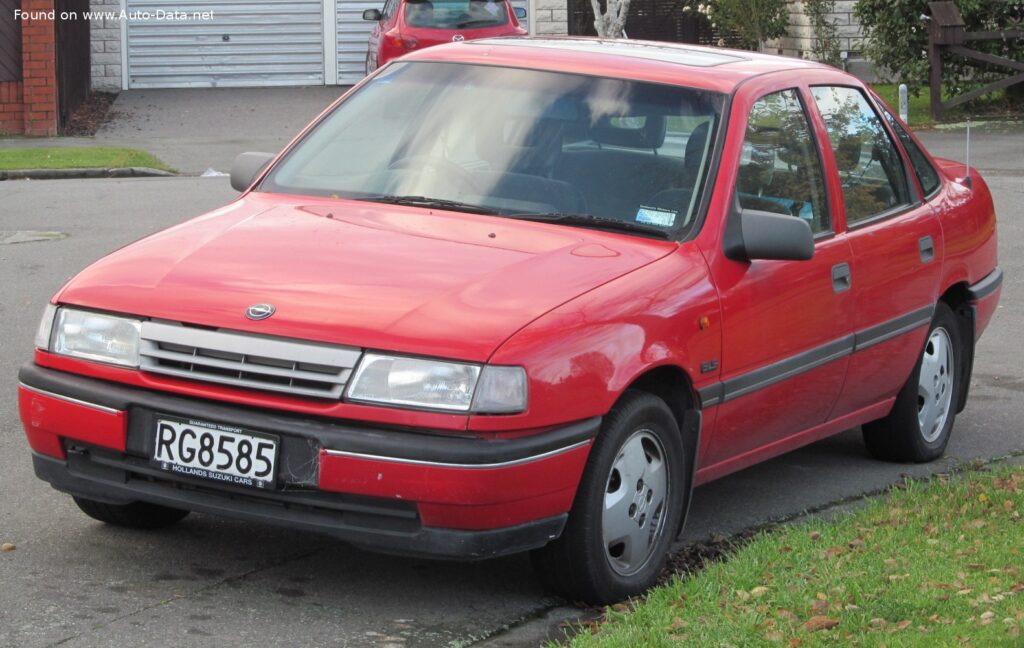
The Opel Vectra B CC (facelift 1999) 2.2 DTI 16V represents a significant iteration of Opel’s mid-size offering, produced from 2000 to 2002. Positioned within the competitive D-segment, the Vectra aimed to provide a practical and comfortable family vehicle. While not officially sold in the United States, the Vectra was a mainstay in European markets, competing with vehicles like the Ford Mondeo, Volkswagen Passat, and Peugeot 406. The “CC” designation denotes the “Comfort Coupe” body style, a five-door hatchback offering a blend of practicality and styling. This particular variant, powered by a 2.2-liter direct injection turbodiesel engine, focused on fuel efficiency and reasonable performance.
Opel Vectra B CC: A Detailed Overview
The Vectra B series, launched in 1995, was a crucial model for Opel, representing a move towards more modern design and engineering. The 1999 facelift brought revised styling, improved interior materials, and updated engine options. The 2.2 DTI 16V model was a key component of this refresh, offering a diesel alternative for buyers prioritizing economy and torque. Opel, as a General Motors subsidiary, leveraged GM technology in the Vectra’s development, resulting in a vehicle that was relatively sophisticated for its time. The Vectra’s success in Europe helped solidify Opel’s position as a major automotive manufacturer.
Engine & Performance
The heart of the Vectra B CC 2.2 DTI 16V is its Y22DTR 2.2-liter inline four-cylinder diesel engine. This engine utilizes direct fuel injection and a turbocharger to produce 125 horsepower at 4000 rpm and 280 Nm (206.52 lb.-ft.) of torque at 1500 rpm. The common rail diesel injection system contributed to improved combustion efficiency and reduced noise compared to earlier diesel technologies. The engine’s transverse mounting and front-wheel-drive configuration were typical for European compact and mid-size cars. Performance figures include a 0-100 km/h (0-62 mph) acceleration time of 10.5 seconds and a maximum speed of 207 km/h (128.62 mph). Fuel economy is a strong point, with combined cycle consumption rated at 6.5 l/100 km (36.2 US mpg), making it an economical choice for long-distance driving. The engine’s 18.5:1 compression ratio is indicative of its diesel design, optimized for efficient combustion of the fuel.
Design & Features
The Vectra B CC’s design emphasized practicality and a contemporary aesthetic. The five-door hatchback body style provides easy access to the interior and a versatile cargo area. The facelifted model featured revised front and rear styling, including updated headlights and taillights. Inside, the cabin offered seating for five passengers and a reasonably spacious interior. Key features included a coil spring suspension on both the front and rear axles, providing a comfortable ride. Safety features, while not as comprehensive as modern vehicles, included an Anti-lock Braking System (ABS). The hydraulic power steering offered ease of maneuverability. The trunk offered 480 liters of space with the rear seats up, expanding to 1180 liters when folded down, providing ample room for luggage and cargo. The vehicle’s dimensions – 4495 mm (176.97 in) in length, 1707 mm (67.2 in) in width, and 1425 mm (56.1 in) in height – positioned it squarely within the mid-size segment.
Technical Specifications
| Brand | Opel |
| Model | Vectra |
| Generation | Vectra B CC (facelift 1999) |
| Type (Engine) | 2.2 DTI 16V (125 Hp) |
| Start of production | 2000 year |
| End of production | 2002 year |
| Powertrain Architecture | Internal Combustion engine |
| Body type | Hatchback |
| Seats | 5 |
| Doors | 5 |
| Fuel consumption (urban) | 9 l/100 km (26.1 US mpg) |
| Fuel consumption (extra urban) | 5 l/100 km (47 US mpg) |
| Fuel consumption (combined) | 6.5 l/100 km (36.2 US mpg) |
| CO2 emissions | 176 g/km |
| Fuel Type | Diesel |
| Acceleration 0 – 100 km/h | 10.5 sec |
| Acceleration 0 – 62 mph | 10.5 sec |
| Acceleration 0 – 60 mph | 10 sec |
| Maximum speed | 207 km/h (128.62 mph) |
| Emission standard | Euro 3 |
| Weight-to-power ratio | 12 kg/Hp |
| Weight-to-torque ratio | 5.3 kg/Nm |
| Power | 125 Hp @ 4000 rpm |
| Torque | 280 Nm @ 1500 rpm (206.52 lb.-ft. @ 1500 rpm) |
| Engine layout | Front, Transverse |
| Engine Model/Code | Y22DTR |
| Engine displacement | 2171 cm3 (132.48 cu. in.) |
| Number of cylinders | 4 |
| Engine configuration | Inline |
| Cylinder Bore | 84 mm (3.31 in.) |
| Piston Stroke | 98 mm (3.86 in.) |
| Compression ratio | 18.5:1 |
| Number of valves per cylinder | 4 |
| Fuel injection system | Diesel Commonrail |
| Engine aspiration | Turbocharger |
| Valvetrain | OHC |
| Engine oil capacity | 5.5 l (5.81 US qt | 4.84 UK qt) |
| Coolant | 7.2 l (7.61 US qt | 6.34 UK qt) |
| Kerb Weight | 1495 kg (3295.91 lbs.) |
| Max. weight | 1950 kg (4299.01 lbs.) |
| Max load | 455 kg (1003.1 lbs.) |
| Trunk (boot) space – minimum | 480 l (16.95 cu. ft.) |
| Trunk (boot) space – maximum | 1180 l (41.67 cu. ft.) |
| Fuel tank capacity | 60 l (15.85 US gal | 13.2 UK gal) |
| Length | 4495 mm (176.97 in.) |
| Width | 1707 mm (67.2 in.) |
| Width including mirrors | 1841 mm (72.48 in.) |
| Height | 1425 mm (56.1 in.) |
| Wheelbase | 2637 mm (103.82 in.) |
| Front track | 1484 mm (58.43 in.) |
| Rear (Back) track | 1487 mm (58.54 in.) |
| Drivetrain Architecture | Front wheel drive |
| Number of gears and type of gearbox | 5 gears, manual transmission |
| Front suspension | Coil spring |
| Rear suspension | Coil spring |
| Front brakes | Ventilated discs |
| Rear brakes | Disc |
| Assisting systems | ABS (Anti-lock braking system) |
| Steering type | Steering rack and pinion |
| Power steering | Hydraulic Steering |
| Tires size | 195/65 R15 |
| Wheel rims size | 15 |
The Opel Vectra B CC 2.2 DTI 16V, while not a performance icon, offered a compelling package of practicality, fuel efficiency, and reasonable comfort for European drivers. Its blend of features and its position within the competitive D-segment solidified its place as a popular choice in its era.