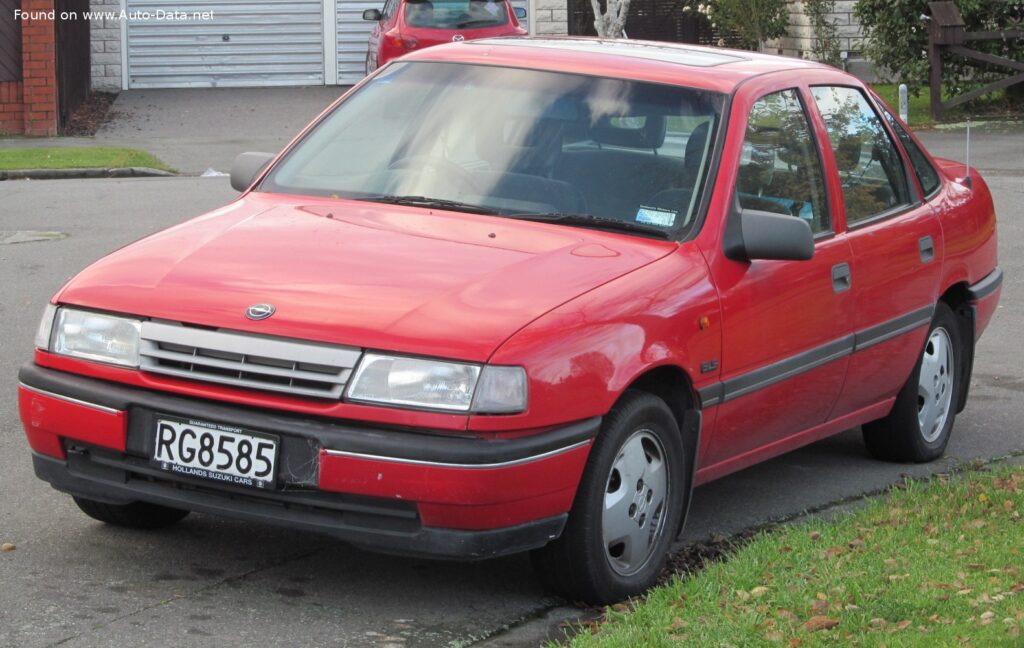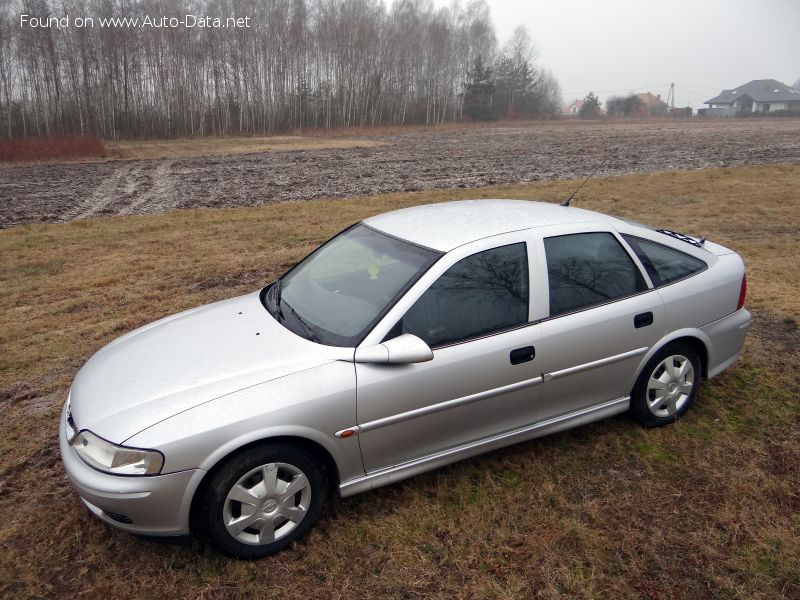
The Opel Vectra B CC (facelift 1999) 2.6 V6 represents a significant iteration of Opel’s mid-size offering, positioned as a competitor to vehicles like the Ford Mondeo and Volkswagen Passat in the European market. Introduced in 1999 as a facelift to the already established Vectra B, the “CC” designation stands for “Comfort and Communication,” highlighting the model’s focus on enhanced features and technology. While not officially sold in the United States, the Vectra B was a popular choice for those seeking a practical, comfortable, and relatively sporty family car in Europe. This particular variant, powered by a 2.6-liter V6 engine producing 170 horsepower, aimed to provide a more premium driving experience within the Vectra lineup.
Opel Vectra B CC (facelift 1999) 2.6 V6: Overview
The Vectra B, launched in 1995, was a crucial model for Opel, representing a move towards more modern design and engineering. The 1999 facelift brought revised styling, improved interior materials, and updated technology. The 2.6 V6 model occupied the upper end of the Vectra range, offering a more powerful and refined alternative to the four-cylinder engines. Its hatchback body style provided a blend of practicality and style, appealing to families and individuals alike. The Vectra B was produced from 2000 to 2002 with this engine configuration.
Engine & Performance
The heart of the Vectra B CC 2.6 V6 is its 2.6-liter, naturally aspirated V6 engine, designated the Y26SE. This engine produces 170 horsepower at 5800 rpm and 250 Nm (184.39 lb.-ft.) of torque at 3600 rpm. The engine features a double overhead camshaft (DOHC) valvetrain with four valves per cylinder and utilizes multi-port fuel injection. This configuration delivers a smooth and responsive power delivery, making it well-suited for both city driving and longer highway journeys. Acceleration from 0 to 100 km/h (0-62 mph) takes 8.5 seconds, while 0-60 mph is achieved in a calculated 8.1 seconds. The vehicle boasts a maximum speed of 230 km/h (142.92 mph). The engine’s power-to-weight ratio is 8.1 kg/Hp, and the torque-to-weight ratio is 5.5 kg/Nm, contributing to a reasonably spirited driving experience. Fuel economy is rated at 9.7 l/100 km (24.2 US mpg) combined, with 14 l/100 km (16.8 US mpg) in urban conditions and 7.2 l/100 km (32.7 US mpg) on the extra-urban cycle. CO2 emissions are rated at 142 g/km.
Design & Features
The Vectra B CC is a five-door hatchback, offering a practical and versatile body style. The facelifted model features subtle but noticeable styling updates, including revised headlights, a redesigned grille, and updated bumpers. Inside, the cabin prioritizes comfort and functionality. The interior offers seating for five passengers and provides a reasonable amount of space for both passengers and luggage. Trunk space is a respectable 480 liters (16.95 cu. ft.). While not laden with cutting-edge technology by today’s standards, the 1999 facelift included improvements to the infotainment system and safety features. Standard equipment typically included power windows, central locking, and an anti-theft system. Safety features, while limited compared to modern vehicles, included ABS brakes and, depending on the trim level, airbags. The focus was on providing a comfortable and reliable family vehicle with a touch of sophistication.
Technical Specifications
| Brand | Opel |
| Model | Vectra |
| Generation | Vectra B CC (facelift 1999) |
| Type (Engine) | 2.6 V6 (170 Hp) |
| Start of production | July, 2000 |
| End of production | January, 2002 |
| Powertrain Architecture | Internal Combustion engine |
| Body type | Hatchback |
| Seats | 5 |
| Doors | 5 |
| Fuel consumption (urban) | 14 l/100 km (16.8 US mpg) |
| Fuel consumption (extra urban) | 7.2 l/100 km (32.7 US mpg) |
| Fuel consumption (combined) | 9.7 l/100 km (24.2 US mpg) |
| CO2 emissions | 142 g/km |
| Fuel Type | Petrol (Gasoline) |
| Acceleration 0 – 100 km/h | 8.5 sec |
| Acceleration 0 – 62 mph | 8.5 sec |
| Acceleration 0 – 60 mph | 8.1 sec |
| Maximum speed | 230 km/h (142.92 mph) |
| Weight-to-power ratio | 8.1 kg/Hp |
| Weight-to-torque ratio | 5.5 kg/Nm |
| Power | 170 Hp @ 5800 rpm |
| Torque | 250 Nm @ 3600 rpm (184.39 lb.-ft. @ 3600 rpm) |
| Engine layout | Front, Transverse |
| Engine Model/Code | Y26SE |
| Engine displacement | 2597 cm3 (158.48 cu. in.) |
| Number of cylinders | 6 |
| Engine configuration | V-engine |
| Number of valves per cylinder | 4 |
| Fuel injection system | Multi-port manifold injection |
| Engine aspiration | Naturally aspirated engine |
| Valvetrain | DOHC |
| Engine oil capacity | 4.75 l (5.02 US qt | 4.18 UK qt) |
| Coolant capacity | 7.7 l (8.14 US qt | 6.78 UK qt) |
| Kerb Weight | 1380 kg (3042.38 lbs) |
| Max. weight | 1935 kg (4265.94 lbs) |
| Max load | 555 kg (1223.57 lbs) |
| Trunk (boot) space – minimum | 480 l (16.95 cu. ft) |
| Fuel tank capacity | 60 l (15.85 US gal | 13.2 UK gal) |
| Length | 4495 mm (176.97 in) |
| Width | 1707 mm (67.2 in) |
| Width including mirrors | 1841 mm (72.48 in) |
| Height | 1425 mm (56.1 in) |
| Wheelbase | 2637 mm (103.82 in) |
| Front track | 1484 mm (58.43 in) |
| Rear (Back) track | 1487 mm (58.54 in) |
| Drivetrain Architecture | Front wheel drive |
| Number of gears and type of gearbox | 5 gears, manual transmission |
| Front brakes | Ventilated discs |
| Rear brakes | Ventilated discs |
| Tires size | 195/65 R15 |
| Wheel rims size | 15 |
The Opel Vectra B CC 2.6 V6, while not a performance car in the purest sense, offered a compelling combination of comfort, practicality, and respectable performance. It represented a solid offering in the European mid-size segment and remains a fondly remembered vehicle for many European drivers.