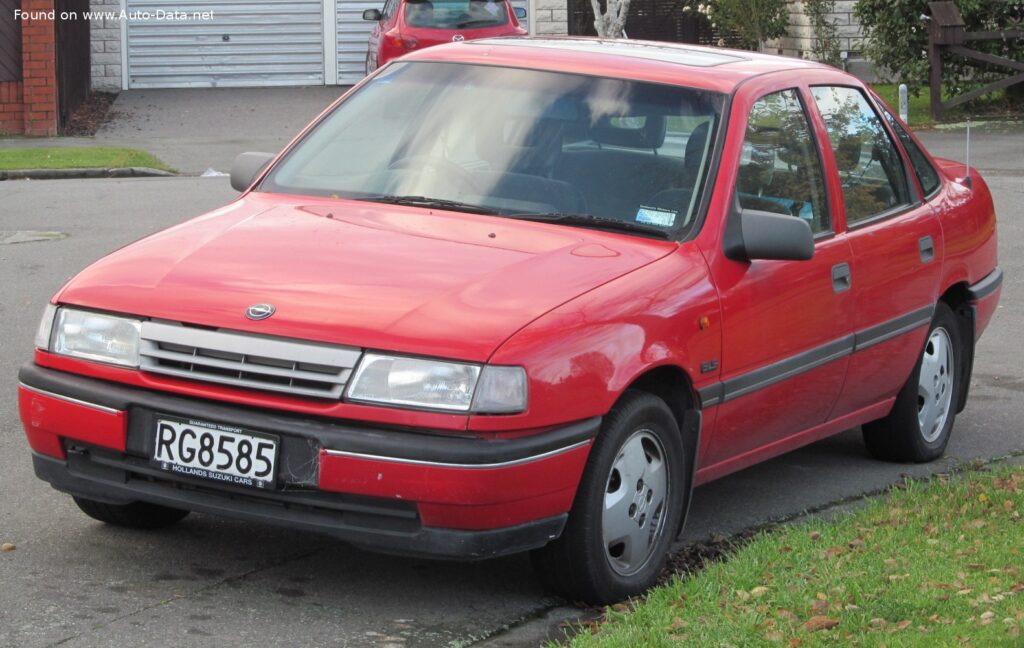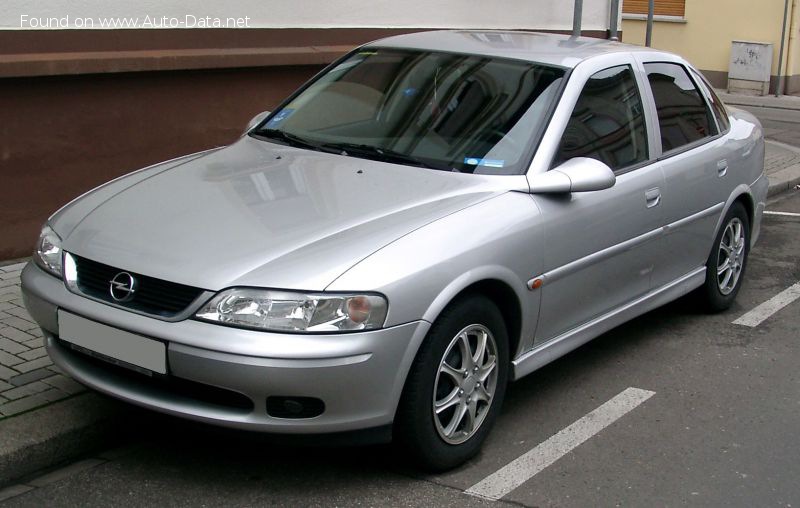
The Opel Vectra B (facelift 1999) 2.0 DI 16V represents a mid-cycle refresh of the second-generation Vectra, a large family car engineered by the German automaker Opel. While not officially sold in the United States, the Vectra was a significant model in Europe, competing with vehicles like the Ford Mondeo, Volkswagen Passat, and Peugeot 406. This facelifted version, produced between 1999 and 2000, focused on refining the existing platform with updated styling and, in this specific variant, a fuel-efficient diesel engine. The Vectra B aimed to provide a balance of practicality, comfort, and affordability for the European market.
Opel Vectra B (facelift 1999) 2.0 DI 16V: An Overview
The Vectra B, launched in 1995, was Opel’s attempt to move upmarket and offer a more sophisticated alternative to its predecessors. The 1999 facelift brought subtle but noticeable changes to the exterior, including revised headlights, a new grille, and updated bumpers. The 2.0 DI 16V model specifically catered to buyers seeking economical motoring, utilizing a direct injection diesel engine to deliver reasonable performance with improved fuel efficiency. This model was primarily sold in Europe, where diesel engines held a larger market share than in North America.
Engine & Performance
The heart of the Vectra B 2.0 DI 16V is a 1.995-liter (121.74 cubic inches) inline-four cylinder diesel engine, designated the X20DTL. This engine employs direct fuel injection and a turbocharger to produce 82 horsepower (Hp) at 4300 rpm and 185 Newton-meters (136.45 lb.-ft.) of torque at 1800 rpm. While not a performance-oriented engine, the turbocharger helps to provide adequate power for everyday driving. The engine’s power per liter is rated at 41.1 Hp/l. Power is delivered to the front wheels via a five-speed manual transmission.
Performance figures reflect the engine’s focus on economy rather than speed. Acceleration from 0 to 100 km/h (0-62 mph) takes 15.5 seconds, while 0 to 60 mph is achieved in approximately 14.7 seconds. The vehicle has a maximum speed of 178 km/h (110.6 mph). The weight-to-power ratio is 16.3 kg/Hp, and the weight-to-torque ratio is 7.2 kg/Nm, indicating a relatively modest power output for the vehicle’s weight of 1335 kg (2943.17 lbs.).
Design & Features
The Opel Vectra B (facelift 1999) is a four-door sedan with a traditional three-box design. The facelifted model features a more streamlined front end and updated taillights compared to the original B-series. The interior offers seating for five passengers and provides a practical and functional cabin layout.
Features for this model year were typical for a mid-range family car of the era. Standard equipment included power steering, anti-lock braking system (ABS), and a basic audio system. Safety features were becoming increasingly important, and the Vectra B incorporated ABS as standard. The trunk offers a usable 480 to 500 liters (16.95 to 17.66 cubic feet) of cargo space. The vehicle’s dimensions are 4495 mm (176.97 in) in length, 1707 mm (67.2 in) in width, and 1425 mm (56.1 in) in height, with a wheelbase of 2637 mm (103.82 in). The drag coefficient of 0.30 contributes to reasonable aerodynamic efficiency.
Technical Specifications
| Brand | Opel |
| Model | Vectra |
| Generation | Vectra B (facelift 1999) |
| Type (Engine) | 2.0 DI 16V (82 Hp) |
| Start of production | January, 1999 |
| End of production | February, 2000 |
| Powertrain Architecture | Internal Combustion engine |
| Body type | Sedan |
| Seats | 5 |
| Doors | 4 |
| Fuel consumption (urban) | 7.9 l/100 km (29.8 US mpg, 35.8 UK mpg, 12.7 km/l) |
| Fuel consumption (extra urban) | 4.8 l/100 km (49 US mpg, 58.9 UK mpg, 20.8 km/l) |
| Fuel consumption (combined) | 5.9 l/100 km (39.9 US mpg, 47.9 UK mpg, 16.9 km/l) |
| CO2 emissions | 205 g/km |
| Fuel Type | Diesel |
| Acceleration 0 – 100 km/h | 15.5 sec |
| Acceleration 0 – 62 mph | 15.5 sec |
| Acceleration 0 – 60 mph | 14.7 sec |
| Maximum speed | 178 km/h (110.6 mph) |
| Weight-to-power ratio | 16.3 kg/Hp |
| Weight-to-torque ratio | 7.2 kg/Nm |
| Power | 82 Hp @ 4300 rpm |
| Torque | 185 Nm @ 1800 rpm (136.45 lb.-ft. @ 1800 rpm) |
| Engine layout | Front, Transverse |
| Engine Model/Code | X20DTL |
| Engine displacement | 1995 cm3 (121.74 cu. in.) |
| Number of cylinders | 4 |
| Engine configuration | Inline |
| Cylinder Bore | 84 mm (3.31 in.) |
| Piston Stroke | 90 mm (3.54 in.) |
| Compression ratio | 18.5:1 |
| Number of valves per cylinder | 4 |
| Fuel injection system | Direct injection |
| Engine aspiration | Turbocharger |
| Valvetrain | OHC |
| Engine oil capacity | 5.5 l (5.81 US qt | 4.84 UK qt) |
| Coolant | 7.4 l (7.82 US qt | 6.51 UK qt) |
| Kerb Weight | 1335 kg (2943.17 lbs.) |
| Max. weight | 1880 kg (4144.69 lbs.) |
| Max load | 545 kg (1201.52 lbs.) |
| Trunk (boot) space – minimum | 480 l (16.95 cu. ft.) |
| Trunk (boot) space – maximum | 500 l (17.66 cu. ft.) |
| Fuel tank capacity | 60 l (15.85 US gal | 13.2 UK gal) |
| Length | 4495 mm (176.97 in.) |
| Width | 1707 mm (67.2 in.) |
| Width including mirrors | 1841 mm (72.48 in.) |
| Height | 1425 mm (56.1 in.) |
| Wheelbase | 2637 mm (103.82 in.) |
| Front track | 1484 mm (58.43 in.) |
| Rear (Back) track | 1487 mm (58.54 in.) |
| Ride height (ground clearance) | 140 mm (5.51 in.) |
| Drag coefficient (Cd) | 0.30 |
| Drive wheel | Front wheel drive |
| Number of gears and type of gearbox | 5 gears, manual transmission |
| Front suspension | Coil spring |
| Rear suspension | Coil spring |
| Front brakes | Disc |
| Rear brakes | Drum |
| Assisting systems | ABS (Anti-lock braking system) |
| Steering type | Steering rack and pinion |
| Power steering | Hydraulic Steering |
| Tires size | 195/65 R15 |
| Wheel rims size | 5.5J x 15 |
The Opel Vectra B (facelift 1999) 2.0 DI 16V, while not a groundbreaking vehicle, represented a solid and practical choice for European buyers seeking a comfortable and economical family sedan. Its direct injection diesel engine provided a good balance of performance and fuel efficiency, making it a popular option in a competitive market segment.