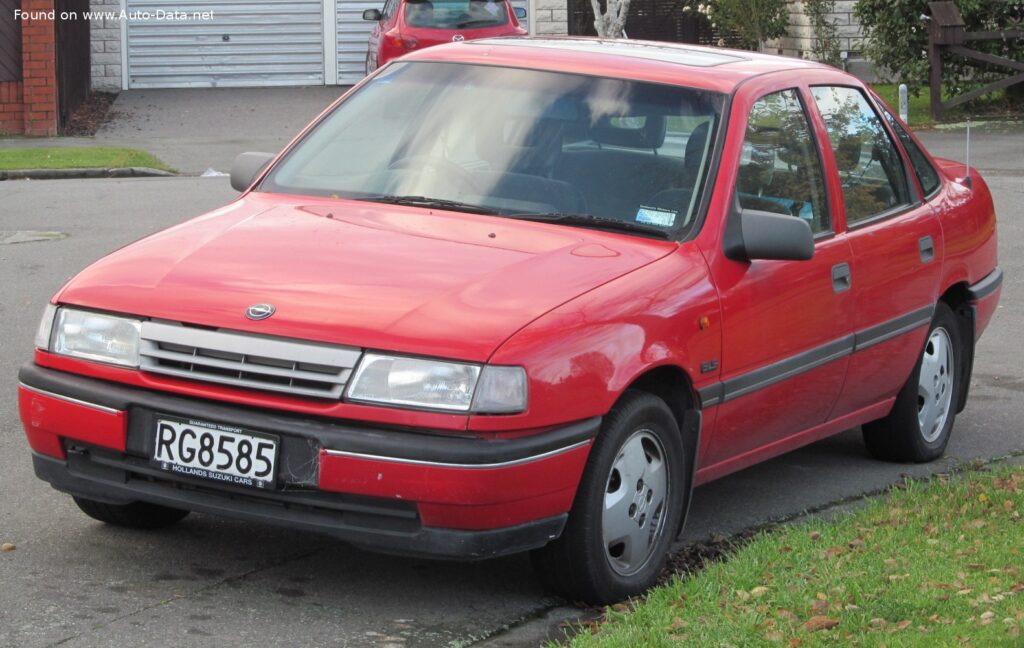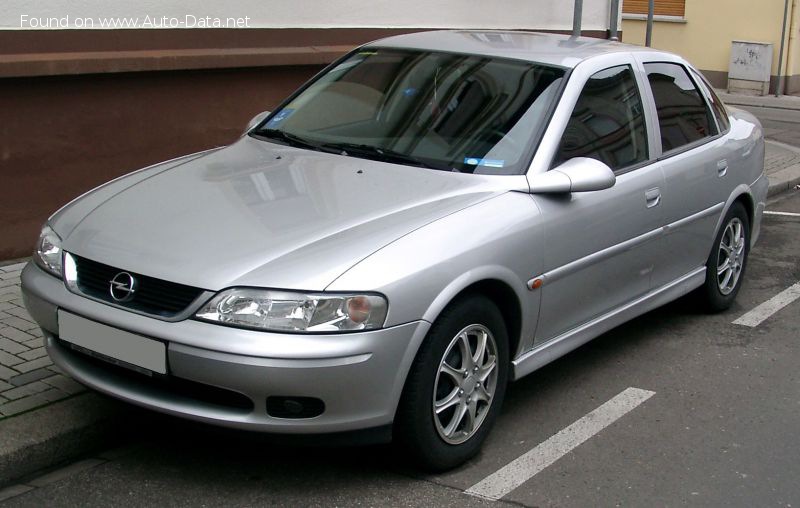
The Opel Vectra B (facelift 1999) 2.2 DTI 16V represents a significant iteration of Opel’s mid-size offering, positioned as a competitor to vehicles like the Ford Mondeo and Volkswagen Passat in the European market. Introduced in 1999 as a facelift to the original Vectra B, this version brought updated styling, improved refinement, and a range of efficient engine options, including the 2.2-liter direct injection turbodiesel detailed here. While not officially sold in the United States, the Vectra B was a popular choice for fleet and private buyers across Europe, known for its practicality, comfortable ride, and relatively affordable price point.
Opel Vectra B 2.2 DTI 16V: An Overview
The Vectra B facelift, produced from 2000 to 2002 in this specific 2.2 DTI 16V configuration, aimed to address criticisms of the original B-series regarding interior quality and styling. The 2.2 DTI model focused on providing a balance of performance and fuel economy, utilizing direct injection technology to maximize efficiency. This model was primarily sold in Europe and other international markets, serving as a key volume seller for Opel during its production run. It represented a move towards more sophisticated diesel technology, offering a quieter and more refined driving experience compared to earlier diesel offerings.
Engine & Performance
The heart of the Vectra B 2.2 DTI 16V is its 2.2-liter (2171 cm3) inline four-cylinder diesel engine, designated Y22DTR. This engine employs direct fuel injection and a turbocharger to produce 125 horsepower (Hp) at 4000 rpm and 280 Newton-meters (206.52 lb.-ft.) of torque at 1500 rpm. The direct injection system contributes to improved combustion efficiency and reduced emissions. Power is delivered to the front wheels via a five-speed manual transmission. Performance figures include a 0-100 km/h (0-62 mph) acceleration time of 10 seconds and a top speed of 208 km/h (129.25 mph). The engine’s torque output provides strong mid-range acceleration, making it well-suited for everyday driving and long-distance cruising. The weight-to-power ratio of 11.6 kg/Hp and weight-to-torque ratio of 5.2 kg/Nm further highlight the engine’s efficiency.
Design & Features
The Vectra B facelift retained the overall silhouette of the original B-series, but featured revised front and rear styling, including new headlights, a redesigned grille, and updated taillights. The vehicle is a four-door sedan with a five-seat configuration. Interior improvements focused on material quality and ergonomics. Standard features typically included power steering, ABS (Anti-lock Braking System), and a comfortable interior layout. The trunk offered a practical 500 liters (17.66 cu. ft.) of space, expandable to 1240 liters (43.79 cu. ft.) with the rear seats folded down. Safety features, while not as comprehensive as modern vehicles, included a robust body structure and the aforementioned ABS system. The McPherson strut front suspension and multi-link rear suspension provided a comfortable and controlled ride. The drag coefficient of 0.30 contributed to reasonable aerodynamic efficiency.
Technical Specifications
| Brand | Opel |
| Model | Vectra |
| Generation | Vectra B (facelift 1999) |
| Type (Engine) | 2.2 DTI 16V (125 Hp) |
| Start of production | 2000 year |
| End of production | 2002 year |
| Powertrain Architecture | Internal Combustion engine |
| Body type | Sedan |
| Seats | 5 |
| Doors | 4 |
| Fuel consumption (urban) | 9 l/100 km (26.1 US mpg, 31.4 UK mpg, 11.1 km/l) |
| Fuel consumption (extra urban) | 5 l/100 km (47 US mpg, 56.5 UK mpg, 20 km/l) |
| Fuel consumption (combined) | 6.5 l/100 km (36.2 US mpg, 43.5 UK mpg, 15.4 km/l) |
| CO2 emissions | 176 g/km |
| Fuel Type | Diesel |
| Acceleration 0 – 100 km/h | 10 sec |
| Acceleration 0 – 62 mph | 10 sec |
| Acceleration 0 – 60 mph | 9.5 sec |
| Maximum speed | 208 km/h (129.25 mph) |
| Weight-to-power ratio | 11.6 kg/Hp |
| Weight-to-torque ratio | 5.2 kg/Nm |
| Power | 125 Hp @ 4000 rpm |
| Torque | 280 Nm @ 1500 rpm (206.52 lb.-ft. @ 1500 rpm) |
| Engine layout | Front, Transverse |
| Engine Model/Code | Y22DTR |
| Engine displacement | 2171 cm3 (132.48 cu. in.) |
| Number of cylinders | 4 |
| Engine configuration | Inline |
| Cylinder Bore | 84 mm (3.31 in.) |
| Piston Stroke | 98 mm (3.86 in.) |
| Compression ratio | 18.5:1 |
| Number of valves per cylinder | 4 |
| Fuel injection system | Direct injection |
| Engine aspiration | Turbocharger |
| Valvetrain | OHC |
| Engine oil capacity | 5.5 l (5.81 US qt | 4.84 UK qt) |
| Coolant | 7.2 l (7.61 US qt | 6.34 UK qt) |
| Kerb Weight | 1450 kg (3196.7 lbs.) |
| Max. weight | 1905 kg (4199.81 lbs.) |
| Max load | 455 kg (1003.1 lbs.) |
| Trunk (boot) space – minimum | 500 l (17.66 cu. ft.) |
| Trunk (boot) space – maximum | 1240 l (43.79 cu. ft.) |
| Fuel tank capacity | 60 l (15.85 US gal | 13.2 UK gal) |
| Length | 4495 mm (176.97 in.) |
| Width | 1707 mm (67.2 in.) |
| Width including mirrors | 1841 mm (72.48 in.) |
| Height | 1425 mm (56.1 in.) |
| Wheelbase | 2637 mm (103.82 in.) |
| Front track | 1484 mm (58.43 in.) |
| Rear (Back) track | 1487 mm (58.54 in.) |
| Drag coefficient (Cd) | 0.30 |
| Minimum turning circle | 11 m (36.09 ft.) |
| Drivetrain Architecture | Front wheel drive |
| Number of gears | 5 gears, manual transmission |
| Front suspension | Independent type McPherson |
| Rear suspension | Independent multi-link suspension |
| Front brakes | Ventilated discs |
| Rear brakes | Disc |
| Assisting systems | ABS (Anti-lock braking system) |
| Steering type | Steering rack and pinion |
| Power steering | Hydraulic Steering |
| Tires size | 195/65 R15 |
| Wheel rims size | 15 |
The Opel Vectra B 2.2 DTI 16V, while not a performance icon, offered a compelling package of practicality, efficiency, and comfort for European drivers. Its direct injection turbodiesel engine provided a good balance of power and fuel economy, making it a popular choice for both private and fleet buyers. Though largely absent from the North American automotive landscape, the Vectra B remains a significant model in Opel’s history and a representative example of European mid-size car design of the early 2000s.