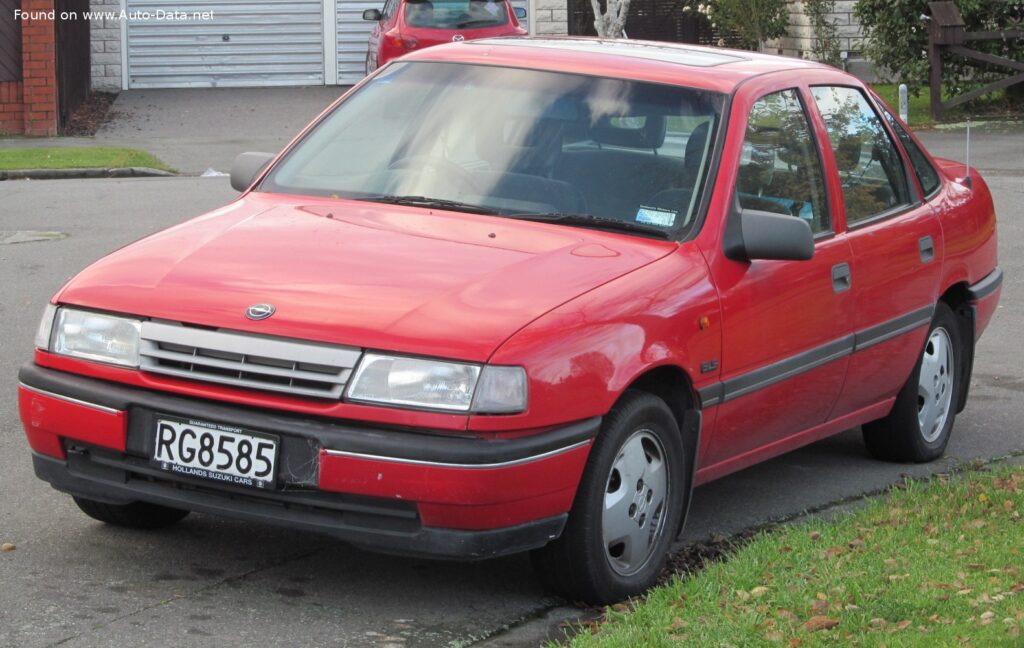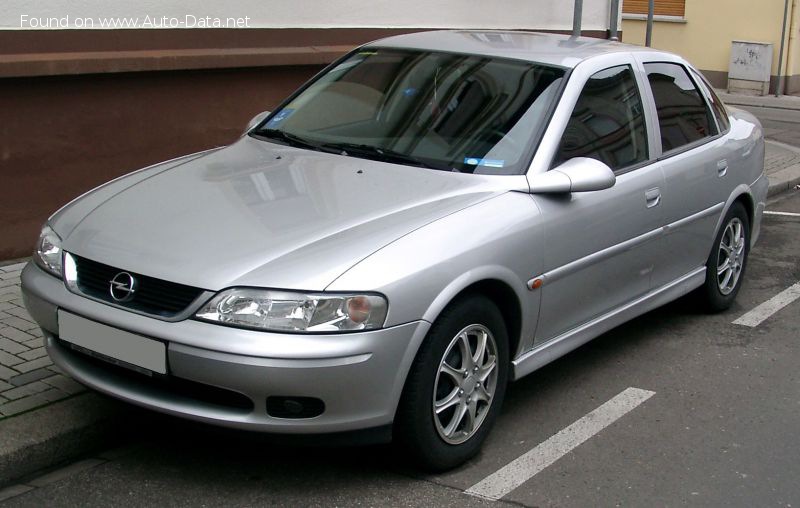
The Opel Vectra B (facelift 1999) 2.6 V6 Automatic is a mid-size sedan produced by the German manufacturer Opel between 2000 and 2002. As a facelift of the broader Vectra B range (1995-2003), this iteration featured styling updates and refinements. While not officially sold in the United States, the Vectra was a significant model in the European market, competing with vehicles like the Ford Mondeo, Volkswagen Passat, and Peugeot 406. The 2.6 V6 variant represented a higher-performance offering within the Vectra lineup, aimed at buyers seeking a blend of comfort, practicality, and spirited driving.
Opel Vectra B: A Refined European Sedan
The Vectra B represented Opel’s attempt to move upmarket in the mid-size segment. The facelifted version, introduced in 1999, brought revised front and rear styling, interior improvements, and updated engine options. The 2.6 V6 model was positioned as a premium trim, offering a more powerful engine and automatic transmission as standard. The Vectra B was known for its relatively spacious interior, comfortable ride, and generally solid build quality, making it a popular choice for families and business users in Europe.
Engine & Performance
The heart of the Vectra B 2.6 V6 is its 2.6-liter, naturally aspirated V6 engine, designated Y26SE. This engine produces 170 horsepower at 5800 rpm and 250 Nm (184.39 lb-ft) of torque at 3600 rpm. The engine’s configuration – a 60-degree V6 – contributes to its smooth operation and relatively compact size. Power is delivered to the front wheels via a four-speed automatic transmission. This powertrain combination allows for a 0-60 mph (0-96 km/h) acceleration time of approximately 8.1 seconds and a top speed of 230 km/h (142.92 mph). The engine’s power-to-weight ratio is 8.4 kg/Hp, and the torque-to-weight ratio is 5.7 kg/Nm, indicating a reasonably responsive driving experience. Fuel consumption is rated at 9.7 liters per 100 kilometers (24.2 US mpg), which was typical for a V6 engine of this size and era.
Design & Features
The Opel Vectra B facelift is a four-door sedan with a traditional three-box design. The styling updates included a revised front grille, headlights, and bumper, as well as redesigned taillights. The interior featured improved materials and a more modern dashboard layout. The vehicle offers seating for five passengers and a trunk capacity ranging from 480 to 500 liters (16.95 to 17.66 cubic feet). Standard features typically included power windows, central locking, and an anti-lock braking system (ABS). The hydraulic power steering provided ease of maneuverability. The 195/65 R15 tires mounted on 15-inch wheels contributed to a comfortable ride. Safety features, while not as comprehensive as modern vehicles, included ABS and a robust body structure designed to meet European safety standards of the time.
Technical Specifications
| Brand | Opel |
| Model | Vectra |
| Generation | Vectra B (facelift 1999) |
| Type (Engine) | 2.6 V6 (170 Hp) Automatic |
| Start of production | July, 2000 |
| End of production | January, 2002 |
| Powertrain Architecture | Internal Combustion engine |
| Body type | Sedan |
| Seats | 5 |
| Doors | 4 |
| Fuel consumption (combined) | 9.7 l/100 km |
| Fuel consumption (US mpg) | 24.2 US mpg |
| Fuel consumption (UK mpg) | 29.1 UK mpg |
| Fuel consumption (km/l) | 10.3 km/l |
| Fuel Type | Petrol (Gasoline) |
| Acceleration 0 – 100 km/h | 8.5 sec |
| Acceleration 0 – 62 mph | 8.5 sec |
| Acceleration 0 – 60 mph | 8.1 sec |
| Maximum speed | 230 km/h |
| Maximum speed (mph) | 142.92 mph |
| Weight-to-power ratio | 8.4 kg/Hp |
| Weight-to-torque ratio | 5.7 kg/Nm |
| Power | 170 Hp @ 5800 rpm |
| Power per litre | 65.5 Hp/l |
| Torque | 250 Nm @ 3600 rpm |
| Torque (lb.-ft.) | 184.39 lb.-ft. @ 3600 rpm |
| Engine layout | Front, Transverse |
| Engine Model/Code | Y26SE |
| Engine displacement | 2597 cm3 |
| Engine displacement (cu. in.) | 158.48 cu. in. |
| Number of cylinders | 6 |
| Engine configuration | V-engine |
| Cylinder Bore | 83.2 mm |
| Cylinder Bore (in.) | 3.28 in. |
| Piston Stroke | 79.6 mm |
| Piston Stroke (in.) | 3.13 in. |
| Compression ratio | 10:1 |
| Number of valves per cylinder | 4 |
| Fuel injection system | Multi-port manifold injection |
| Engine aspiration | Naturally aspirated engine |
| Valvetrain | DOHC |
| Engine oil capacity | 4.75 l |
| Engine oil capacity (US qt) | 5.02 US qt |
| Engine oil capacity (UK qt) | 4.18 UK qt |
| Coolant | 7.6 l |
| Coolant (US qt) | 8.03 US qt |
| Coolant (UK qt) | 6.69 UK qt |
| Kerb Weight | 1423 kg |
| Kerb Weight (lbs.) | 3137.18 lbs. |
| Max. weight | 1920 kg |
| Max. weight (lbs.) | 4232.88 lbs. |
| Max load | 497 kg |
| Max load (lbs.) | 1095.7 lbs. |
| Trunk (boot) space – minimum | 480 l |
| Trunk (boot) space – minimum (cu. ft.) | 16.95 cu. ft. |
| Trunk (boot) space – maximum | 500 l |
| Trunk (boot) space – maximum (cu. ft.) | 17.66 cu. ft. |
| Fuel tank capacity | 60 l |
| Fuel tank capacity (US gal) | 15.85 US gal |
| Fuel tank capacity (UK gal) | 13.2 UK gal |
| Length | 4495 mm |
| Length (in.) | 176.97 in. |
| Width | 1707 mm |
| Width (in.) | 67.2 in. |
| Width including mirrors | 1841 mm |
| Width including mirrors (in.) | 72.48 in. |
| Height | 1425 mm |
| Height (in.) | 56.1 in. |
| Wheelbase | 2637 mm |
| Wheelbase (in.) | 103.82 in. |
| Front track | 1464 mm |
| Front track (in.) | 57.64 in. |
| Rear (Back) track | 1467 mm |
| Rear (Back) track (in.) | 57.76 in. |
| Drivetrain Architecture | The Internal combustion engine (ICE) drives the front wheels of the vehicle. |
| Drive wheel | Front wheel drive |
| Number of gears and type of gearbox | 4 gears, automatic transmission |
| Front suspension | Coil spring |
| Rear suspension | Coil spring |
| Front brakes | Ventilated discs |
| Rear brakes | Disc |
| Assisting systems | ABS (Anti-lock braking system) |
| Steering type | Steering rack and pinion |
| Power steering | Hydraulic Steering |
| Tires size | 195/65 R15 |
| Wheel rims size | 15 |