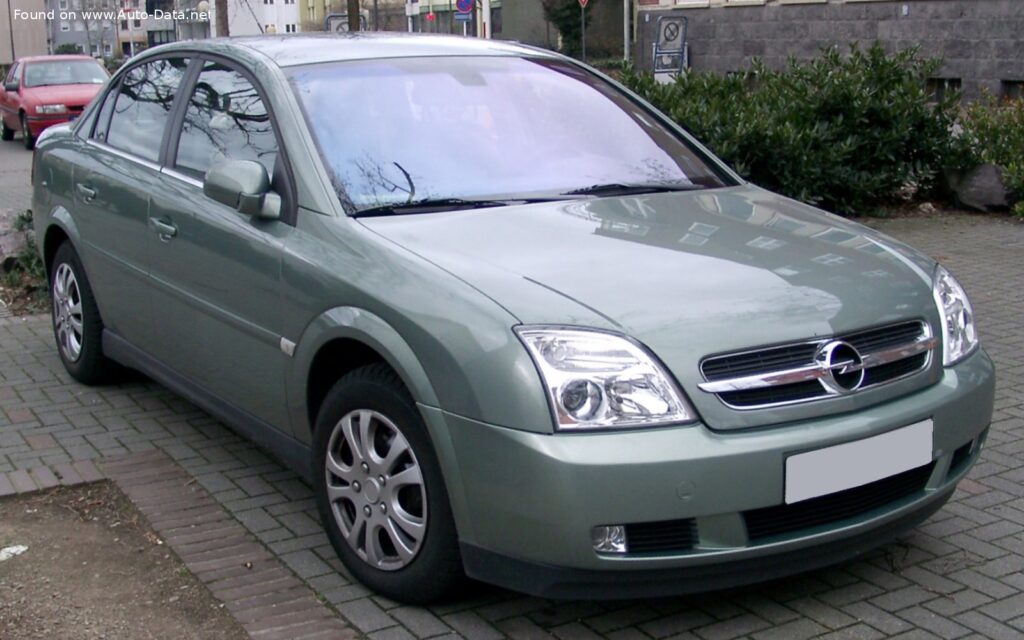
The Opel Vectra C 2.0i 16V Turbo, produced between 2003 and 2005, represents a significant iteration in Opel’s mid-size family car lineage. As the successor to the Vectra B, the C model aimed to offer a more refined driving experience, improved safety features, and a more modern aesthetic. While not officially sold in the United States, the Vectra C was a popular choice in Europe as a practical and relatively sporty sedan, competing with models like the Ford Mondeo, Volkswagen Passat, and Peugeot 406. This particular variant, the 2.0i 16V Turbo, offered a balance of performance and fuel efficiency, making it a versatile option for everyday driving.
Opel Vectra C: An Overview
The Vectra C was part of the Epsilon platform generation, shared with other General Motors vehicles like the Saab 9-3 and Fiat Croma. This platform allowed for a more spacious interior and improved handling characteristics compared to its predecessor. The 2.0i 16V Turbo model specifically targeted drivers seeking a more engaging driving experience without sacrificing practicality. It featured a turbocharged engine that provided a noticeable performance boost over the naturally aspirated versions of the Vectra C.
Engine & Performance
At the heart of the Vectra C 2.0i 16V Turbo lies a 1.998-liter (121.93 cubic inches) inline-four cylinder engine, designated the Z20NET. This engine utilizes a turbocharger and intercooler to boost power output to 175 horsepower at 5500 rpm and 265 Nm (195.45 lb.-ft.) of torque at 2500 rpm. The engine features multi-port fuel injection and a double overhead camshaft (DOHC) valvetrain with four valves per cylinder. This configuration delivers a power-to-liter ratio of 87.6 hp/l. The engine is transversely mounted at the front of the vehicle, driving the front wheels through a six-speed manual transmission. Performance figures include a 0-100 km/h (0-62 mph) acceleration time of 9.1 seconds and a 0-60 mph time of approximately 8.6 seconds. The vehicle boasts a maximum speed of 230 km/h (142.92 mph). The weight-to-power ratio is 8 kg/Hp, and the weight-to-torque ratio is 5.3 kg/Nm, indicating a reasonably responsive driving experience.
Design & Features
The Opel Vectra C was offered primarily as a four-door sedan, although station wagon (estate) and hatchback versions were also available in some European markets. The sedan body style provided a practical and spacious interior for passengers and cargo. The exterior design of the Vectra C was a departure from the more angular styling of the Vectra B, adopting a smoother, more contemporary look. Key features of the 2.0i 16V Turbo model included standard ABS (Anti-lock Braking System), ventilated front disc brakes, and disc brakes on the rear axle. The steering system is a hydraulic power-assisted rack and pinion setup. The suspension utilizes a spring strut configuration at the front and a multi-link system at the rear, designed to provide a comfortable ride and stable handling. Inside, the Vectra C offered a functional and well-equipped cabin, with seating for five passengers. Trunk space is generous, ranging from a minimum of 500 liters (17.66 cubic feet) to a maximum of 1050 liters (37.08 cubic feet) with the rear seats folded down. The vehicle rides on 215/55 R16 tires mounted on 6.5Jx16 alloy wheels.
Technical Specifications
| Brand | Opel |
| Model | Vectra |
| Generation | Vectra C |
| Type (Engine) | 2.0i 16V Turbo (175 Hp) |
| Start of production | March, 2003 |
| End of production | 2005 |
| Powertrain Architecture | Internal Combustion engine |
| Body type | Sedan |
| Seats | 5 |
| Doors | 4 |
| Fuel consumption (urban) | 12.8 l/100 km (18.4 US mpg, 22.1 UK mpg, 7.8 km/l) |
| Fuel consumption (extra urban) | 6.6 l/100 km (35.6 US mpg, 42.8 UK mpg, 15.2 km/l) |
| Fuel consumption (combined) | 8.9 l/100 km (26.4 US mpg, 31.7 UK mpg, 11.2 km/l) |
| Fuel Type | Petrol (Gasoline) |
| Acceleration 0 – 100 km/h | 9.1 sec |
| Acceleration 0 – 62 mph | 9.1 sec |
| Acceleration 0 – 60 mph | 8.6 sec |
| Maximum speed | 230 km/h (142.92 mph) |
| Weight-to-power ratio | 8 kg/Hp |
| Weight-to-torque ratio | 5.3 kg/Nm |
| Power | 175 Hp @ 5500 rpm |
| Torque | 265 Nm @ 2500 rpm (195.45 lb.-ft. @ 2500 rpm) |
| Engine layout | Front, Transverse |
| Engine Model/Code | Z20NET |
| Engine displacement | 1998 cm3 (121.93 cu. in.) |
| Number of cylinders | 4 |
| Engine configuration | Inline |
| Cylinder Bore | 86 mm (3.39 in.) |
| Piston Stroke | 86 mm (3.39 in.) |
| Compression ratio | 9.5:1 |
| Number of valves per cylinder | 4 |
| Fuel injection system | Multi-port manifold injection |
| Engine aspiration | Turbocharger, Intercooler |
| Valvetrain | DOHC |
| Engine oil capacity | 6 l (6.34 US qt | 5.28 UK qt) |
| Coolant | 7.5 l (7.93 US qt | 6.6 UK qt) |
| Kerb Weight | 1395 kg (3075.45 lbs.) |
| Max. weight | 1945 kg (4287.99 lbs.) |
| Max load | 550 kg (1212.54 lbs.) |
| Trunk (boot) space – minimum | 500 l (17.66 cu. ft.) |
| Trunk (boot) space – maximum | 1050 l (37.08 cu. ft.) |
| Fuel tank capacity | 61 l (16.11 US gal | 13.42 UK gal) |
| Length | 4596 mm (180.94 in.) |
| Width | 1798 mm (70.79 in.) |
| Height | 1460 mm (57.48 in.) |
| Wheelbase | 2700 mm (106.3 in.) |
| Front track | 1536 mm (60.47 in.) |
| Rear (Back) track | 1525 mm (60.04 in.) |
| Drivetrain Architecture | Front wheel drive |
| Number of gears and type of gearbox | 6 gears, manual transmission |
| Front suspension | Spring Strut |
| Rear suspension | Several levers and rods |
| Front brakes | Ventilated discs |
| Rear brakes | Disc |
| Tires size | 215/55 R16 |
| Wheel rims size | 6.5JX16 |
The Opel Vectra C 2.0i 16V Turbo, while never officially available in the US market, offered a compelling package of performance, practicality, and comfort for European drivers. Its turbocharged engine, combined with a well-engineered chassis, made it a capable and enjoyable vehicle to drive. The Vectra C ultimately paved the way for future Opel/Vauxhall models, incorporating lessons learned in design, engineering, and technology.